
Last November I spent some time on Google maps looking for accessible creeks around the fringes of Kanata north where I might find some creek-loving odonates. If a tiny fragment of a stream in Stony Swamp could hold Arrowhead Spiketails, who knows what other species might call these small streams home? I wasn’t expecting anything as magnificent or scarce as a Mustached or Eastern Least Clubtail, but I thought that Stream Cruisers, Fawn Darners, River Jewelwings, and maybe a spiketail might be possible.
A few areas looked particularly interesting, including a section of Shirley’s Brook between Station Road and Monk Environmental Park, the stream that drains the eastern end of the Beaver Pond near Lismer Pines Park, and Stillwater Creek where it runs between Corkstown Road and the Trans-Canada Trail, aka the Watts Creek Pathway. Although all of these streams run through green space, the surrounding areas had become built up with new homes and developments over the years. The Crystal Bay/Lakeview Park subdivision just south of Andrew Haydon Park is long-established, with a narrow band of trees running between the subdivision and Highway 417, but the area around the Beaver Pond off of Goulbourn Forced Road started being cleared for housing relatively recently (around 2010), starting with the controversial Terry Fox extension, and houses are still being built there to this day. The forest is thickest in Monk Environmental Park where there is little encroachment so far, and my hopes were highest for this little park as a result.
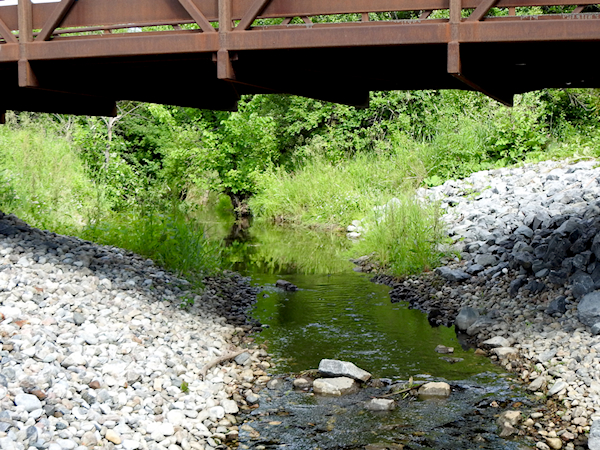
I parked at the small parking lot on Innovation Drive and walked about 15 minutes until I found the stream. I had seen pictures of the bridge here online, which was one the factors that prompted my visit. The stream poured out of a marsh and down a shallow cascade of rocks, around a bend, through the trees, and disappeared into an open area toward Innovation Drive. It looked lovely, and my imagination started running wild with the species I might see in the summer.
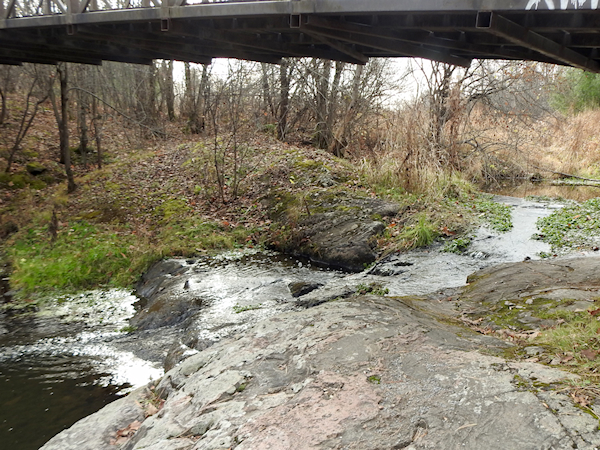
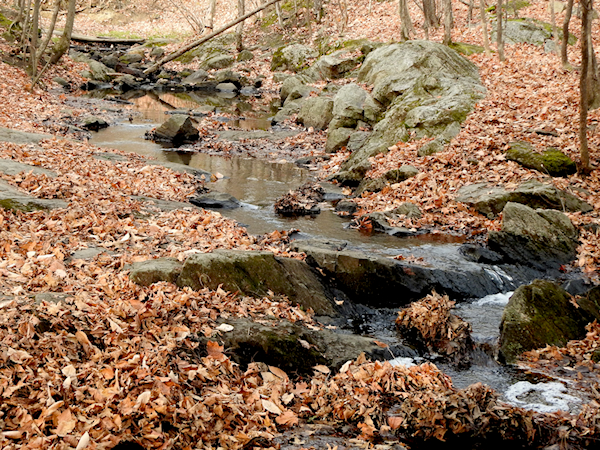
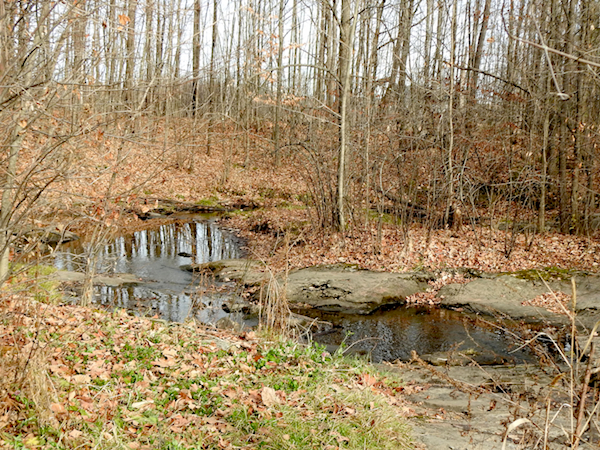
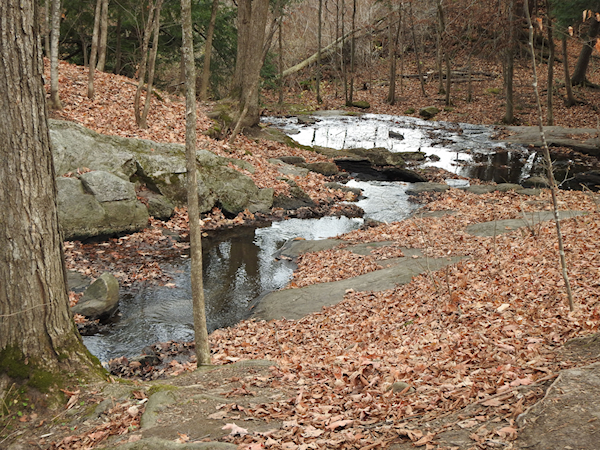
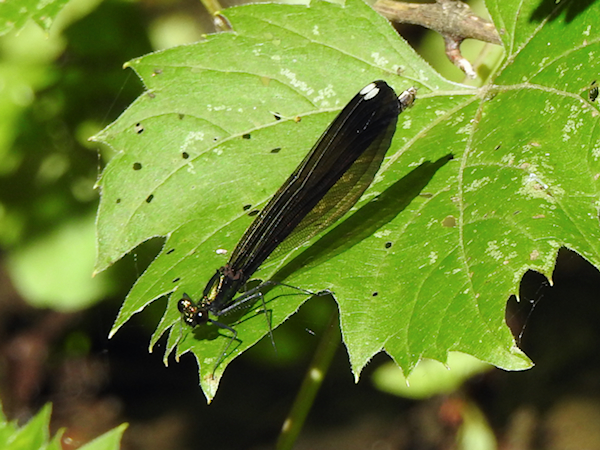
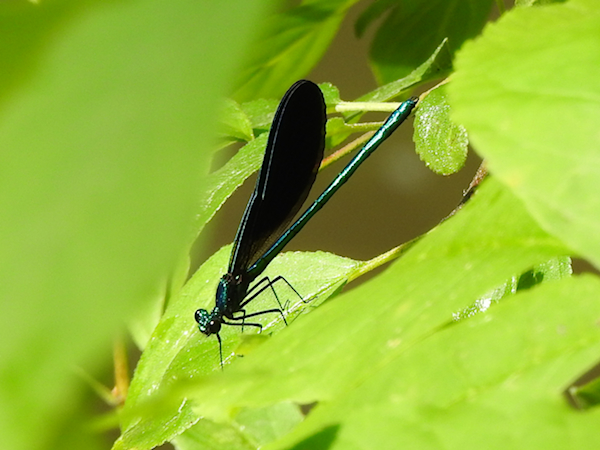
My visit on June 20th was much different. It was warmer, greener, and this time I found some dragonflies! I found a Racket-tailed Emerald before I even entered the woods and was eager to see what might be waiting for me at the bridge. The first dragonfly I noticed was a male Common Whitetail sallying out from a large rock in the pool just below the bridge; then I spotted the black wings of an Ebony Jewelwing flying low over the water!
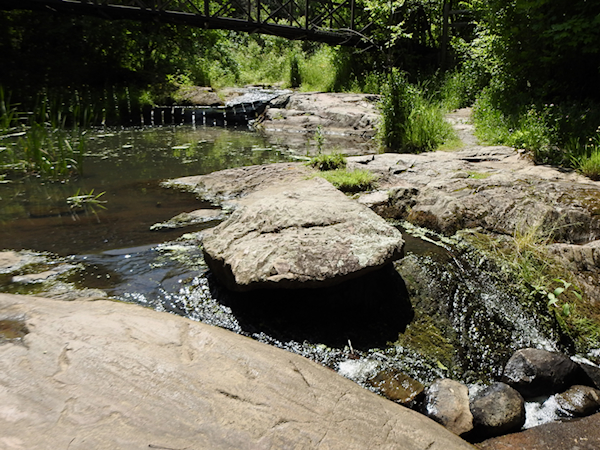
I left the trail to follow the stream, hoping to spot more dragonflies perching on the rocks or zooming up and down the water. I found more Ebony Jewelwings in the vegetation and flying over the water, but no more dragonflies. The stream trickled through the woods over a rocky bed before it tumbled down to the field below where it cut a trench through the dense vegetation. There were more Ebony Jewelwings here, and still no other odes. I picked my way along what little bank there was before turning around and heading back into the woods.
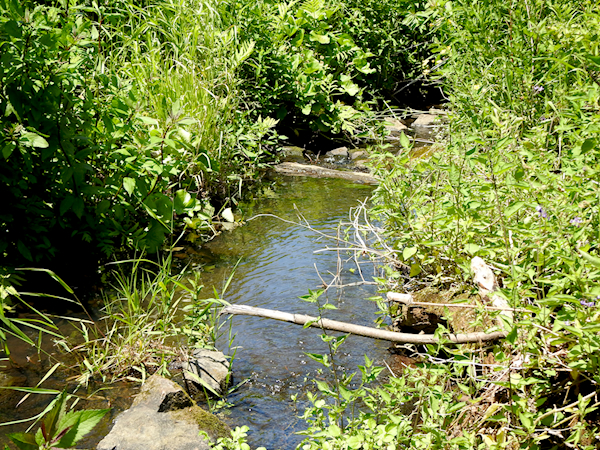
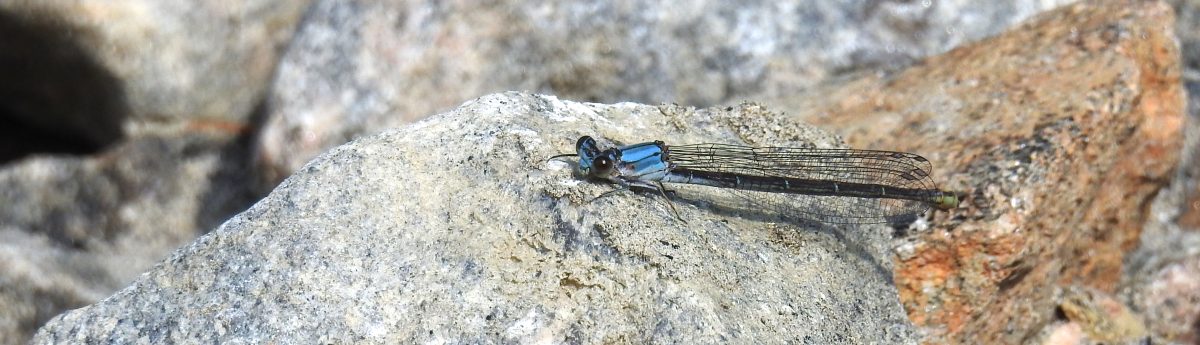
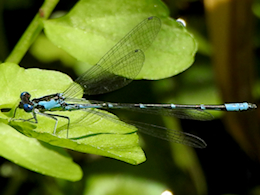
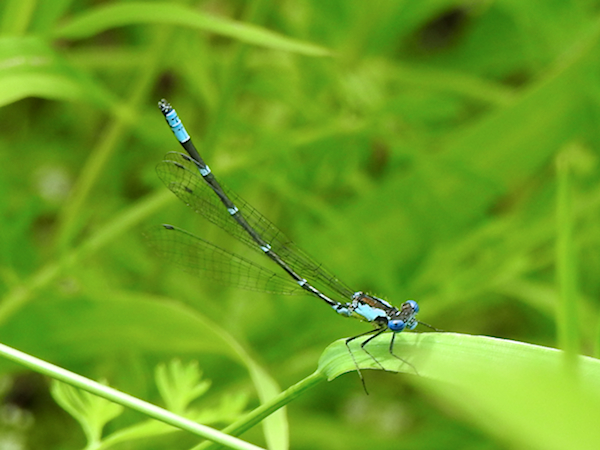
Then, in the sun-dappled woods I saw something black and blue fly by and land on a broad leaf. My first thought was that it was a bluet, but then I realized it was an Aurora Damsel – something I’d never seen in Kanata before!
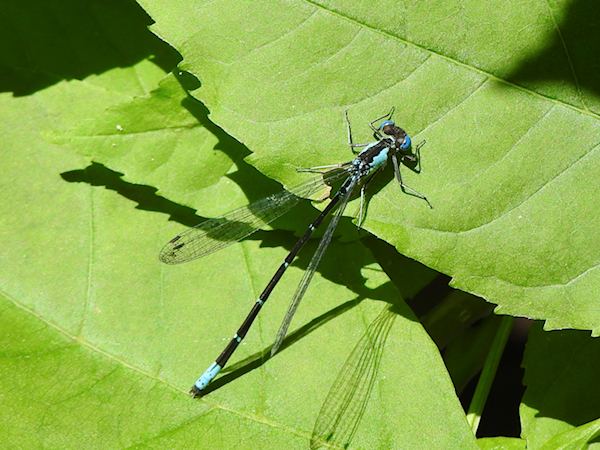
This sighting gave me hope. I continued my search along the stream, walking beneath the bridge to get to the marsh on the other side. A few emeralds were flying above me, and I saw two more Aurora Damsels. Still, I was hoping to find a few other species and continued walking down the trail, crossing the hydro cut and re-entering the woods. The trail never did get close to the stream, so I turned around after finding only a Four-spotted Skimmer and some more Ebony Jewelwings.
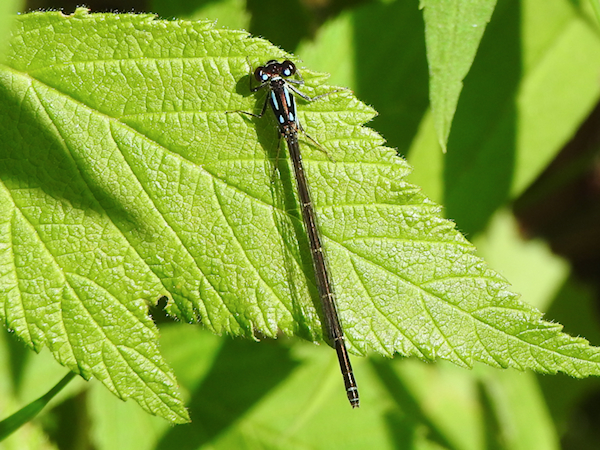
From there I drove over to the Beaver Pond Trail on Walden Drive where I first checked out the path on the opposite side of the pond which runs through a small wooded area known as Lismer Pines Park. I found a few Sedge Sprites in the sunny vegetation before the woods closed in, along with both Eastern and Fragile Forktails along the water’s edge. One was an immature male with blue exclamation marks on top of the thorax.
The path crossed over the stream at a spot that was too high and too steep to get down to the water’s edge, so I stood there and watched the water for a while, looking for odes flying up and down the water. There were a few black and blue damselflies too far to identify as well as several Ebony Jewelwings. I did not see any River Jewelwings.
I followed the path into the woods, stopping to check a tiny opening onto the water – there was no real shore here, and I saw no odes. Retreating back to the path, I eventually came to a sunny opening lined with flowering plants where I spotted a female bluet in the vegetation. I stopped to take a photo in the hope of identifying her; then, I inadvertently startled her into flight where she was immediately caught by an Eastern Pondhawk I hadn’t seen lurking among the leaves!
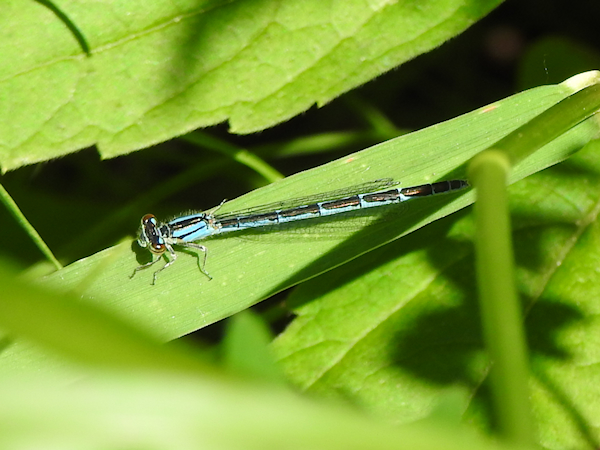
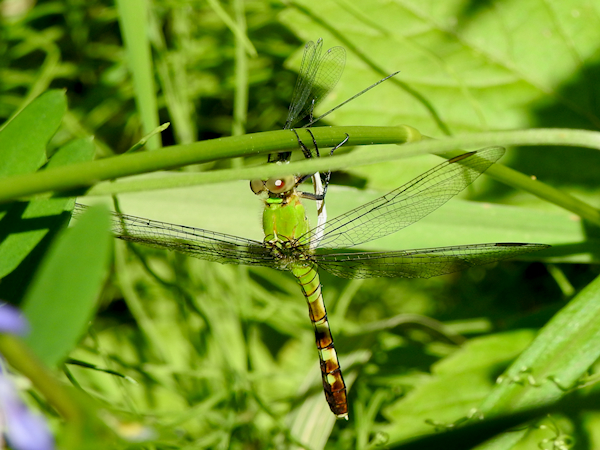
I felt badly for causing this pretty damselfly’s demise. Pondhawks are well-known to prey on other odonates – including other pondhawks! – which is undoubtedly the reason they were named for such fierce avian predators. While males are a beautiful powder-blue colour, females are green with black markings – all the better to hide in the vegetation.
I was unable to find any other species along the stream, so I returned to Walden Drive, crossed the road, and started exploring the area around Beaver Pond. There was a much greater variety of dragonflies in the vegetation and around the water. The first one I saw was a baskettail flying over the lawn above the water. I held out my net to catch it, and then it decided to land on me!
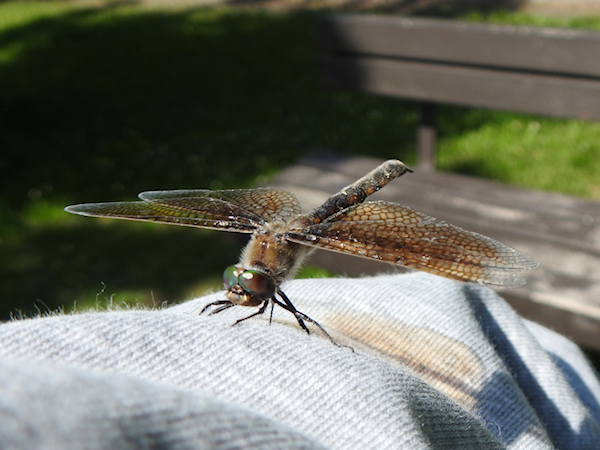
The first thing I noticed was how dark her wings were. She had clearly been flying for quite some time, as only older individuals develop the dark brown veins. I was able to pluck her off my sleeve so I could check out the rest of her; the yellow colour behind the eyes and the length of her appendages identified her as a Beaverpond Baskettail.
The second thing I noticed was that she was carrying a load of eggs!
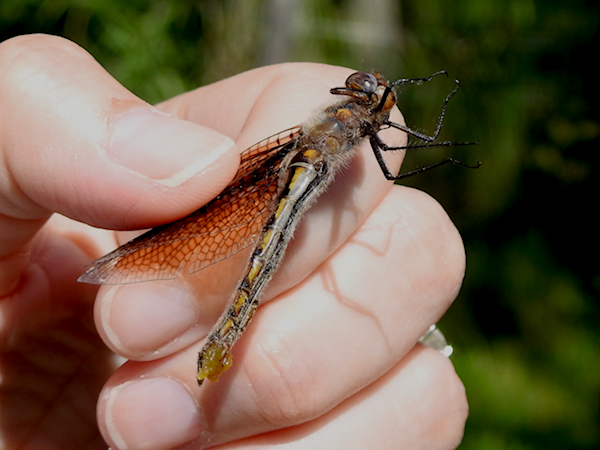
After mating, the eggs accumulate on the end of the female’s abdomen as though being held in a basket. The female will then search for a suitable location to oviposit, typically in an open area of water with emergent vegetation and twigs lying over the surface. Once she finds such a location, she will then dip the tip of her abdomen in the water and release the ‘basket’ of eggs. As soon as I realized she was carrying a load of eggs I released her in order to complete her life cycle; however, instead of heading for the water she landed in a patch of tall vegetation.
At the water I found a couple of Dot-tailed Whitefaces and Marsh Bluets, but the best spot for odes turned out to be a large weedy patch along the path leading back to the road. A few skimmers were flycatching from perches, including a Common Whitetail and this lovely Four-spotted Skimmer.
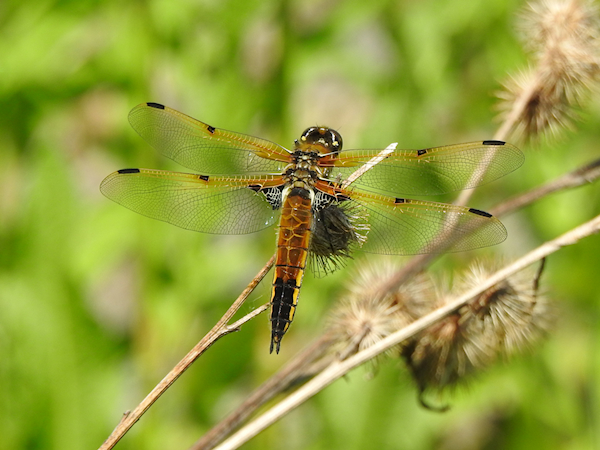
A mature female Frosted Whiteface was sunning itself on a similar branch out in the open, while another female Eastern Pondhawk sat camouflaged among the greenery.
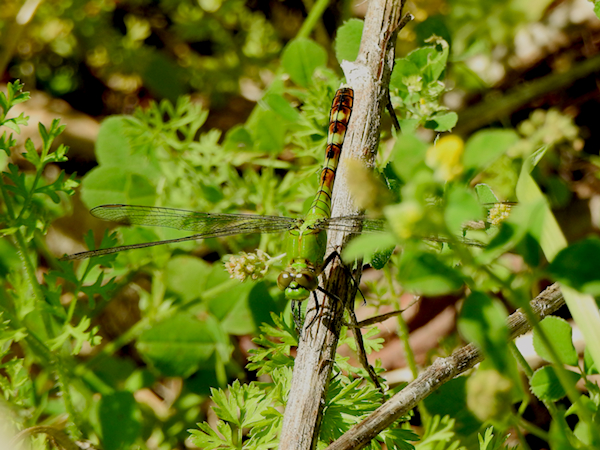
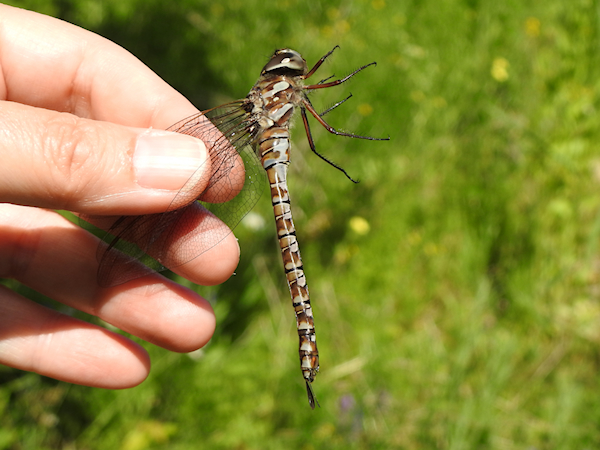
Two dragonflies were flying over the open area, hunting for prey. I caught a Racket-tailed Emerald, and then a Canada Darner. I was more excited about the darner as it represented a new family (Aeshnidae) for my creek explorations.
I walked through the woods for a little bit, but found the houses depressingly close to the trail compared to the last time I was here (circa 2008 or 2009) before the area was developed. There wasn’t any shoreline to explore around the pond, so I decided to check out another spot where I could acces the stream at the north end. From Google maps I had seen that it continued north through an open area toward the railroad tracks, and that I could access it from a path that continued at the end of Kimmins Court off of Walden Drive. I made the short drive and walked to the bridge. I heard the water before I saw it; on the north side of the bridge the stream tumbled down a pile of rocks and disappeared into a shady, overgrown channel. On the south side the land opened up and there appeared to be a bit of a shoreline I could get down to. I made my way down the embankment and started looking for odes.
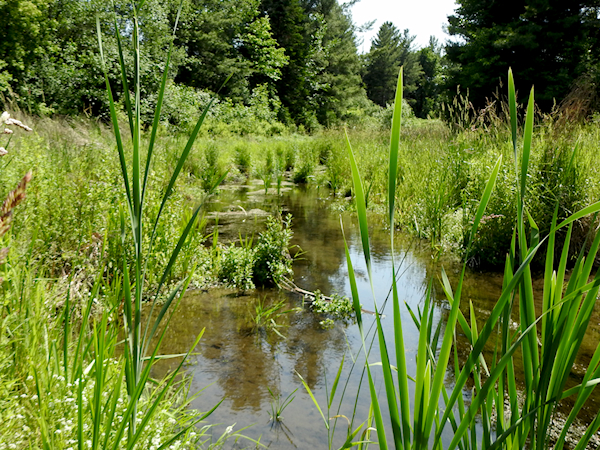
Unfortunately the water was higher than it looked, and when I tried to jump across a small inlet my foot sank into a couple of inches of water. I saw some bluets in the middle of the stream and a couple of Twelve-spotted Skimmers dancing further out over the water and that was it.
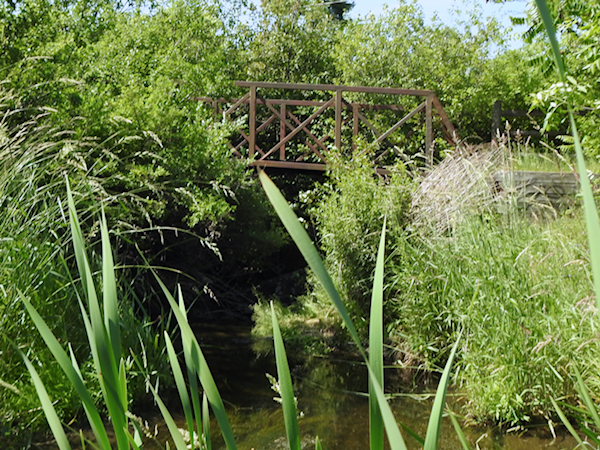
My foot was soaking wet so when it was clear there were no other odes to be found I went home.
Two days later I visited the last place on my list, Stillwater Creek near Corkstown Road. Chris Traynor and I had once found a River Jewelwing along the trail, and I was hoping they were still here. I made my way through the woods to the large bridge but it was too high to get down to the water – a continuing theme in my explorations. I found several Ebony Jewelwings resting in the vegetation but no River Jewelwings.
I followed the creek west toward Moodie Drive without seeing any other odes despite the excellent habitat – the stream looked sandy near the shore, with large rocks forming shallow steps in the middle, creating a small series of waterfalls. When I emerged into the open again at the smaller footbridge, the creek had narrowed to a small channel.
I was able to scramble down the rocks to get to water’s edge where I found a few Fragile and Eastern Forktails, some bluets flying in the middle of the water, and a couple of Dot-tailed Whitefaces perching near the shore. Then I spotted another familiar damselfly in the vegetation along the bank – an Aurora Damsel! It was raising and lowering its abdomen repeatedly, something I hadn’t seen this species do before. This is now the closest place to home I’ve ever seen one, and it thrilling to know they were so close to Andrew Haydon Park. Perhaps one day they will turn up there!
Although I didn’t see any of the more specialized creek species I was looking for, it doesn’t mean they aren’t around – it was still early in the summer, and I definitely planned to check them out later in the season. Still, I was happy with the species I did get; it was fantastic finding two new spots for Aurora Damsel – now I don’t have to go to Marlborough Forest just to see them!

 OdoNotations