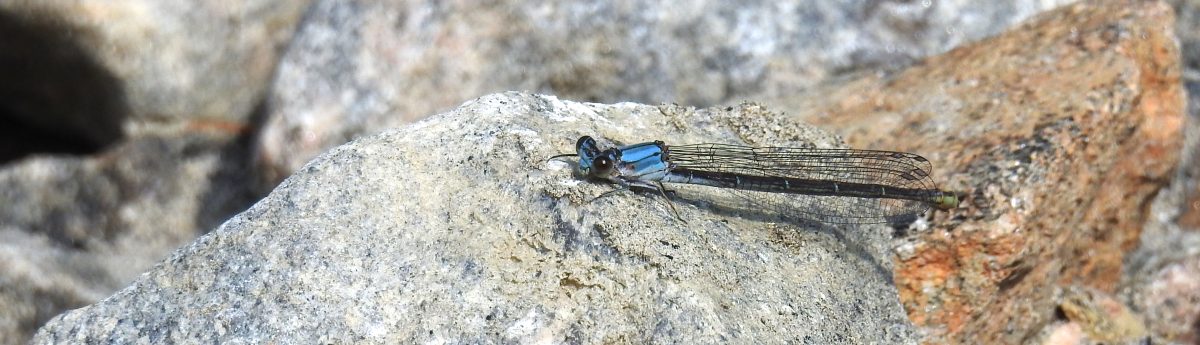
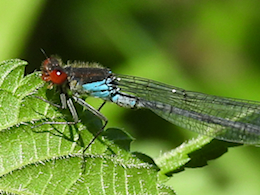
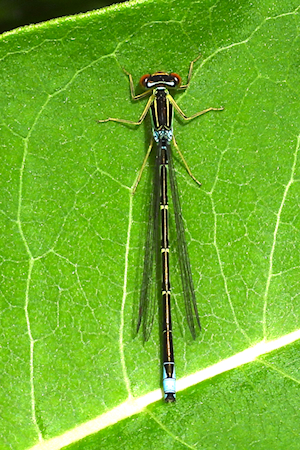
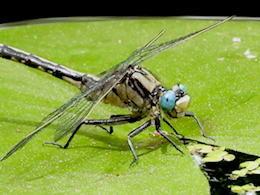
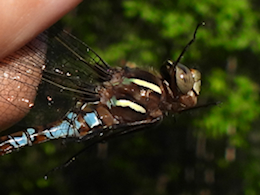
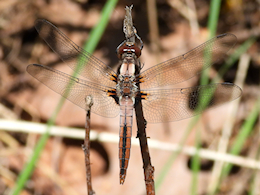
In June 2026 I travelled to Europe for the first time – a trip resulting from a decision I made in 2024 when I joined a local community choir, not expecting that it would lead me on a nine-day singing tour of the three Baltic countries with a group of 65 people! Ellison, our travel agent, had not only helped to arrange concerts in the three capital cities, the NATO forces base in Latvia, and the small community of Nida in Lithuania, but also walking tours of the Tallinn, Riga and Vilnius, as well as visits to places of cultural significance: Rundale Palace in Lativa, and the Hill of Crosses, Curonian Spit, and Trakai Castle in Lithuania. There would be plenty of opportunities for me to take in some nature and do some birdwatching along the way, and with our visit taking place in late June/early July I had a good chance of seeing some European dragonflies, too.
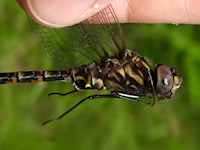
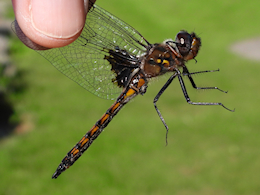
It’s been a good year for Harlequin Darners. Normally I see only one each spring, or perhaps two at most. This year I’ve seen five! They don’t seem to gather in same-species swarms the way other darners do, or even swarms with other darners. I always see them flying alone, or perhaps in an area where other dragonflies are hunting – mainly emeralds, such as the Common Baskettails at Andrew Haydon Park or Prince Baskettails at Roger’s Pond this year (the one at the Richmond Lagoons wasn’t associating with any other dragonflies). This is likely because while baskettails are at their peak in late May and June, there are few other darner species on the wing at the same time; only the Cyrano Darner and Springtime Darner have a similar flight season to the Harlequin Darner in our region, and neither is as common or as widespread as the Harlequin Darner.
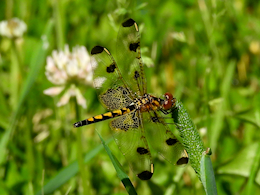
The 2026 Odolympics were held from June 13-23, 2026. This was my best Odolympics yet, with a total of 33 species seen! Although the weather was not cooperative, I still managed to get out to a few different places and find some good species….the Arrowhead Spiketail, Harlequin Darners and Mustached Clubtail were among my favourites.
If the weather had cooperated, I would have liked to have check out Flood Road, Bruce Pit, and Mud Lake, as well as return to Sheila McKee Park and Andrew Haydon Park. I missed quite a few common odes, such as River Jewelwing, Elegant Spreadwing, Violet Dancer, Lancet Clubtail, Swift River Cruiser, American Emerald, Brush-Tipped Emerald, Blue Dasher and Halloween Pennant. Hopefully next year’s Odolympics will be held in July when there will be an excellent chance of finding even more odonates (such as darners and spreadwings)!
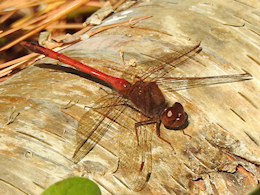
When I got up Sunday, the sky was full of puffy white clouds – however, there was more open blue sky than cloud, and the sun was shining! I had my breakfast, then headed out to Marlborough Forest where I hoped to add several new species to my year and Odolympics lists. My first stop was Roger’s Pond, which had hardly anything of interest the last time I had visited. I thought it might be a good outing when I saw four Common Whitetails in the first opening with three on the same log, and an Eastern Pondhawk in the clearing on the other side of the trail. However, I didn’t see much as I proceeded down the open path through the cedars – there were no emeralds flying up and down the trail, no clubtails resting on the gravel trail, and only a few Chalk-fronted Corporals perching on the ground – and I began to wonder if I should have gone somewhere else.
Although Saturday morning started off overcast, the clouds began to break up around noon and the sun started shining through. I headed out at 1:30 to hit a few spots close to home in case it started to rain: the former sewage lagoons at the Richmond Conservation Area, and Jack Pine Trail to look for emeralds. The Richmond CA ended up being a terrific place to spend some time. I saw a female Ebony Jewelwing along the small path between the parking lot and the lagoons; although this isn’t the first time I’ve had one here, it is the first one I have photographed and added to iNaturalist.
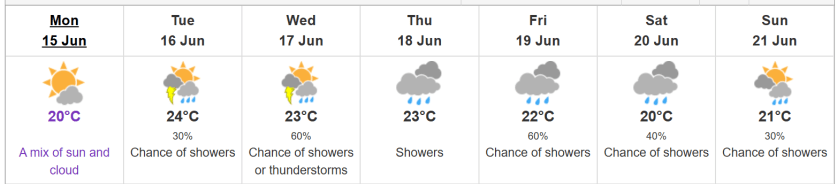
All week I’ve been dodging rain showers to get out and find dragonflies to add to my Odolympics species total. It figures the sunniest day of the week was Tuesday, when I had to work downtown. Almost every other day was overcast, and it rained heavily on Thursday and most of Friday. Limited to checking only areas close by, my dreams of tallying a large number of species completely fizzled out in the sub-optimal weather.
The forecast for today called for rain, and it rained hard on and off all day, with zero odes seen (I didn’t even try to leave the house). This leaves only one more weekend and whenever I can get out at lunch or after work on my work-from-home days to find some new species for the Odolympics. The forecast does not look promising.
When I got up this morning it was the type of day I’d been dreaming about all spring – already warm at 8:00, with dazzling sunshine, a clear blue sky, and lush green vegetation so vivid it finally burned the visions of the bare, brown woods and dull grey skies of early spring out of my memory. I’d been planning this excursion all week – I was heading to points west, starting at Sheila McKee Memorial Park, then onto the Bill Mason Center with maybe one final stop if I had time – I would be performing in a choir concert that night, and didn’t want to wear myself out or get home too late to get ready! I didn’t realize until later in the day that it was June 13th – the first day of the Odolympics, but even if I had it wouldn’t have changed my plans that much.
Terry Carisse may not have the highest diversity of odonate species, but it is worth visiting for the ones that inhabit this small park, namely Orange and Rainbow Bluets, Skimming Bluets, Stream Bluets, Elegant Spreadwings, and Fragile Forktails. Various skimmers show up along the edge of the water fairly frequently, particularly near the boat launch at the north end, but never in large numbers. My best skimmer find to date has been a Slaty Skimmer seen back in 2022 and then never since.
Other dragonfly families are less common. The only darners I’ve identified here are Common Green Darner and Lance-tipped Darner, while the only emeralds I have observed are Prince and Common Baskettails. I have never seen a clubtail, cruiser, or spiketail here, although I suppose there is a faint chance that individuals belonging to the first two families may show up here from suitable habitat nearby. The list as of this morning stood at 25 species, and I have never given much thought to what might show up next. Perhaps not all the darners cruising over the lawn in the late summer are Lance-tipped Darners, and there might be a Canada Darner among them. Perhaps a Wandering Glider would join them. Perhaps another type of spreadwing – such as Spotted or Northern – would show up at the water’s edge.
We are now about four weeks into dragonfly season here in Ottawa and my dragonfly woes continue. There just don’t seem to be the number of individuals present as there should be. On June 3rd I visited Andrew Haydon Park to see if there were more odes flying there. While there were plenty of teneral damselflies in the vegetation – too fresh and colourless to properly identify – I only saw three dragonflies. Not three species – three individuals. One was a Common Whitetail that escaped my camera. The other two were Common Green Darners laying eggs in the pond that didn’t. I walked around the two ponds and checked the eastern creek and the small beach at the mouth of Graham Creek (which was almost non-existent due to high water levels) but did not find nearly the number of dragonflies that I was expecting.
Monday was finally warm and sunny, reaching 20°C, with only a hint of a breeze. I hope it’s not going to be one of those years where the weekdays are sunny and beautiful while the weekends are rainy and cold! I headed over to Terry Carisse Park on the Jock River on my lunch break to test my theory that rivers and streams would have more odes than marshes and ponds badly affected by last year’s drought. This not a great park for dragonflies but an excellent one for damselflies. When I scanned the lawn for baskettails I did not see a single one – I’ve had Common Baskettails here the last two years both flying over the grass and over the water. I checked the river in three different spots and the only dragonfly I saw was a Common Green Darner on patrol. I didn’t even see any damselflies lurking in the vegetation at the canoe launch.
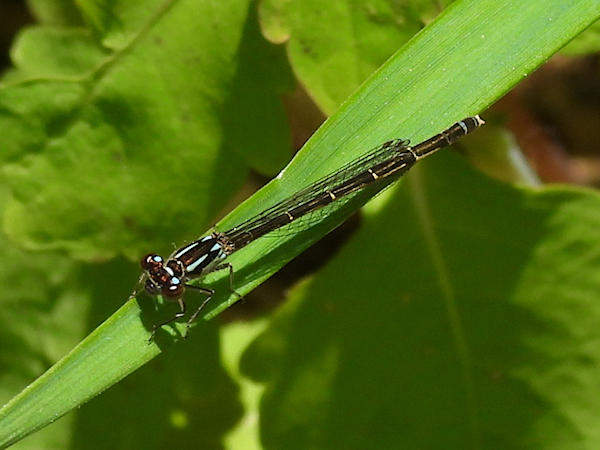
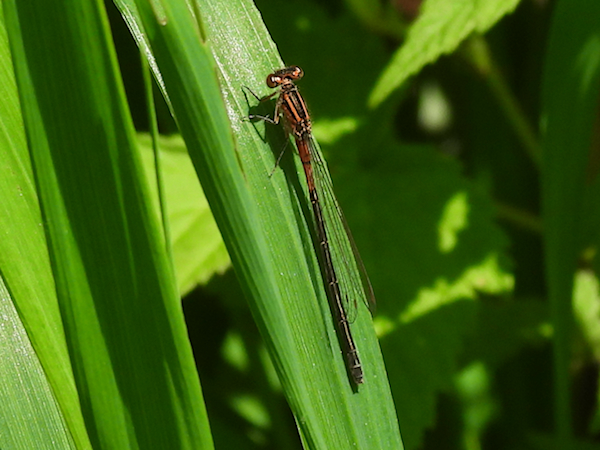
From there I returned to the lawn and began checking the sunlit vegetation on the east side. At last I had some luck, finding both Eastern and Fragile Forktails in relatively small numbers.
Fragile Forktail (Ischnura posita)
Both immature and mature individuals were present – I did not see any mature females. There were perhaps four or five of each.
Eastern Forktail (Ischnura verticalis)
I did not see any other damselflies on my walk – no Skimming Bluets, Stream Bluets or Rainbow Bluets. It’s still early in the season for some of those species, but at least it’s a start!
The dragonfly season for odes that emerge here in Ottawa (as compared to those that migrate from further south) usually begins for me on the May long weekend, if not earlier. Odonate larvae need the waters they inhabit to warm up to a specific temperature in order to begin the transformation process, and this usually requires several days of heat and strong sunshine. Unfortunately this year the temperature was slow to warm up, with many days of cloud and northern winds that made it feel cold even when the sun was shining – I didn’t put my winter coat away until the first day of the long weekend because morning temperatures were still quite cold!
I saw my first dragonfly of 2026 on April 17, 2026 – two days after the date of my first sighting in 2025. These sightings both occurred at the same pond in Stony Swamp along NCC Trail 24, located in the forest east of Bridlewood and west of the large Sarsaparilla Trail pond. I started visiting the trail last spring when I noticed it was a great spot to listen to the early spring frog chorus – Spring Peepers, Boreal Chorus Frogs, and Wood Frogs are all present and calling by mid-April. I am not sure why the pond attracts these early Common Green Darners; perhaps the shallow depth allows the water to warm up quickly, which in turn leads to the hatching of the aquatic insects that the dragonflies (and frogs!) feed on.
I didn’t get a photo of the two males I saw chasing each other over the water on April 17th, but a few days later I spotted at least three or four males patrolling the hydro cut in Monaghan Forest. April 22nd was a warm, sunny day and I had headed there to look for spring ephemerals and early migrants. There was no mistaking the flash of wings of the darners as they zipped through the air. One of them landed, and I got some great photos.
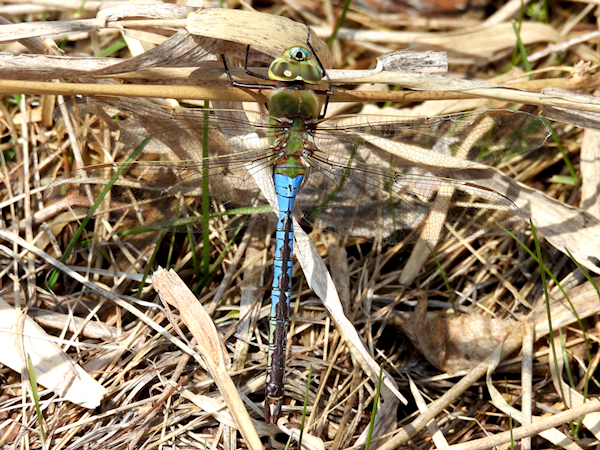
Common Green Darner (Anax junius)
The beginning of dragonfly season is always exciting, even though the first dragonflies that appear are almost always the Common Green Darners that migrate north on the warm winds of April. Other species won’t arrive for several weeks – those are the ones that breed here, and need the ponds and streams to warm up enough to trigger their transformation. If the weather stays warm and sunny for a prolonged period of time they will emerge sooner rather than later – one year I started seeing dragonflies (the early-flying American Emerald and Beaverpond Baskettail) on the 2nd of May! However, if the days remain cold and cloudy, they may not emerge until later in the month. By the Victoria Day long weekend the dragonflies start to emerge in large numbers, with a large number of species taking wing. In another month ode season should start really heating up! Until then, look for the newly-arrived Common Green Darners mating and ovipositing over the water of local ponds, or hunting for insects in sunny meadows and open areas close to water.
The end of the 2025 dragonfly season came to an abrupt end for me. In 2023 and 2024 the warmth extended well into October, which extended the flight season of many species. That was not the case this year. While daytime highs were still quite warm, staying in double-digits until October 24th, nights got cold fairly quickly. A cold spell right in the middle of the month saw two nights fall just below zero; daytime highs were only about 13°C. After October 23 nights were all below 3°C, with five nights just below zero. As a result, I did not see as many dragonfly species this month as I had in previous years.
It was just a quick trip to Cambridge, Ontario, but the weather was so gorgeous I couldn’t resist dragging my dad out for a few nature walks. Although in his mid-70s now, he is still mobile enough to get out, and while I’m looking up for birds and dragonflies, he is usually looking down for snakes and turtles or turning over logs for salamanders.
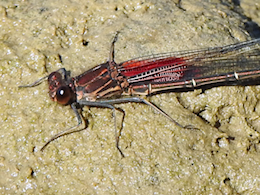
Because it was late in the season I had checked iNaturalist ahead of time to see what odes had been recorded at the beginning of October. I was blown away when I realized that American Rubyspots were still flying, and that they lived along the Grand River! Their range does not extend to eastern Ontario – they are a southern Ontario bug, though funnily enough there is a population in Montreal.