The 2025 Odolympics

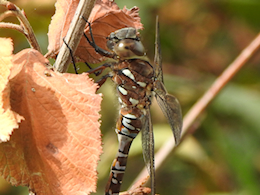
Variable Darner

I was quite happy when I learned that this year’s North American Odolympics were to take place in mid-August this year. This would be my third year participating; the 2023 Odolympics ran from August 19-27 while the 2024 Odolympics ran from September 7-15, so I was worried that this year’s bioblitz would be held in October! However, with a start date of August 16th (and running till August 24th) it would be my earliest bioblitz yet!

Unfortunately there was one problem with that date: I would be driving to Nova Scotia with my partner and three cats during the entire first weekend! Then came the second blow: while I was excited to participate in my first Nova Scotia Odolympics, a forest fire was burning out of control in Annapolis County (not too far from where our trailer is located); the fire risk was extremely high all throughout the province due to the prolonged drought conditions; and the government had closed the woods to recreational activities, including trails in provincial and national parks. The reason for the closure was to prevent additional human-caused forest fires, which meant hiking, camping, fishing, and driving recreational vehicles on both Crown and private property were all prohibited. This decision was based on the amount of dry, flammable material present which could easily start a fire, and the fine for violating the ban was $25,000. Immediately my dreams of looking for odes along forest creeks – which were already terribly low from a lack of summer rainfall – were dashed, and even places like Miner’s Marsh were out of the question as the marsh had entirely dried up, leaving the dry, cracked muddy bottom completely exposed.

Continue reading “The 2025 Odolympics”

The 2024 Summer Odolympics

Autumn Meadowhawk (Sympetrum vicinum)

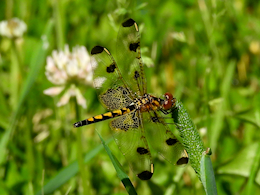
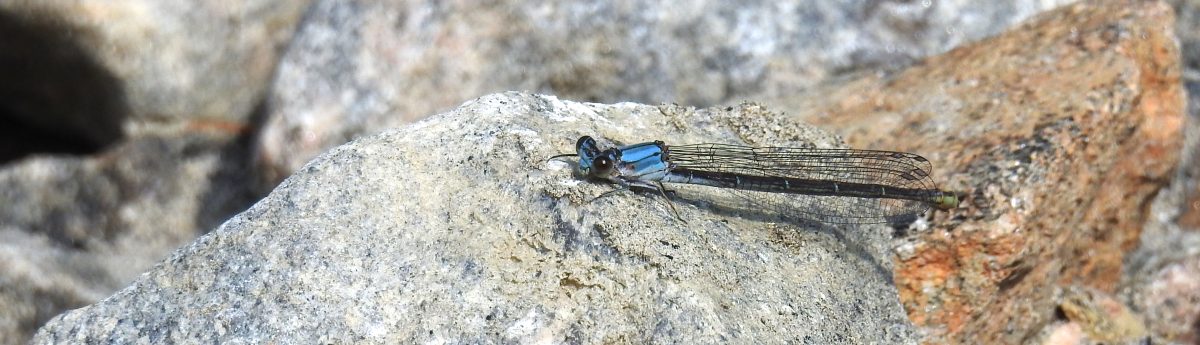
The 2024 North American edition of the Summer Odolympics were held between September 7-15, giving ode enthusiasts two weekends and as much time as a regular working week would allow to collect observations. I had hoped to find 19 or 20 species based on the same period spent collecting observations last year, but as most species are on the decline by this time, I knew I needed both good weather and good luck to come up with a respectful number. Unfortunately, neither luck nor weather were in my favour that first crucial weekend when I hoped to find a few species whose season ended around the beginning of September; it rained most of Saturday, and the temperature never rose above 15°C. Although it didn’t rain nearly as much on Sunday, the weather was worse: it was cloudy, windy, and the temperature never rose above 14°C. In fact, it was the coldest September 8th in more than 70 years (since 1949) and the windiest since records began in 1953 with a mean wind of 21 km/h. With a 1:00am windchill of 1.6 it was almost (within 0.1) the lowest windchill ever recorded on September 7th. Cold, wet, windy nights are even more of an obstacle, as many late-lingering species may not survive the low temperatures. When the sun began peeking out from the thick, fast-moving clouds around 4:30 I headed out despite the wind as to have zero species recorded on the first weekend was unthinkable. I didn’t expect much, and found only two species at the Eagleson ponds: an Eastern Forktail and a Slender Spreadwing.

Continue reading “The 2024 Summer Odolympics”

Preparing for the 2024 Odolympics

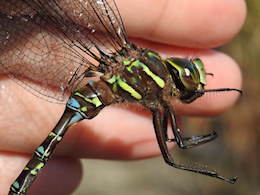
Shadow Darner

Last year I participated in my first Odolympics and had so much fun that I planned to do it again this year. The Odolympics is a special bioblitz hosted by the Dragonfly Society of the AmericasOdonata Central, and Sociedad de Odonatología Latinoamericana in order to record as many odonata species from as many places in the Western Hemisphere as possible. This specialized bioblitz is only three years old, and there are usually two Odolympics each year: one falling during the North American summer, and one falling during the South American summer in order generate a snapshot of odonate distribution throughout both hemispheres. The 2023 Summer Odolympics ran from August 19-27, giving observers two weekends to collect observations. Although late August is well past the peak of dragonfly diversity, I ended up counting 27 species, and photographed all but three. Even with the less-than perfect weather last year, I thought that 27 species for the end of August is pretty good, providing a much better snapshot of the odes on wing in Ottawa than I had anticipated. 

Continue reading “Preparing for the 2024 Odolympics”

The 2023 Summer Odolympics

Dragonhunter
Dragonhunter

When I first heard about the Odolympics – a special bioblitz hosted by the Dragonfly Society of the Americas, Sociedad de Odonatología Latinoamericana, and Odonata Central in order to record as many odonata species from as many places in the Western Hemisphere as possible – I knew I had to participate. This specialized bioblitz is only two years old, and there are usually two Odolympics each year: one falling during the North American summer, and one falling during the South American summer in order generate a snapshot of odonate distribution throughout both hemispheres.

Dragonflies and damselflies, collectively known as odonates, are valuable indicators of a wetland’s environmental health and biodiversity. Simply put, the more odonates that use a wetland for breeding and feeding purposes, the healthier the ecosystem. Naturalists were encouraged to submit their observations during the bioblitz via one of two platforms: iNaturalist, or Odonata Central. While I love iNaturalist and have been using it for a few years now to record my non-avian observations, I began submitting my observations to Odonata Central last year when it developed a checklist-based phone app similar to eBird. iNaturalist also has a phone-based app for submitting observations, but it is intended to be used in conjunction with the phone’s camera which I only use as a backup camera when my Nikon Coolpix’s battery decides to take a nap. Although I love the ease of searching for data in iNaturalist’s projects, I chose to record my Odolympic observations in Odonata Central as it allowed me to include observations of species for which I am usually unable to get a photo (yes, I’m looking at you, Prince Baskettail and Wandering Glider!)

Continue reading “The 2023 Summer Odolympics”