I was quite happy when I learned that this year’s North American Odolympics were to take place in mid-August this year. This would be my third year participating; the 2023 Odolympics ran from August 19-27 while the 2024 Odolympics ran from September 7-15, so I was worried that this year’s bioblitz would be held in October! However, with a start date of August 16th (and running till August 24th) it would be my earliest bioblitz yet!
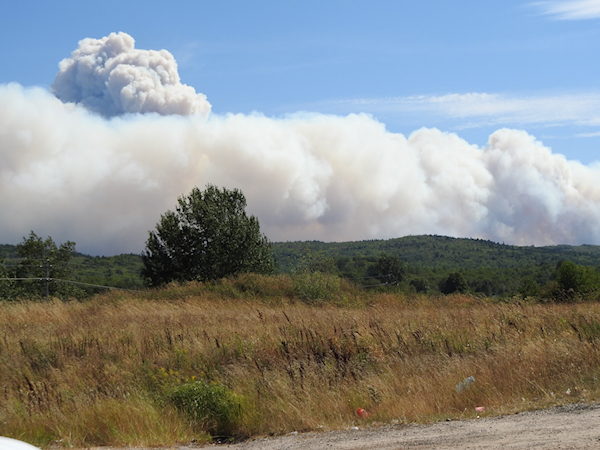
Unfortunately there was one problem with that date: I would be driving to Nova Scotia with my partner and three cats during the entire first weekend! Then came the second blow: while I was excited to participate in my first Nova Scotia Odolympics, a forest fire was burning out of control in Annapolis County (not too far from where our trailer is located); the fire risk was extremely high all throughout the province due to the prolonged drought conditions; and the government had closed the woods to recreational activities, including trails in provincial and national parks. The reason for the closure was to prevent additional human-caused forest fires, which meant hiking, camping, fishing, and driving recreational vehicles on both Crown and private property were all prohibited. This decision was based on the amount of dry, flammable material present which could easily start a fire, and the fine for violating the ban was $25,000. Immediately my dreams of looking for odes along forest creeks – which were already terribly low from a lack of summer rainfall – were dashed, and even places like Miner’s Marsh were out of the question as the marsh had entirely dried up, leaving the dry, cracked muddy bottom completely exposed.
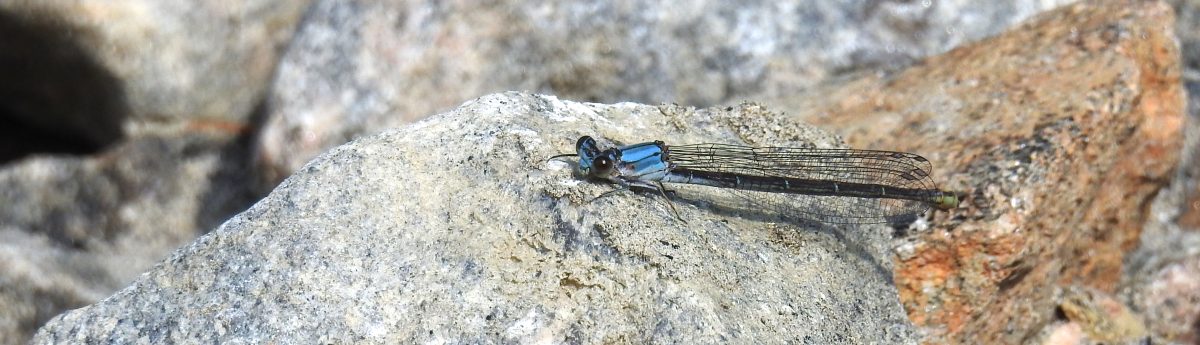
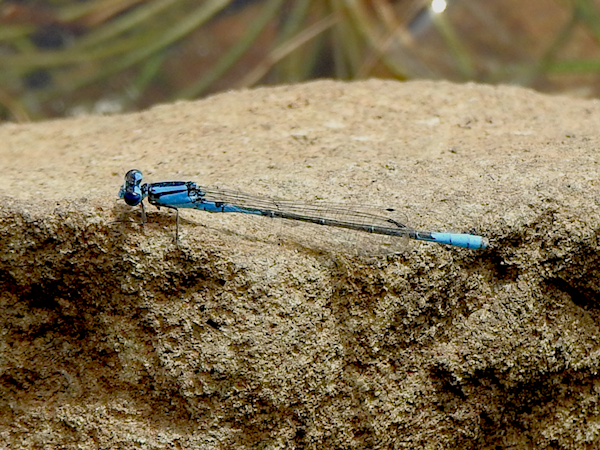
There is no water within walking distance of our trailer except for one small roadside creek which was barely a trickle, so participating in the Odolympics took some strategy. I was limited to ponds and lakes along roadsides, lakes with public access, non-wooded parks that were still open to the public, and streams and rivers accessible from the road. On my first real day of dragon-hunting I drove up to Lily Lake Road where the edge of the lake is easily viewed from the road. However, the water was low this year, and the shore extended much further than I remembered from my previous visit. I saw a few spreadwings perching on emergent vegetation too far out to identify as well as a few Azure Bluets. I couldn’t see any dragonflies – the Twelve-spotted Skimmers, Slaty Skimmers and Calico Pennants I remembered from my previous visits were already gone.
From there I drove the length of Lily Lake Road, hoping to see some patrolling darners, gliders or emeralds – this was where I’d had the swarm of Somatochlora emeralds and gliders back in 2023. I got lucky and found a darner patrolling the road near the same intersection. Fortunately I managed to catch it and pulled a Variable Darner out of my net! This was a terrific find for the Odolympics.
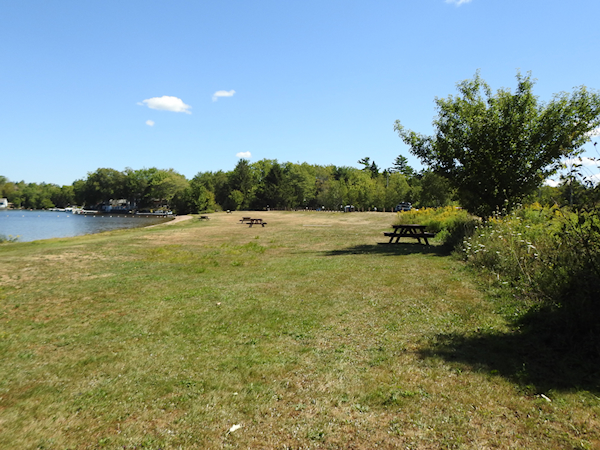
The next day I visited a couple of lakes with public access. I headed east into Kings County, stopping first at Lake George Provincial Park. This is the only public access to Lake George, and the park features a sandy beach, a small lawn with a couple of picnic tables, and change houses for those who wished to go swimming. I was hoping the edges of the beach would have emergent vegetation for damselflies, but they did not.
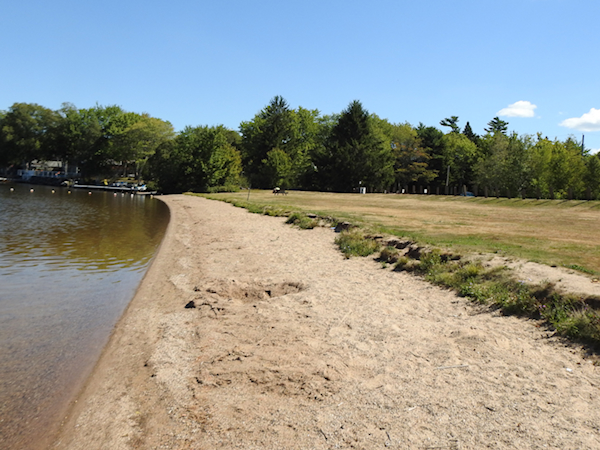
The park itself was not very wide…just a few metres of lawn between the road and the water.
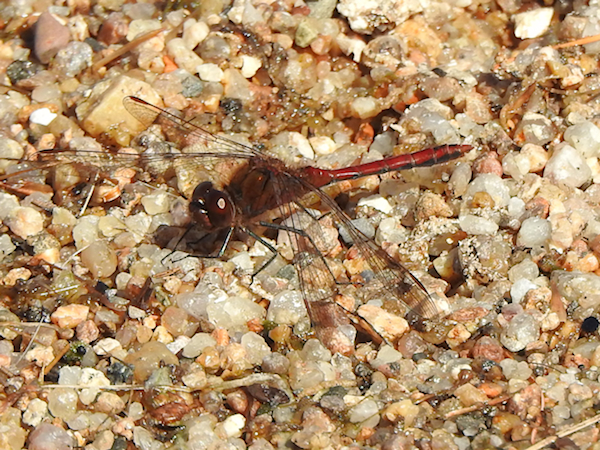
I saw a bluet or two flying out over the water, but the only odes I identified were a few Saffron-winged Meadowhawks perching on the sand and in the grassy areas.
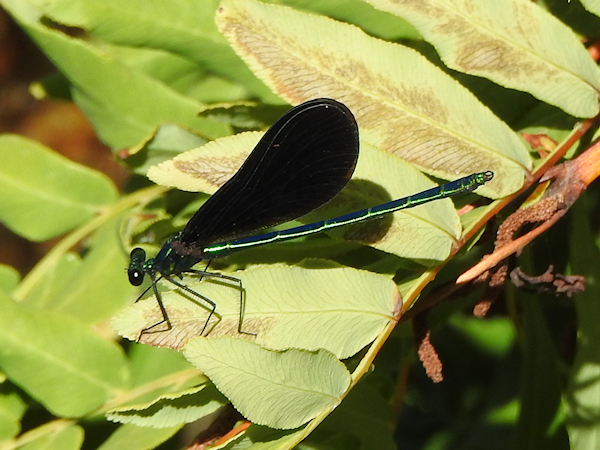
Google maps had showed a stream nearby, so I walked along the road into the cottage area until I found the bridge. Half of the stream was in shade, but on the lake side sunlight shone down on the bubbling brook and the shrubs that lined it. There I found about two dozen Band-winged Meadowhawks and three Ebony Jewelwings. This was a nice surprise!
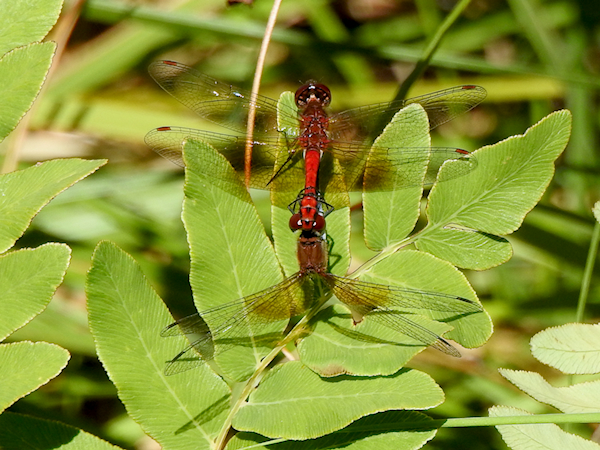
Some of the Band-winged Meadowhawks were mating, while others were just perching on the ground.
My next stop was just down the road at Aylesford Lake Beach. This was spot was much more popular with beach-goers and boaters and quite crowded. I did not spend much time along the water as there were too many people frolicking. Instead I checked a few small openings on the water, the boat launch, and the long dirt road beyond the entrance where I hoped to catch some of the darners I’d seen floating by on my drive down. I identified only a couple of Autumn and Band-winged Meadowhawks; the few darners I saw eluded my net, as did a single glider flying in circles above the parking lot – I didn’t want to get too close to the cars with my net and had to let that one go.
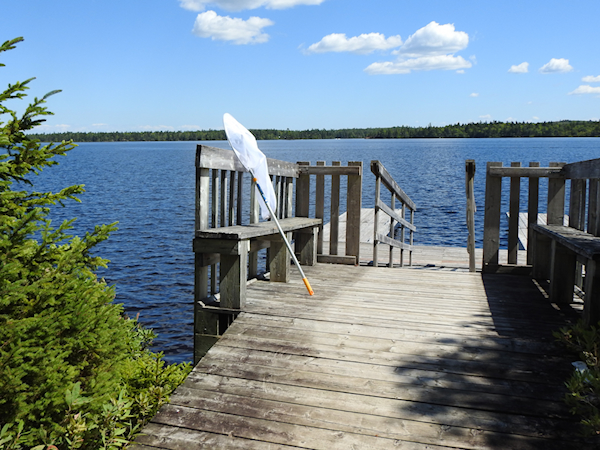
My last stop that day was at the Factorydale Pond on Harmony Road; we’d driven by this dam a number of times over the years, and it had always intrigued me. The high dam – which bears an ancient sign warning people to enter at their own risk – blocks the view of the pond from the road, but you can see the water pouring over the dam and into the stream that runs beneath the road. At least, there is usually a decent-sized waterfall here in normal years; because of the drought, the water running over the dam was just a trickle.
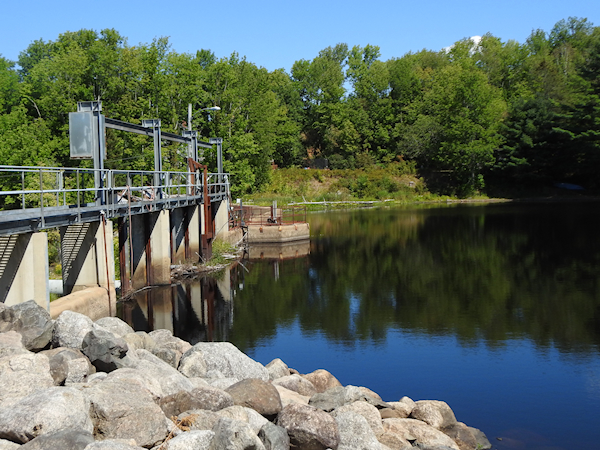
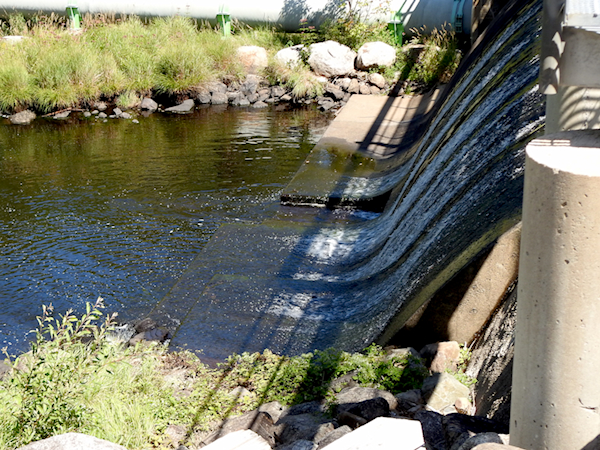
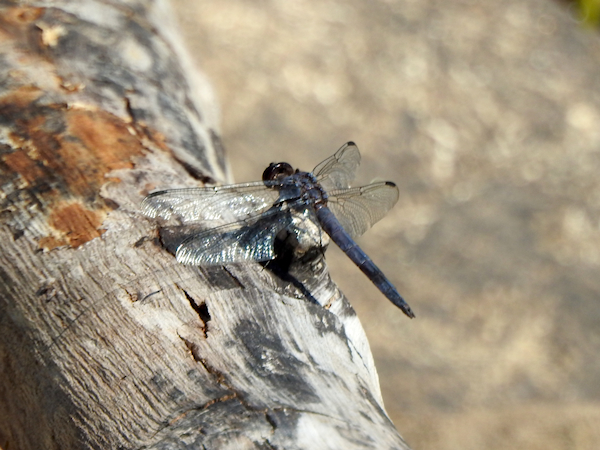
I first made my way to the stream to look for stream-loving dragonflies. I was hoping for a few rock-loving clubtails and swift-flying spotted darners in the stream, but saw nothing. After that I crossed the bridge and climbed up the rocks to look out over the pond. A Slaty Skimmer buzzed by my head and landed on a stick close to the water; much further out I saw Twelve-spotted Skimmer on some vegetation next to the water.
The best dragonfly was one I was not able to capture on camera; a Dragonhunter flew right by me, carrying a skimmer. I had initially thought it was a Widow Skimmer, but as they are apparently not found in Nova Scotia I was probably mistaken – I had once seen a Dragonhunter eating a Widow Skimmer at Mud Lake in Ottawa, which may have triggered an association with the black-and-white-winged skimmer being carried by the Dragonhunter at Factorydale Pond. Then again, maybe it was a Widow Skimmer – who knows? The Dragonhunter flew into the leaves of a tree growing along the edge of the stream, where it disappeared from sight with its prey.
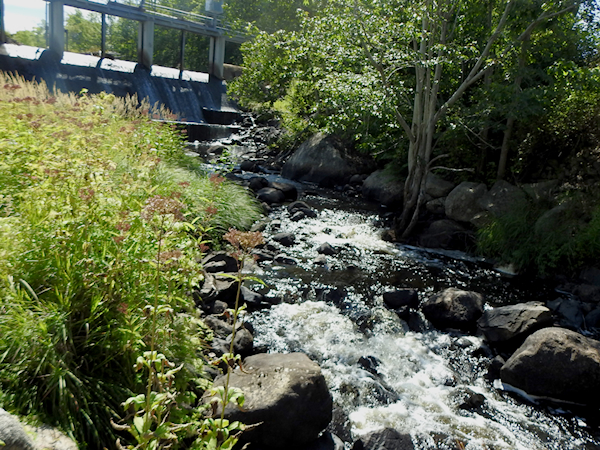
The only other species I found here was another Band-winged Meadowhawk.
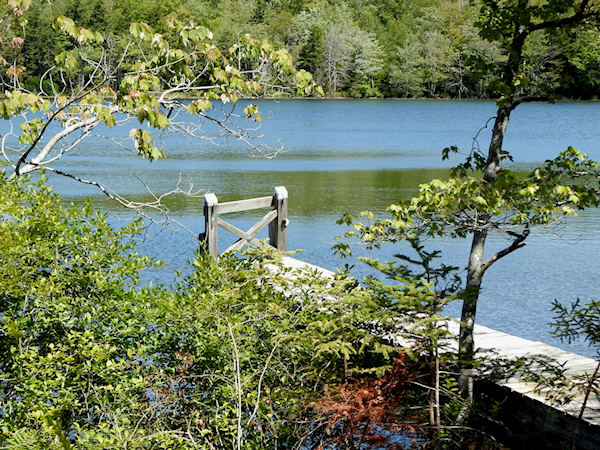
On the last day of the Odolympics my partner and I received an invitation from one of his friends to spend the afternoon at their cottage. I didn’t hesitate to accept the invitation, and our afternoon there turned out to my best dragon-hunting adventure of the trip. When we arrived I immediately headed down to the dock with my net. The water was low, revealing a muddy shoreline that led to an area with plenty of emergent vegetation! Even better, there were plenty of darners flying around! I watched them patrol the shoreline, flying both over and under the dock.
It took some time, but when I caught one of the darners flying over the dock I was surprised to see a Lake Darner in my hand!
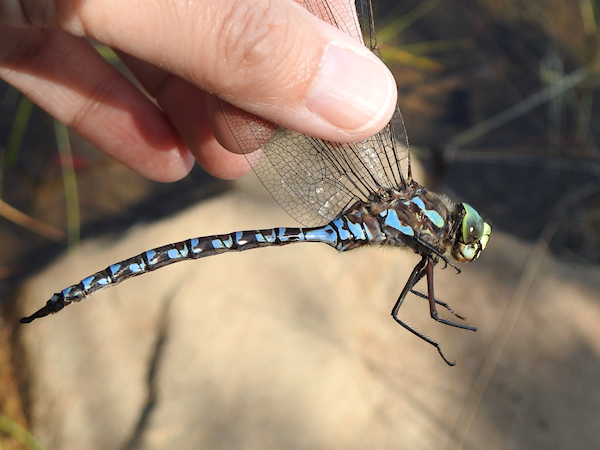
I spent some time wading in the vegetation with my boots and ended up catching another, as well as three different Canada Darners which were noticeably smaller in flight.
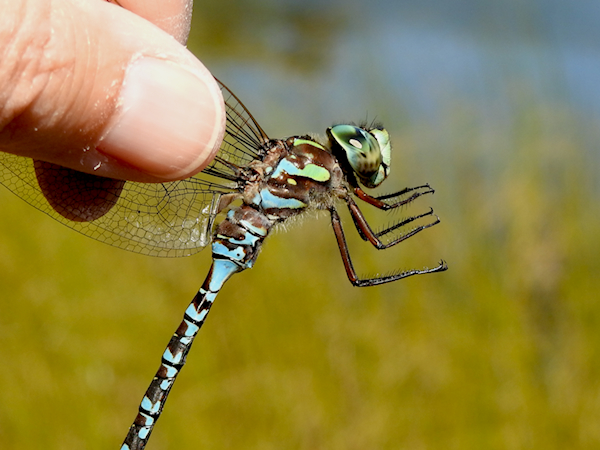
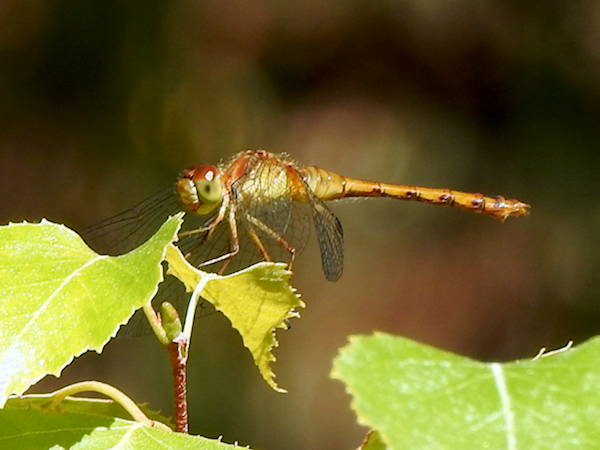
While waiting on the dock for the darners to come within net-swinging distance I noticed a few other odes out over the water: first a Calico Pennant that perched briefly on a plant stem before disappearing, then a male Azure Bluet that landed on a plant right next to the dock, and finally some meadowhawks which kept landing on the dock, then flying away before I could get close enough to photograph one. Finally I caught one with my net and identified it as a Saffron-winged Meadowhawk – it’s amazing how often I found this species in Nova Scotia when it’s so difficult to find back in Ottawa!
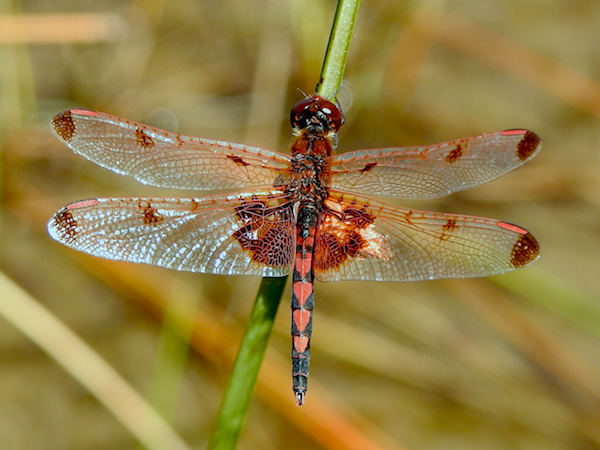
Doran and his friend Doug came out of the cottage to check on me, and then Doug asked if I had walked down the shoreline. When I said no, he led us along the shore to a sandy area where I found some more odonates. I was happy to find a Familiar Bluet (which I caught), an Eastern Forktail and a Calico Pennant that landed almost in front of me!
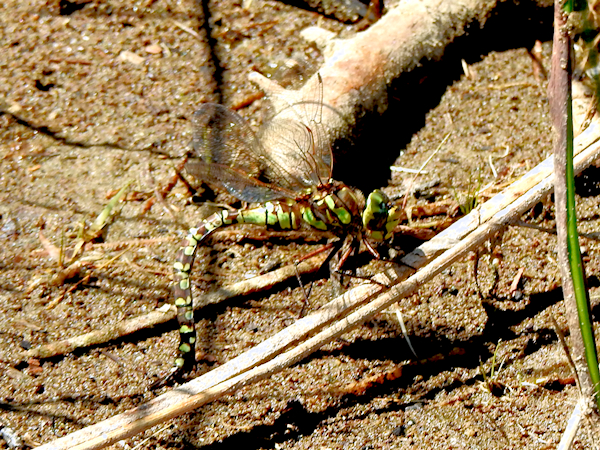
I was also thrilled to see a female Lake Darner ovipositing on a dried stem of some sort on the damp sand.
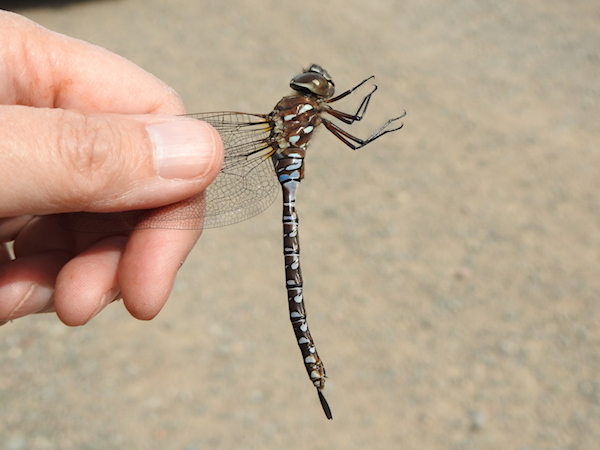
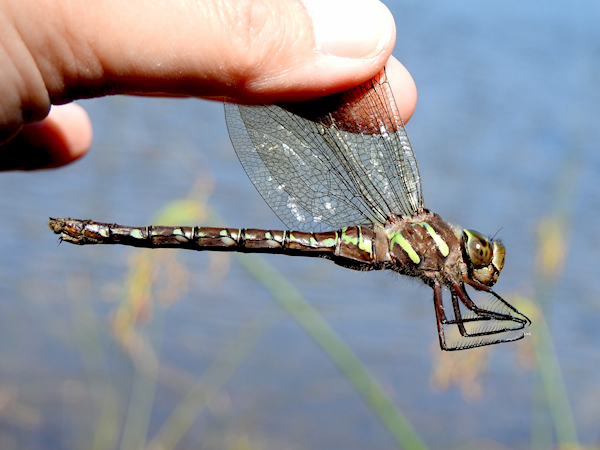
On our way back to the cottage I noticed a darner patrolling a shady clearing just inside the woods. When I caught it I wasn’t surprised to identify it as a Shadow Darner; Doug was thrilled when I gave it to him to hold.
The last dragonfly I saw at Doug’s cottage was an Autumn Meadowhawk, and this marked the end of the Odolympics. Despite the drought and the woods I ended up with 15 species:
- Ebony Jewelwing
- Familiar Bluet
- Azure Bluet
- Eastern Forktail
- Lake Darner
- Canada Darner
- Variable Darner
- Shadow Darner
- Dragonhunter
- Calico Pennant
- Slaty Skimmer
- Twelve-spotted Skimmer
- Band-winged Meadowhawk
- Saffron-winged Meadowhawk
- Autumn Meadowhawk
The best part of the Odolympics was that I ended up with two new species for my Nova Scotia list: Lake and Shadow Darners!