
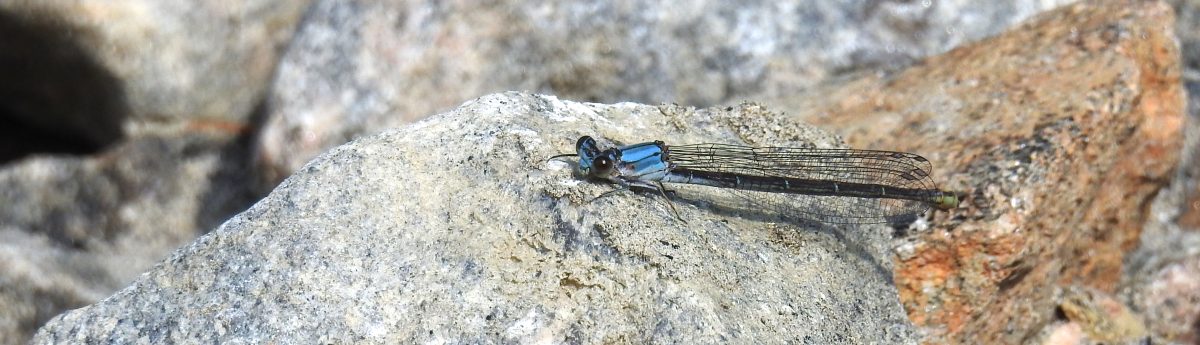
I saw my first dragonfly of 2026 on April 17, 2026 – two days after the date of my first sighting in 2025. These sightings both occurred at the same pond in Stony Swamp along NCC Trail 24, located in the forest east of Bridlewood and west of the large Sarsaparilla Trail pond. I started visiting the trail last spring when I noticed it was a great spot to listen to the early spring frog chorus – Spring Peepers, Boreal Chorus Frogs, and Wood Frogs are all present and calling by mid-April. I am not sure why the pond attracts these early Common Green Darners; perhaps the shallow depth allows the water to warm up quickly, which in turn leads to the hatching of the aquatic insects that the dragonflies (and frogs!) feed on.
I didn’t get a photo of the two males I saw chasing each other over the water on April 17th, but a few days later I spotted at least three or four males patrolling the hydro cut in Monaghan Forest. April 22nd was a warm, sunny day and I had headed there to look for spring ephemerals and early migrants. There was no mistaking the flash of wings of the darners as they zipped through the air. One of them landed, and I got some great photos.
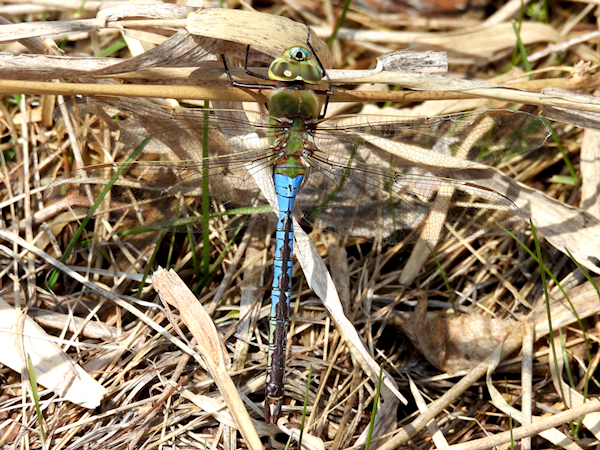
The beginning of dragonfly season is always exciting, even though the first dragonflies that appear are almost always the Common Green Darners that migrate north on the warm winds of April. Other species won’t arrive for several weeks – those are the ones that breed here, and need the ponds and streams to warm up enough to trigger their transformation. If the weather stays warm and sunny for a prolonged period of time they will emerge sooner rather than later – one year I started seeing dragonflies (the early-flying American Emerald and Beaverpond Baskettail) on the 2nd of May! However, if the days remain cold and cloudy, they may not emerge until later in the month. By the Victoria Day long weekend the dragonflies start to emerge in large numbers, with a large number of species taking wing. In another month ode season should start really heating up! Until then, look for the newly-arrived Common Green Darners mating and ovipositing over the water of local ponds, or hunting for insects in sunny meadows and open areas close to water.


