
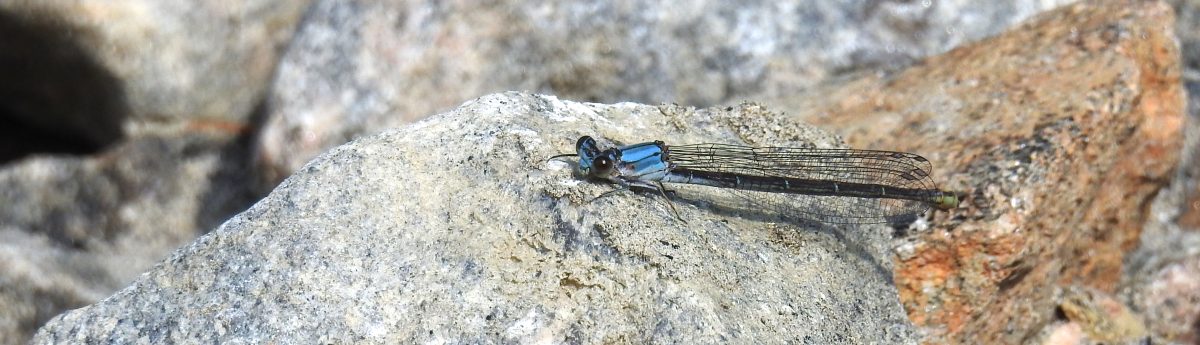
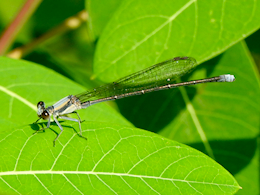
Burritt’s Rapids has been on my radar as a low-priority place to visit for about a year now, and if I hadn’t missed a turn on my way to the southwestern corner of Marlborough Forest I wouldn’t have ended up there on a nice warm day in mid-July. I had been curious about what species I might find at the rapids there, and was hoping to find a few new species to add to iNaturalist as it didn’t have many when I first started thinking about going there. One species I was curious about was Swamp Spreadwing, which had been found a short distance east at Rideau River Provincial Park back in 2022. The only place I’ve seen this species in Ottawa is Petrie Island, and it would be fantastic to find another one closer to home. I was also wondering if the river and rocky rapids might host some of our common clubtails, such as Dragonhunter or Black-shouldered Spinyleg.
On the morning of July 12th I was driving south on Dwyer Hill Road, missed the turn onto Paden Road to get to the parking area for Marlborough Forest, and found myself driving across a bridge onto the island at Burritts Rapids. I was looking for a place to turn around and then thought, why not spend an hour here? I was in no rush, and it was a beautiful day. I crossed the historic swing bridge over the Rideau River and saw a parking area to my left that lead down to the water, so I pulled over and went exploring.
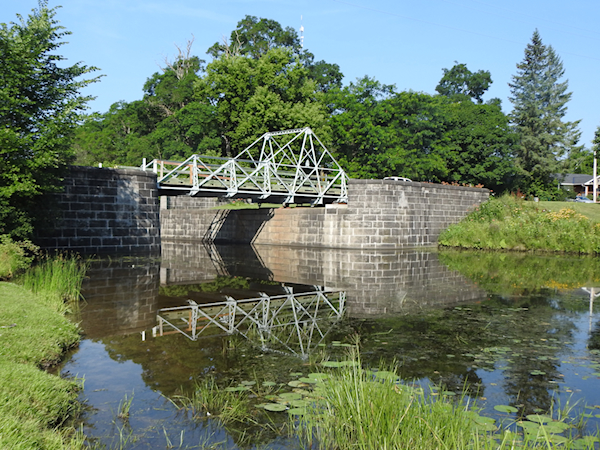
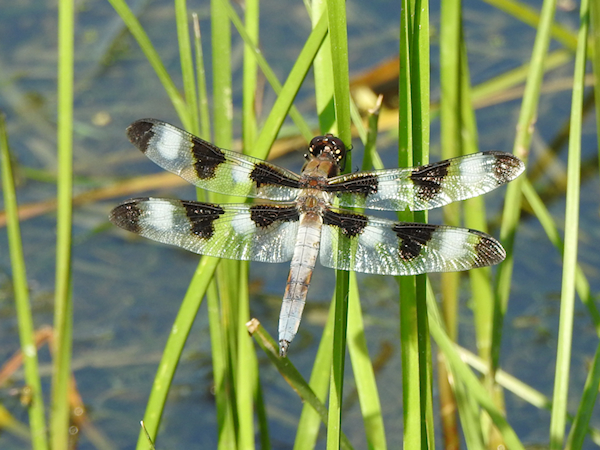
There was some vegetation growing along the shore which made it a great place to look for odes. I saw a Dot-tailed Whiteface and Eastern Pondhawk resting on different lily pads and Twelve-spotted Skimmers and Widow Skimmers hanging onto reeds at the edge of the water.
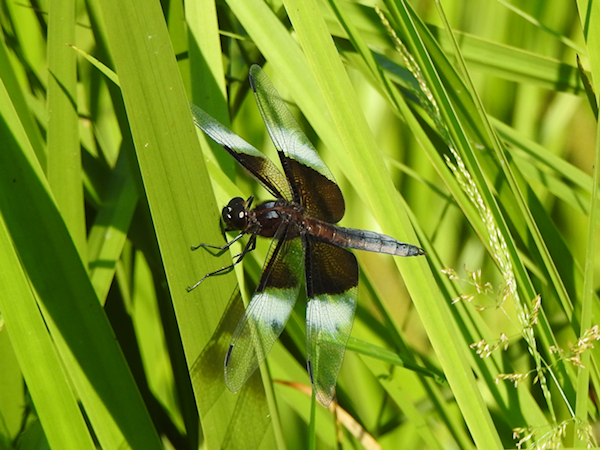
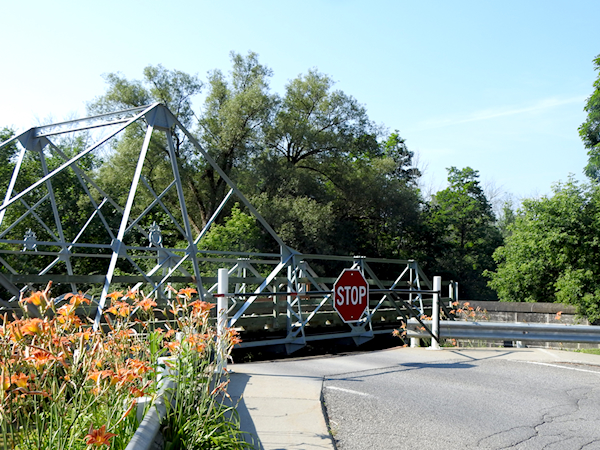
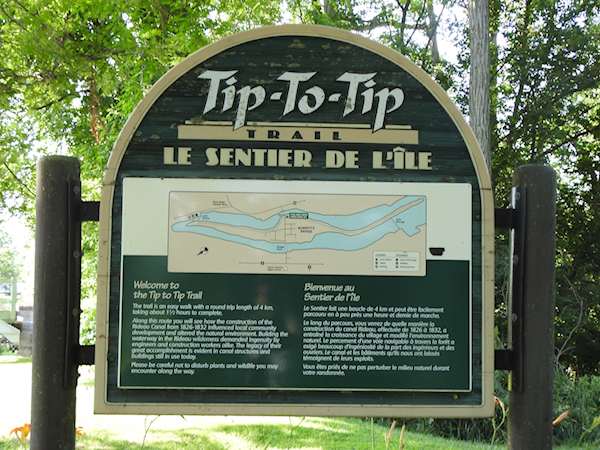
Once I finished surveying the riverbank for odes I went back up to the road and crossed the bridge, looking for the entrance to the Tip-to-Tip Trail that ran along the south shore of the island. I stopped to take a few pictures, and while I was standing there a woman came out of the Parks Canada building and began operating the swing bridge to allow a boat through. By turning a crank with her hand she caused the bridge to rotate 90°, which pulled it out of the way of the boat travelling south toward Kingston. It was a fascinating process, one that has been going on since the bridge was originally built in 1897 and restored in 2018.
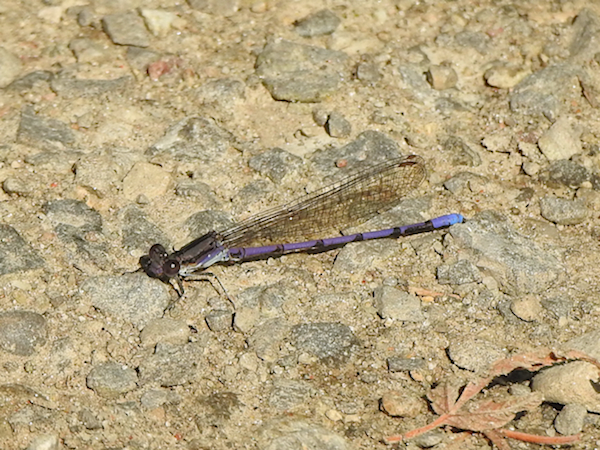
From there I found the entrance to the Tip-to-tip Trail, heading south toward the rapids below the control dam. It was forested on the north side, with the Rideau River visible on the south side. The river was wide and slow-moving, with several marshy bays that reminded me of Petrie Island. I couldn’t see the north side of the Rideau River at all through the screen of trees, though I heard the rushing water somewhere ahead of me. I was happy to find a Violet Dancer resting on the ground before I had gotten too far.
Where there are Violet Dancers there are usually Powdered Dancers; I saw a few on the ground with others perching in the foliage of the leaves along the trail.
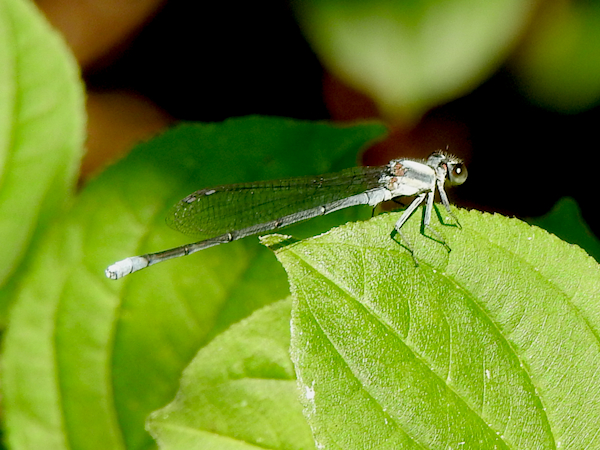
When a few Stream Bluets put in an appearance I wasn’t surprised – the species here were beginning to remind me of the ones along the Jock River instead of Petrie Island.
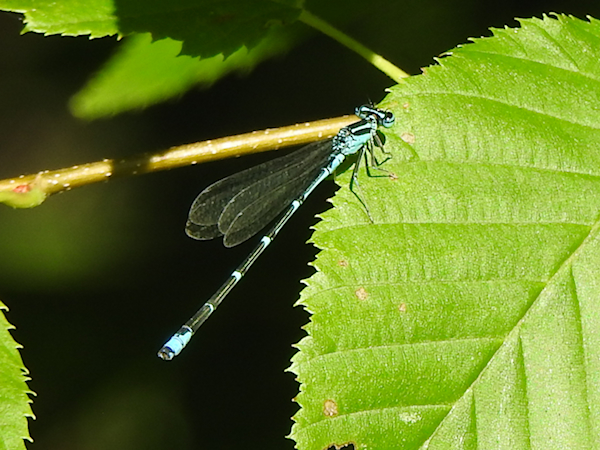
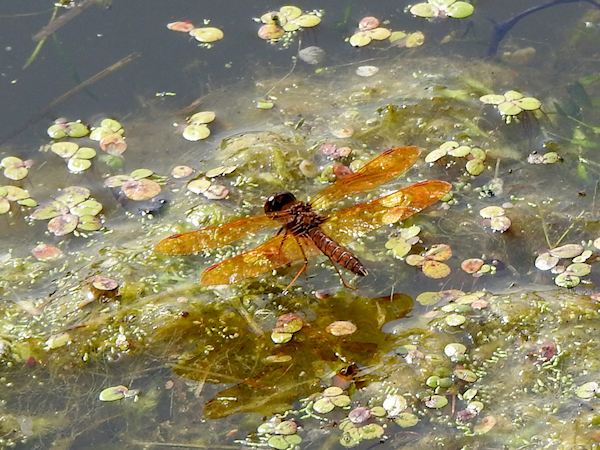
There weren’t too many places where I could get down to the water, but I stopped at each opening to see what was around. A few Halloween Pennants and Eastern Pondhawks were nice to see, and a single male Slaty Skimmer surprised me – I had not expected to find one here even though the habitat looked suitable. I started seeing Eastern Amberwings out on the water: bright orange males perching on the vegetation or skimming over the water. The more I looked, the more amberwings I saw, and I estimated at least thirty along that section of the shore!
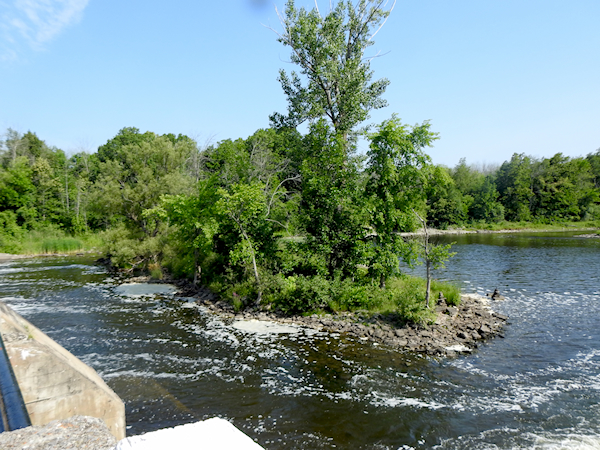
The roar of the water got louder, and the trail started sloping up above the river. I found myself at the dam where the water spilled from a calm, flat area of the river down into a small rocky section. I was disappointed that there was very little shoreline to explore; a few fisherman stood on a narrow bank. Nor was there any way to get to the island below the dam. It looked like a great spot to see a few clubtails, but it was inaccessible without a boat.
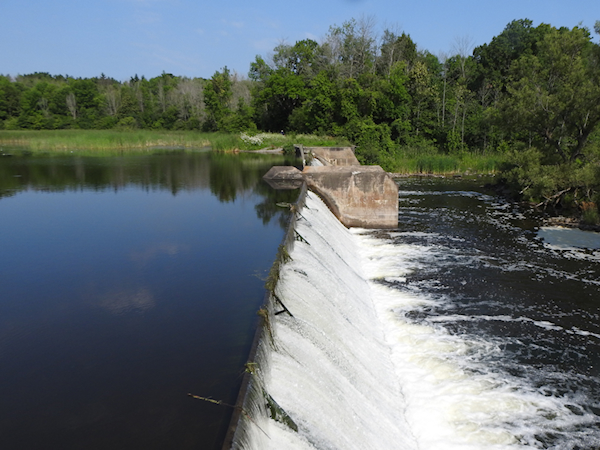
I saw two Prince Baskettails flying above the calm water, and a few bluets perching in the vegetation. One was a Skimming Bluet resting on a small cedar shrub at the water’s edge.
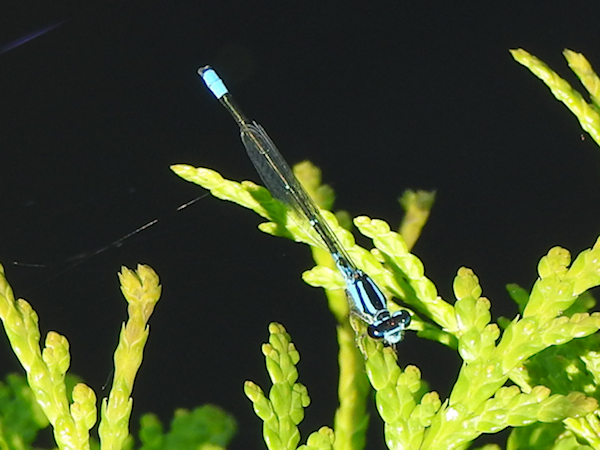
As there was no way to check out the rapids I didn’t stay long. Instead I returned to the marshy area where I had parked to check out the odes below the swing bridge. I had much better luck on my return trip, finding plenty of dragons and damsels to photograph.
This male Eastern Pondhawk was cooperative; the green colour between the wings indicate that he is not quite fully mature and hasn’t been on the wing for very long.
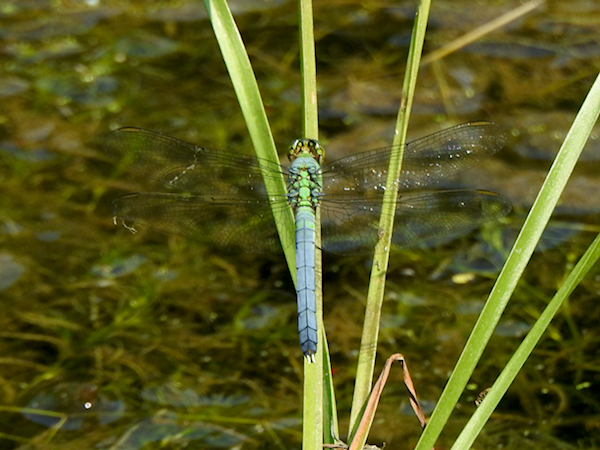
A Blue Dasher nearby showed off a deep blue abdomen similar to the pondhawk’s, but notice the black tip (including the claspers) which differ from the white claspers of the pondhawk. From this angle the yellow and brown stripes on the side of the thorax are visible.
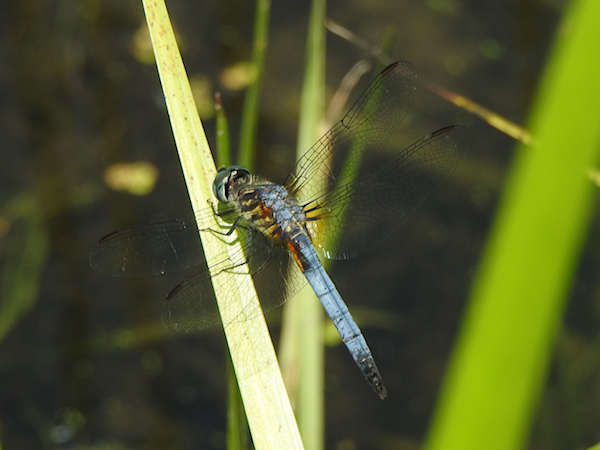
I got a much nicer shot of a male Eastern Amberwing perching close to shore. While they often perch directly on the mat of vegetation on top of the water, some males prefer elevated perches where they can watch for intruders in their domain. I had seen at least 40 individuals on my hike now, making this the absolute best place to see this species – I had never seen so many in one place before!
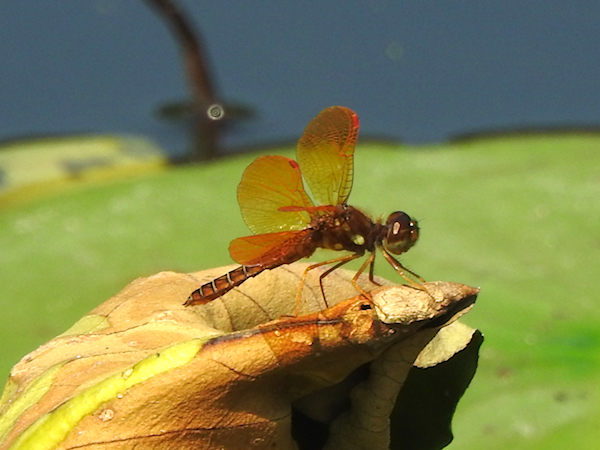
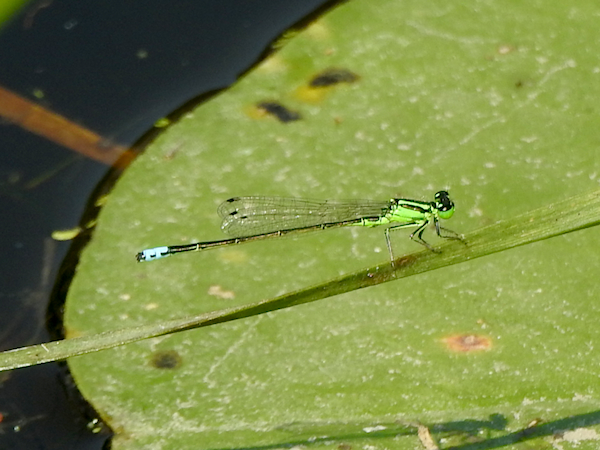
There were a few damselflies gliding low among the reeds, including a Tule Bluet and this Eastern Forktail which landed in front of me.
The Tip-to-Tip Trail was an interesting place to visit, though I was disappointed with the lack of access to the rocky shore along the rapids. The trail continues east on the south shore of the island as well, and while I would have loved to spend more time there, I was eager to get back to Marlborough Forest to look for emeralds and other goodies. It is definitely worth a repeat visit in the future, if only to stop in briefly on my way to the trailhead on Paden Road.

 OdoNotations