
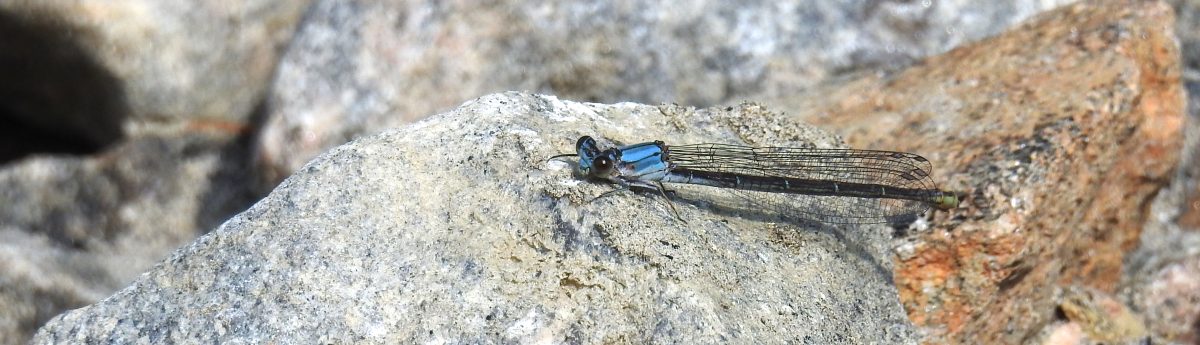
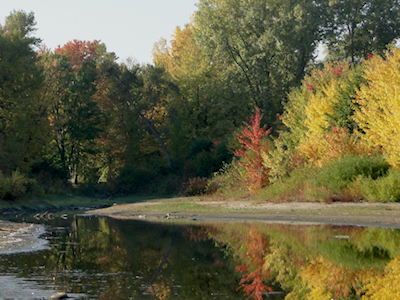
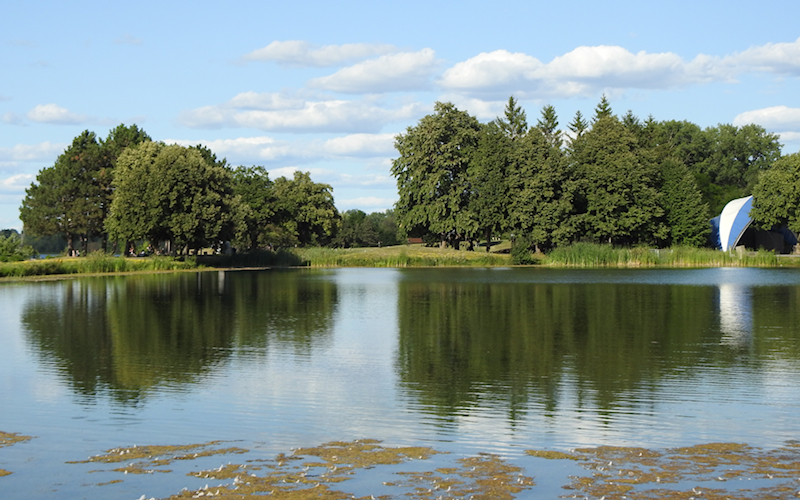
Although this park is a recreation-oriented park rather than a natural wilderness or conservation area, it is surprisingly good for odes. Located in the city’s west end on a wide section of the Ottawa River known as Lac Deschênes, it can be accessed via two entrances on Carling Avenue. The western entrance leads to a heavily-used recreational park dominated by manicured lawns, a bandshell for outdoor concerts, a picnic area, and two artificial ponds. A man-made waterfall adds to its charm, and Stillwater Creek flows into a small marsh at its western boundary. The water in the ponds drains into Graham Creek at the eastern boundary via a natural channel. There are two bridges over the channel – one leading to a small island at the eastern edge of the pond, and another that leads through a wooded grove toward the river.
The eastern entrance leads to a much smaller area which is more heavily treed. While there are some picnic tables and a playground close to the parking area, this half of the park is more secluded, more sheltered, and is much better for migrating songbirds than odonata. An unofficial path leads to the mouth of Graham Creek and the area known to long-time birders as Ottawa Beach. The reason for this name only becomes apparent in mid- to late summer when the water drops and a wide, sandy beach is revealed. If the water is low, there is plenty of vegetation to scan all the way to Britannia Beach for odes. However, in recent years water levels have only dropped briefly in mid-summer before rising again, greatly impacting this site’s potential for both birds and odonata.
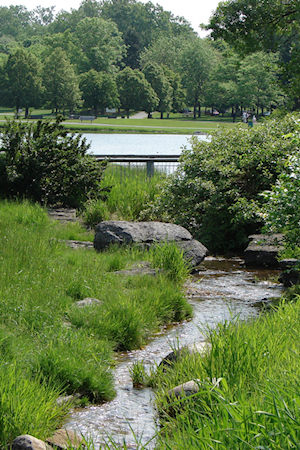
The vegetation that surrounds the ponds in the main park, as well as the mats of algae and emergent plants growing within the ponds themselves, are the best places to search for damselflies, skimmers, patrolling darners and baskettails. Emerging dragonflies can sometimes be found at the water’s edge – the exuviae of numerous Common Green Darners are usually observed attached to cattail stems later in the season.
The rocky shore of the river is a great spot to look for resting clubtails and large river dragonflies flying out over the water. Graham Creek, including the small channel that flows beneath the bridge to connect with the eastern pond, is worth checking for odes that prefer small streams with gently flowing waters and soft bottoms to the rushing, rocky-bottomed Ottawa River. In summers when the river is low extensive mudflats can be accessed from the Ottawa Beach entrance. While historically better for shorebirds than odes, rainpool gliders are sometimes found here.
Specialties
A total of 42 species have been reported from the park environs, including a few difficult-to-find species. The best times to visit are afternoons in July and August, which – unfortunately – corresponds to peak human activity as well. September can be just as productive for as long as the warm weather lasts, which lately has continued into the beginning of October!
Damselflies
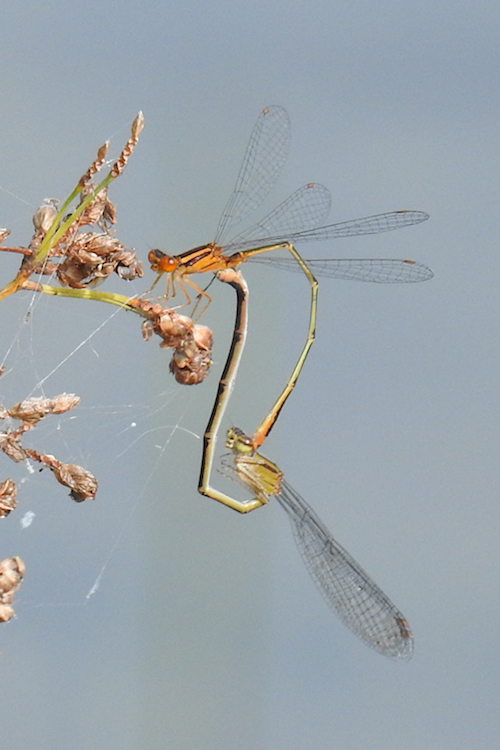
Ebony Jewelwings have become much more common in recent years, particularly near the junction of the Graham Creek and the small stream that empties the eastern pond. Eastern Forktails are abundant here but keep a close eye out for the Fragile Forktails hiding among them. A net and a hand lens are required to distinguish the blue bluets, but binoculars will suffice for the others – 2023 was an exciting year when we found both Vesper and Orange Bluets perching on the vegetation in both ponds throughout late July and August. The adults come to the water later in the day – I have seen immatures in the vegetation lining Graham Creek where it follows the edge of the lawn, including a blue male Orange Bluet that was identified by his claspers! This was also the first year a Skimming Bluet was photographed on a lily pad behind the bandshell, a species not often seen in the AHP/Mud Lake area.
Dragonflies
Common Green Darners and Shadow Darners are very common, but you may get lucky and find a rare Lake Darner.
Cobra Clubtails have been photographed on more than one occasion, and Elusive Clubtails have been found along Graham Creek. Although Midland Clubtail and Black-shouldered Spinyleg have not yet been recorded here, I would expect them to show up here as they have been seen nearby. Scanning the river for large dragonflies out over the water or resting on the rocks facing the Ottawa River may prove fruitful.
Prince Baskettails are often seen patrolling low over the ponds – particularly the eastern pond – as well as the top of the hill between the ponds and Graham Creek. The only other emerald reported here is Common Baskettail, though that may be because few people are looking for odes here early in the season when other species may be flying.
Although I have never seen Stream Cruiser here, a few have been recorded on iNaturalist. If you are birding the riparian area along Graham Creek in May, keep an eye out for large brown dragonflies patrolling the area as well!
Halloween Pennants are the big draw for me each summer. This is the closest place to me where I can reliably find them. Blue Dashers have also become common here, and in 2024 I saw an Eastern Amberwing. Recently, Band-winged Meadowhawks have been found in the vegetation along the stream between Graham Creek and the eastern pond.
 OdoNotations