
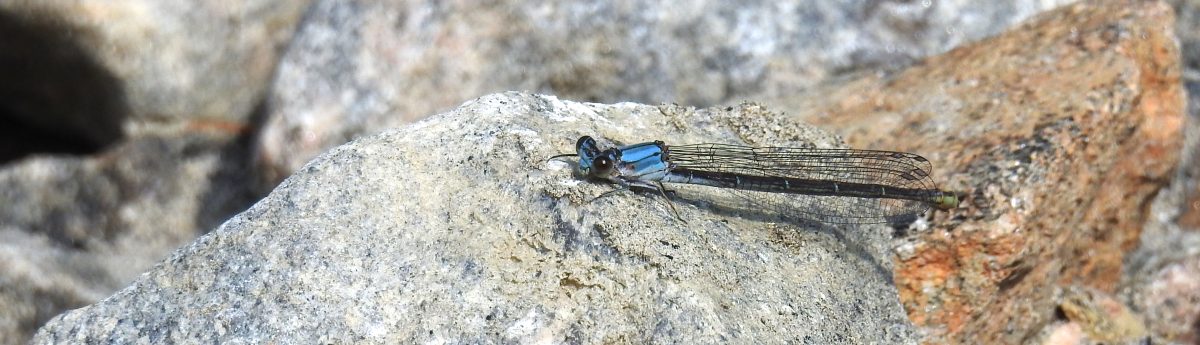
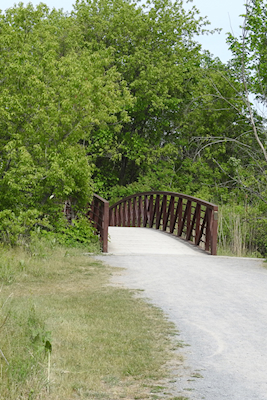
Bruce Pit, chiefly popular as an off-leash dog park and birding spot, is also well-known among dragon-hunters as one of the best spots to find odonates in the west end. When I started going there with my mentors Chris Lewis and Bob Bracken in 2009 they had an impressive list of 45 species, including many uncommon species, and added a 46th (Ebony Jewelwing) on my first visit with them. According to my calculations, as of the summer of 2025 a total of 61 species have been recorded at the Brue Pit pond and environs! Considered part of Stony Swamp, the parking lot for this huge NCC trail system is located at 175 Cedarview Road between West Hunt Club and Baseline Roads. There is ample room for more than 100 cars even on the busiest summer weekend. The fully fenced-in dog park takes up most of the south part of the park; the north part, and the only spot I go looking for odes, is usually much quieter, though it can get busy with cyclists, nature lovers, joggers, and dog walkers (though the dogs have to be on a leash in this part of the park).
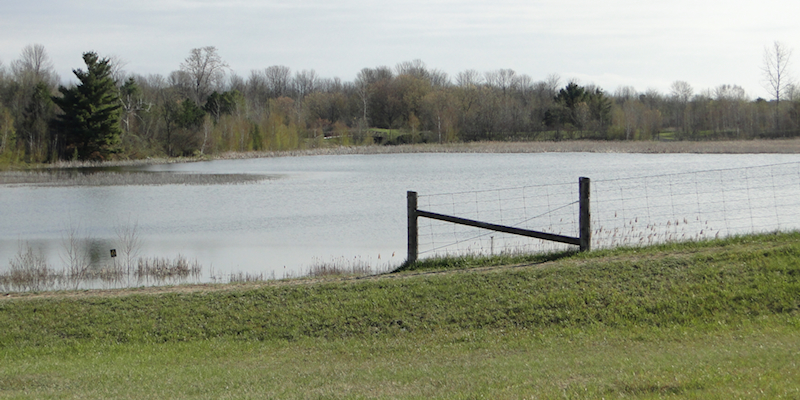
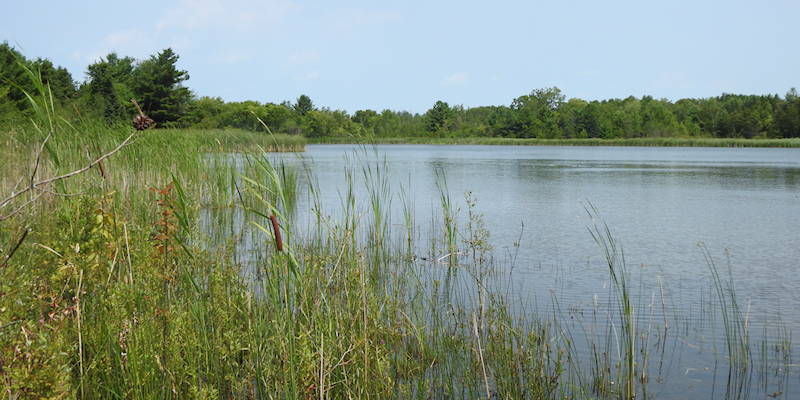
While most of the site is covered in forest – including an area still regenerating after the 2018 tornado brought down many old Eastern Pine Trees – the north side is dominated by a large open sandpit now permanently filled with water. This sandy habitat, great for ground-nesting bees and tiger beetles, is still visible on unpaved trails leading to the water and in the meadows on the east side of the pond. A paved multi-use path circles the pond, but mostly remains on top of the slope a fair distance from the water with only two access points: a spot on the eastern side of the pond, and the bridge where it crosses a small stagnant creek flowing out of the northeast corner.
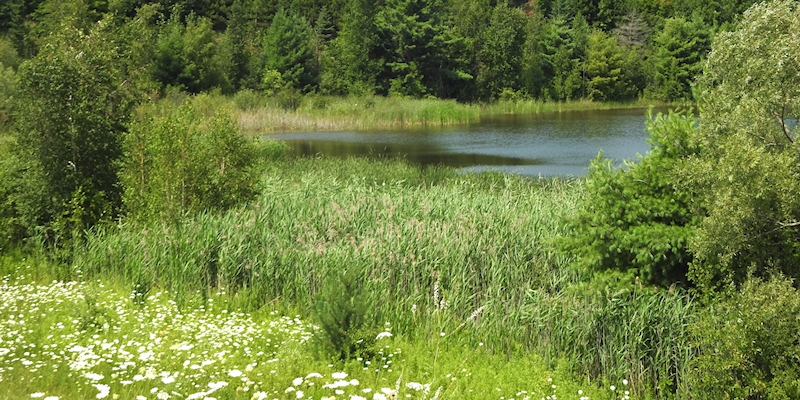
Back in 2009 my mentors and I would walk down the toboggan hill and wade in the shallow southeastern corner of the pond in our waterproof boots while looking for odes. Back then the emergent vegetation was sparse enough and low enough that it was easy to see perching dragonflies and spread-winged damselflies. Today, that corner has been swallowed up by a dense forest of reeds and phragmites, so I have shifted my explorations to the northwest corner. A few notes of caution for ode-hunters eager to spend some time in the pond: this is a breeding haven for amphibians, and on some visits I’ve had to turn back before reaching the water because of all the tiny American Toadlets hopping along the trail. In 2024 I came across four newly hatched Snapping Turtles basking in the sun on the trail as well, so always mind your footing. And third, I’ve never attempted to approach the water in the spring because of the many Red-winged Blackbirds nesting here.
Specialties
- Link to list of Odonata Species found at Bruce Pit
- Link to map of sightings in iNaturalist
The best thing about Bruce Pit is that it contains a variety of species in different families. The only family not represented here is Cordulegastridae (the spiketails), which is understandable given that the only creek attached to the pond has been dammed by beavers and is fairly stagnant.
Bruce Pit used to be the only spot in Ottawa where the Eastern Red Damsel was found, though none have been seen since 2014. This damselfly is a creature of spring-fed seeps and ditches, and although it is bright red in colour, it is quite tiny making it easy to overlook. Since then it was discovered in a ditch along the Trans Canada Trail near Corkstown Road, thought that population may have been transient as well.
It is a terrific spot for spreadwings and bluets as well. Amber-winged Spreadwing is one of the less common species found here, and it was exciting to find an individual here in 2024 after not seeing any for a number of years.
In the late summer an incredible number of darners can be found patrolling the meadows and open areas for food. Lake and Variable Darners, not common in Ottawa, have been found here more than once. Green-striped Darner, which is becoming more common in Stony Swamp, has been seen here once, as has Harlequin Darner.
Late summer is a good time to visit and see a variety of meadowhawks, including Cherry-faced, Band-winged, and – hopefully – Saffron-winged Meadowhawk, which I haven’t seen since 2021.
Other species
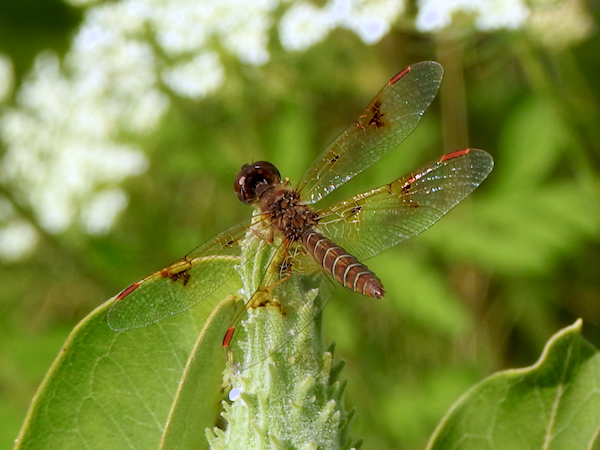
Bruce Pit is also a great spot to look for vagrants and dragonflies passing through. Black Meadowhawk and a Swift River Cruiser have shown up there, and it is a repeat site for Black Saddlebags. Blue Dashers and Eastern Amberwings were found there for the first time in 2024, and both Halloween Pennants and Calico Pennants showed up in 2024 after a lengthy absence.
 OdoNotations