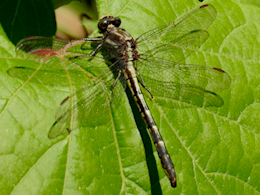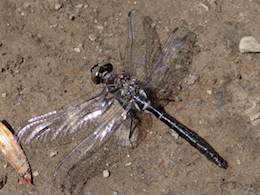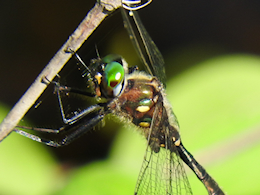
Brush-tipped Emeralds in Marlborough

Brush-tipped Emerald

Family Corduliidae (the emeralds) is one of my favourite dragonfly families. My love for these green-eyed beauties grew when I started seeing a large number of Williamson’s Emeralds (Somatochlora williamsoni) in Stony Swamp in the summer of 2014; one particular day at the end of June stands out in my memory because I found a total of five emerald species at Jack Pine Trail in one visit (Common Baskettail, Prince Baskettail, Racket-tailed Emerald, Brush-tipped Emerald and Williamson’s Emerald). It was around that time that I realized that I didn’t have to wander too far from home to see such a fantastic variety of wildlife – Stony Swamp in particular is amazing, with the Eagleson storm water ponds close behind. I saw two Williamson’s Emeralds in Stony Swamp in 2018, then none in any subsequent years. The Brush-tipped Emerald population was still present as of last year, with one iNaturalist record (not mine) from Old Quarry Trail on July 1, 2022.

Continue reading “Brush-tipped Emeralds in Marlborough”

Spring Dragons

Harlequin Darner
Harlequin Darner

Sunny skies, a predicted high of 20°C, and a day off from work on the last Friday in May meant plans to visit Marlborough Forest for the first time this season with my mentor, Chris L. I had convinced her to come with me to trail E4 north of Roger Stevens Drive, home of the Ocellated Emerald, Ashy Clubtail, and Twin-spotted Spiketail – though it was too early for any of those to be flying yet. No less exciting were the possibilities for the early spring dragons that should be on the wing by now: Harlequin Darner, American Emerald, Ebony Boghaunter, and maybe a Springtime Darner or Stream Cruiser. We were sure to see plenty of whitefaces and other skimmers, some baskettails and a Dusky Clubtail or two, and some gossamer-winged butterflies to keep things interesting…the great thing about Marlborough Forest is that it is home to an amazing number of species not easily found in the city, so anything is possible!

Continue reading “Spring Dragons”

The Morris Island Spring Bioblitz

Springtime Darner

Last year a particular OFNC outing caught my eye: a bioblitz to be held at the Morris Island Conservation Area on September 10th. Morris Island is a fantastic place for a bioblitz; the woodlands and wetlands of this 47-hectare site are home to a number of fascinating wildlife species, including several ode species not regularly found in my area of the city. I had never gone ode-hunting in September there before, as September is past the peak of ode season, with fewer species flying than in June or July. Still, it was a good chance to observe what was still flying there, and maybe find an unusual darner species or two. I attended with Chris T. and Chris L. and we photographed seven species for inclusion on the Morris Island Bioinventory Project on iNaturalist: Skimming Bluet, Eastern Forktail, Fragile Forktail, Powdered Dancer, Halloween Pennant, Autumn Meadowhawk, and White-faced Meadowhawk. So much for finding any cool darners!

Continue reading “The Morris Island Spring Bioblitz”

The Emerald Mystery

Mystery Emerald
Mystery Emerald

On May 20th I received a photo of a large male emerald dragonfly from Chris Traynor. It was a teneral, with brown eyes and crisp, intact wings, but wasn’t so fresh that the wings had that glistening Saran-wrap look. The abdomen was long, thin and black, with an incomplete thin yellowish-white ring near the base. The message that accompanied the photograph was brief: “Don’t have my book. Any ideas?”

Continue reading “The Emerald Mystery”

Marlborough Forest: Summer 2022

Ashy Clubtail

I did not get out to Marlborough Forest as often as I would have liked this past summer; ongoing medical issues early in the season left me feeling too tired and too sore for the long five-hour outings I enjoyed so much last year. On June 2nd I visited the E6 trail with Rick Collins to look for the Sedge Wrens breeding there. We heard one without too much difficulty, though we weren’t able to spot it. Our other highlight was a female Ruffed Grouse on the trail trying to lure us away from its chicks (none seen) by giving distress calls. It was a gray, drizzly day so I didn’t see any insects worth photographing. Indeed, I didn’t take my camera out of my bag at all.

The weather was much better on June 19th, so Chris Traynor and I went to trail E4 to look for Twin-spotted Spiketails and some different emerald species for his life list. I was also eager to show him the pool below the culvert as this was where I’d seen my one and only Ocellated Emerald hanging out in 2020. It was a bit windy, but the sun was shining and the weather was warm, and the breeze made the usual biting insects less of a distraction.

Continue reading “Marlborough Forest: Summer 2022”

Identifying the Small Baskettails of Ottawa

Common Baskettail
Common Baskettail

On May 14th I wrote about a mass emergence of Spiny Baskettails at Mud Lake but didn’t explain much about how I identified them except to say my identification was based on the shape of the male claspers. Emerging dragonflies are pale and translucent, showing little to no colour of the mature adults they will become, but fortunately identification of the three small baskettail species in Ottawa does not depend the pattern of colours on its body (a fourth species, the Prince Baskettail, is much larger and has distinctive black spots at the base, tip and center of its wings). This post provides more detail about how to distinguish between the Common Baskettail, the Spiny Baskettail, and the Beaverpond Baskettail, three similar-looking species of the emerald family. While they are most likely to be found patrolling sunny woodland openings or grassy spaces next to water, they often perch on tree branches and plant stems at an angle, allowing good views or photographs.

Continue reading “Identifying the Small Baskettails of Ottawa”

Mass Emergence: Spiny Baskettails

Spiny Baskettail emergence

By May 14th Ottawa had seen a string of six days with temperatures above 20°C, with the last three above 30°C. The warmth signaled the beginning of ode season, with my first dragonflies of the season – both Common Green Darners – seen at the Richmond Conservation Area (May 10) and Sarsaparilla Trail (May 11, 2022). Common Green Darners are migrants, however, arriving on the warm winds flowing from further south. The true ode season begins once it is warm enough for local dragonflies and damselflies to emerge from the rivers and wetlands in which their life cycle began. All odonates lay their eggs in water, and it takes time – from a few months to a few years – for the larvae to go through the individual stages of molting until they are large enough to begin the transformation from nymph to adult. When the nymph is ready, it crawls out of the water onto rocks, emergent vegetation, or nearby tree trunks or plant stems, and then bursts out of the larval shell through a hole in its back, using gravity to pull itself free. I have seen various dragonflies in the middle of this process a few times; I had never witnessed the full transformation as it takes a few hours for the dragonfly to become ready for its first flight. However, when I arrived at Mud Lake on a sunny day in mid-May hoping to find some warblers, it was a mass emergence of at least 50 individual dragonflies that engaged my attention, and I was able to observe many individuals at different points of the process.

Continue reading “Mass Emergence: Spiny Baskettails”

Dragon-hunting in the Carp Hills

Marsh Bluet

On June 20, 2021 I accompanied fellow OFNC members Derek and Erik to the Carp Barrens Trail off of Thomas Dolan Parkway to assist them in a survey of breeding birds and other wildlife. Because of the sensitivity of the ecosystem and number of at-risk species which breed here, this trail is closed to the public during the summer. In order for us to access the site, Derek had acquired a permit to allow us to look for unique breeding birds such as Black-billed Cuckoo, Eastern Towhee, Common Nighthawks and Whippoorwills. Derek and Erik started around dawn to listen for both nightjars, but heard none. I joined them at 6:00 am while they were still walking along Thomas Dolan Parkway, and together we entered the trail system.

The trail follows a rocky outcrop around a long slough. Many birds were already singing, and we heard the typical open field and woodland edge species: Field Sparrow, White-throated Sparrow, Veery, Scarlet Tanager, Rose-breasted Grosbeak, and many warblers, the best of which (in my humble opinion) included two Pine Warblers, two Yellow-rumped and two Nashville Warblers.

Continue reading “Dragon-hunting in the Carp Hills”

New Dragonflies at Marlborough Forest

Kennedy's Emerald
Kennedy’s Emerald

The beginning of June arrived with plenty of warmth and sunshine, and I couldn’t wait to go back to Marlborough Forest at the peak of butterfly and dragonfly season to look for new species living there. Last year when I started going to Marlborough Forest in mid-June, I kept seeing large, dark dragonflies – almost certainly emeralds of some sort – zipping down the shadowy trail before the sun had fully risen above the trees. I never had my net on me when I saw them on my early-morning birding walks, so I was unable to catch one to verify their identity. This time I was prepared for these dawn-flying dragons, and brought my net with me. I had already added one dragonfly to my life list, the Ocellated Emerald at Trail E4 last year; was it possible that there were other species of interest here?

My first summer visit to Trail E4 occurred on June 6th. Although the morning started out cool, it quickly warmed up. The usual birds were singing along the trail, including all the Red-eyed Vireos, Eastern Wood-pewees, Eastern Kingbirds, Veeries, and the Tree Swallows that were missing from my mid-May visit. I heard seven warblers (Ovenbirds, Northern Waterthrushes, Black-and-whites, Nashvilles, Common Yellowthroats, Black-throated Greens, and a single Magnolia Warbler), two Chipping Sparrows, a Field Sparrow, and a Blue-headed Vireo singing in its usual spot in the large open area devastated by motor bikes and ATVs.

Continue reading “New Dragonflies at Marlborough Forest”

Dragonfly Emergence

Freshly emerged dragonfly

My first real dragonfly outing of the year occurred on May 24, 2021, and as usual, took place at Roger’s Pond in Marlborough Forest. I invited a few friends to join me now that outdoor gatherings can include up to 5 people, and fellow OFNC members Derek and Gerald decided to join me. It was a warm, sunny day, and I hoped to find the usual common skimmers and clubtails, as well as a few uncommon species that I’d seen previously at Marlborough Forest such as the elusive Ebony Boghaunter and Harlequin Darner. I’ve already seen one boghaunter this season, but it’s been a few years since I’ve seen a Harlequin Darner, and the Cedar Grove Nature Trail has been a repeat site for this ode.

We met at 9:30 am, just early enough to get some birding in while waiting for the sun to rise higher in the sky. We had the usual Nashville Warblers, Black-throated Green Warblers, Great Crested Flycatchers, White-throated Sparrows, Veeries, and Yellow-bellied Sapsuckers on the walk in. At the pond itself we had Eastern Kingbirds, a Pied-billed Grebe, Common Yellowthroats and four Ring-necked Ducks. Many dragonflies were already flying along the open trail through the cedar forest, including a few teneral whitefaces and emeralds.

Continue reading “Dragonfly Emergence”

Another Ebony Boghaunter in Marlborough Forest

Ebony Boghaunter

On May 15th I decided to try a new trail in Marlborough Forest. I was mainly looking for butterflies, as dragonflies weren’t all that numerous yet. Dreaming more of elfins and commas than dragons and damsels, I parked on Kettles Road near the Black-billed Cuckoo site from last year. I headed south, and almost immediately found myself in an area with four species flying: Mourning Cloak, Northern Spring Azure, Henry’s Elfin, and Gray Comma. The sunny day was perfect for looking for butterflies, and I ended up finding quite a few, especially in the open cedar woods where they were resting on the trail.

Continue reading “Another Ebony Boghaunter in Marlborough Forest”

A Lifer Dragonfly: Ocellated Emerald

Ocellated Emerald

Marlborough Forest has been long known to me as a special place to find some of the more unusual species of the Ottawa area – various trips to the Cedar Grove Nature Trail over the past ten years have turned up Mink Frogs, Eastern Newts and Red Efts, Blue-spotted Salamanders, Bronze Coppers, Silvery Checkerspots, Harvesters, Calico Pennants, Brush-tipped Emeralds, Lake Darners, Twin-Spotted Spiketails, Ebony Jewelwings, and Aurora Damsels. The one “specialty” of Marlborough Forest that I had not yet found, and search for every time I go, is the Smooth Green Snake – it has managed to elude me every single visit.

Continue reading “A Lifer Dragonfly: Ocellated Emerald”

The Baskettails of Spring

Beaverpond Baskettail

In most years dragonfly season begins around the Victoria Day weekend (which always falls on the third Monday of May). I remember visiting Mud Lake on the long weekend in years past and seeing up to a hundred freshly emerged dragonflies perching in the trees there. However, in the last few years it seems that dragonfly season has started later than normal – the long-lingering cooler spring weather has played a large part in this, as emergence depends chiefly on the temperature of the water the dragonfly nymphs are living in. By the second weekend of May I’d go out eagerly hoping to see the first dragonflies of the year, and by the end of May I’d still be looking for them. Even when I eventually found some, such as last year, numbers would be low, and it would take time for the season to get back on track. Numbers remained low in Ottawa all summer last year for some reason, though we think that the unprecedented spring flooding might have been the cause, either washing away the small nymphs or dumping unhealthy amounts of debris, sediment, and chemical-laden runoff in areas where they breed.

Continue reading “The Baskettails of Spring”

Adventure in Dunrobin

Snowshoe Hare

On June 5th I headed out to Dunrobin to spend some time looking for odes and birds. My first stop was the Crazy Horse Trail on March Road at the end of Huntmar Road. This is a relatively new pedestrian-only trail for hikers, skiers, and snowshoers that was developed by the Friends of the Carp Hills under an agreement with the City of Ottawa. It is named for an old tavern that used to stand adjacent to the trailhead but has long since been demolished. The goal of the trail is to provide recreational access to the the Carp Hills on City-owned property while keeping impact on the environment to a minimum. The trail is narrow, and as there is no intention to groom or widen the trail, people are asked to respect the natural areas by staying on the trail, keeping dogs under control at all times (which means using a leash if necessary), leaving no waste, and respecting property boundaries. There are some rough, volunteer-built boardwalks in places too wet to cross which adds to its charm. In fact, all trail maintenance and improvement depends on volunteers, rather than the City, which makes it doubly important to respect the work they have done in creating this trail.

Continue reading “Adventure in Dunrobin”

The Odes of Andrew Haydon Park – 2019 edition

Halloween Pennant

Back in 2015 I wrote a blog post about the odonates I found at Andrew Haydon Park one weekday afternoon near the end of July. Since discovering the colony of Halloween Pennants at AHP in 2014, I’ve made it a point to visit this park each year during mid-summer; it’s much closer than travelling all the way to Morris Island to see this stunning dragonfly! So far I’ve only made it out to Morris Island once this year, and when I found no Halloween Pennants flying along the causeway I decided to visit Andrew Haydon Park specifically to search for this species. With the strange, slow start to the season I was bit apprehensive about whether these odes would even be around at AHP, but thankfully I found a few on each of my visits, and in good numbers, too.

Continue reading “The Odes of Andrew Haydon Park – 2019 edition”