Two provinces. Six families. One unbelievable day.

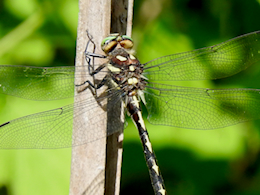
Swift River Cruiser (Macromia illinoiensis)

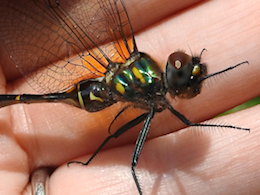
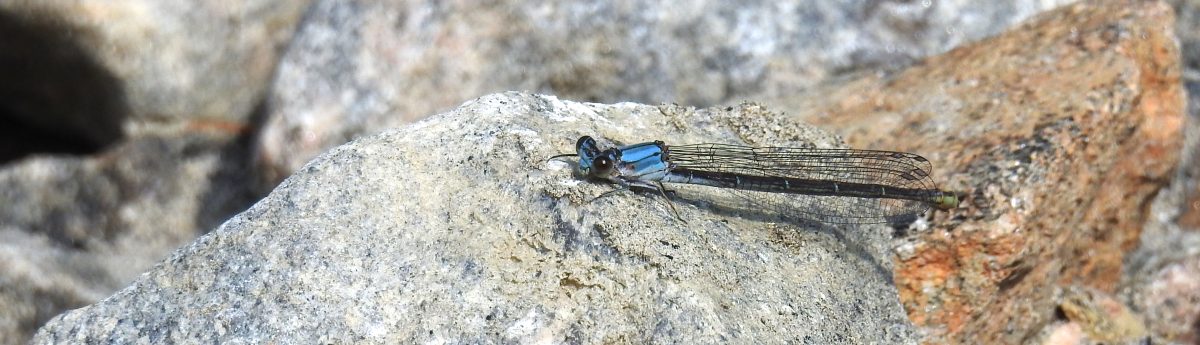
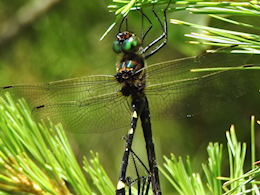
If you had told me it was possible to see more than a dozen Prince Baskettails hanging from the pine trees like early Christmas ornaments, three perching Swift River Cruisers (including two in a mating wheel), a perching Springtime Darner, an ovipositing Cyrano Darner, an emerging Dragonhunter, four additional clubtail species, a dozen Brush-tipped Emeralds, about 50 Widow Skimmers, and an Arrowhead Spiketail all in a single day here in the Ottawa region, I am not sure I would believe you. That kind of day is so rare in Ottawa that I would would assume that you were engaging in a particularly fanciful daydream. However, on the Quebec side of the river many things are possible. Part of it is due to the scenic geography – the deep, rocky lakes, rushing streams, and variety of marshes, swamps and bogs carved out of the Canadian Shield provide a fantastic variety of habitats. Part of it is due to the untouched wilderness outside of the Gatineau area – there are no cottages lining the shore, no subdivisions full of manicured lawns, no pesticides and insecticides to wreak havoc on insect populations. These two factors make it an excellent place to see a variety of odes – especially along the Ottawa River, a major dragonfly habitat of its own.

Continue reading “Two provinces. Six families. One unbelievable day.”
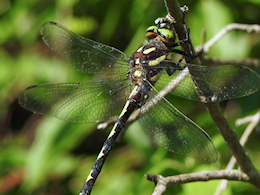
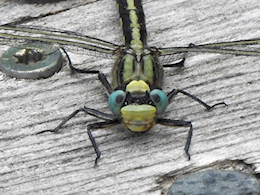
New Odes in Marlborough Forest

Arrowhead Spiketail (Zoraena obliqua)

Marlborough Forest is one of my favourite spots for ode-hunting. There are so many terrific species there, including some considered scarce, rare, or even very rare according to the official Ottawa checklist. So far I’ve found three lifers here – two of which I have not seen again in the forest or anywhere else: Ocellated Emerald on June 21, 2020, and Ashy Clubtail on June 19, 2022. The third species, Kennedy’s Emerald, was a lifer for me in Marlborough Forest on June 12, 2021 in Marlborough Forest and then, oddly enough, turned up on a house in Nepean on May 21, 2023. The sheer size of the forest – over 9,300 hectares of meadows, wetlands, old plantations and natural forests – tantalized me with the mysteries hidden within its depths, whether those be bog-loving Somatochlora emeralds, remnants of old farmsteads, or rumours of long-lost graveyards.

Continue reading “New Odes in Marlborough Forest”

Stony Swamp Dragons

Horned Clubtail

It’s mid-June, which means the season is flying by and soon some of the early-season species will be gone. I’ve been trying to get out every chance I get, but uncooperative weather and a busy work week after my vacation meant that I wasn’t really able to get out until earlier this week for some intensive dragon-hunting. I worked from home Monday and Wednesday, and with the weather finally turning warm and sunny, a couple of lunchtime outings this week in Stony Swamp resulted in some surprisingly good dragonflies!

On Monday I visited Jack Pine Trail with one goal: to see if any Arrowhead Spiketails were flying. Some emeralds would be nice, too, as well as any spreadwings or cruisers, but the spiketail was my target species. Jack Pine Trail is the most reliable location for it in the west end, and when present I only seem to find it during the second or third week of June. The official checklist of Ottawa says it is present in the region between early June and early July, so I had high hopes of finding one.

Continue reading “Stony Swamp Dragons”

Searching for the Arrowhead Spiketail

Stream Cruiser

Spiketails are large, brightly coloured dragonflies that inhabit small or mid-sized streams, usually with a good current in forested areas. There are three species present in eastern Ontario, all with dark brown or black bodies, green eyes, and bold yellow patterns along the abdomen that may cause them to be confused with clubtails in flight. Each species has a dark thorax with two vivid yellow stripes on the side and two smaller yellow dashes on the top. It is the pattern on the top of the abdomen that distinguishes them: the Arrowhead Spiketail has a single line of yellow arrows pointing toward two round spots at the tip; the Twin-spotted Spiketail has two lines of yellow spots with straight tops and rounded bottoms running down the abdomen, set close together; and the Delta-spotted Spiketail has two lines of widely-separated spots running down the abdomen, each pointed and distinctly triangular in shape. Because of their habitat requirements, they are considered local and uncommon, and in Ottawa the Arrowhead Spiketail is considered the rarest of the three.

Continue reading “Searching for the Arrowhead Spiketail”

Arrowhead Spiketails in Stony Swamp

Arrowhead Spiketail

Perhaps more than Mud Lake, the one place I enjoy visiting most during migration and the summer breeding season is Stony Swamp. Pre-Covid it was always less busy than Mud Lake, especially early in the morning; however, after the pandemic hit the trails have become really popular and the parking lots are getting full before 10:00 on the weekend. If my goal is to look for birds, I try to get there before 7:00 am; but if it’s insects I’m looking for it doesn’t matter so much, as insects are not as likely to be disturbed by people, and I arrive whenever it’s convenient for me. It’s still quieter during the week than on the weekend, so I arrived at the Beaver Trail at 8:15 hoping to find some good birds as well some interesting insects as the day warmed up.

Continue reading “Arrowhead Spiketails in Stony Swamp”

Jack Pine Specialties

Brush-tipped Emerald

The day after the excellent snaketail adventure in Gatineau Park, I headed over to Jack Pine Trail to see if any of its unique dragonflies were on the wing. Two years ago I found a healthy population of Brush-tipped and Williamson’s Emeralds, and Arrowhead Spiketails are regularly seen along the stream at the back. Although I’d heard that it takes four years for Williamson’s Emerald larvae to mature, I had hopes of at least finding the Brush-tipped Emerald; I still think it’s amazing that all these wonderful dragonflies live and breed so close to home. I was also hoping to find some spreadwings, as I’ve seen both Northern and Emerald Spreadwings along the trails here in the past – though none in the past couple of years.

Continue reading “Jack Pine Specialties”