
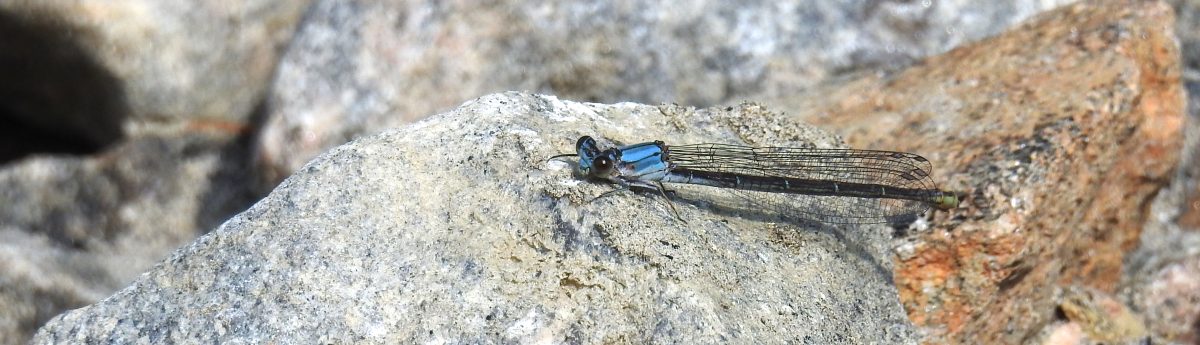
Family Coenagrionidae consists of the remaining damselfly species, collectively known as the narrow-winged damselflies or pond damselflies, as most species breed in still water habitats – all except the dancers, which live near streams and rivers with a variety of rocks and plants present. The clear wings are narrowly attached to the long, slender body, the colour of which can be useful in narrowing down the identification. Look for them close to the ground, perching on rocks, sticks, low-growing vegetation – including on lily pads in the water – or directly on the ground.
This is the largest damselfly family, including approximately 90 species in North America, 23 of which have been found in the Ottawa-Gatineau area. Included in the checklist are two dancers, two damsels, two sprites, three forktails, and a whole pile of bluets – 14 species in fact. Of those 14 bluets, 11 of those are predominantly black and blue, which is where they get the name “bluets”. Although they are all small, their habitat preferences are as varied as their colourful bodies. Some, such as the Eastern Red Damsel and Sphagnum Sprite, are habitat specialists, living in small seeps or sphagnum bogs; others, including the Eastern Forktail and Sedge Sprite, are habitat generalists and inhabit the vegetated margins of ponds, lakes, rivers, and even roadside ditches. They are not considered strong flyers, so checking the vegetation along any water body in season should turn up a few species; however, they can quickly fly off making photography difficult. They can also turn up in some surprising places quite a distance away from water or any known breeding populations; I’ve seen Violet Dancers and both jewelwings at the Eagleson ponds, and I’ve even had a couple of Fragile Forktails and an Eastern Forktail in my townhouse backyard about half a kilometer away from the Eagleson Ponds as the crow flies!
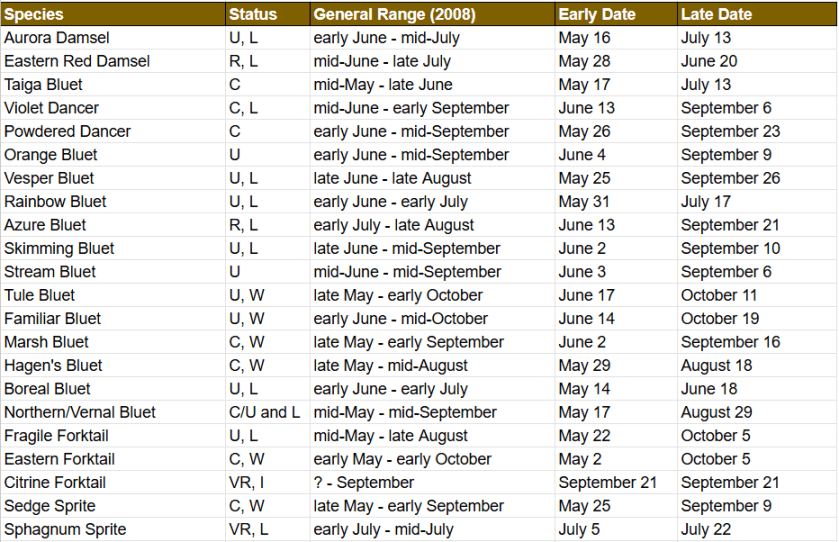
Status and Flight Season in Ottawa-Gatineau
Examples of Species:
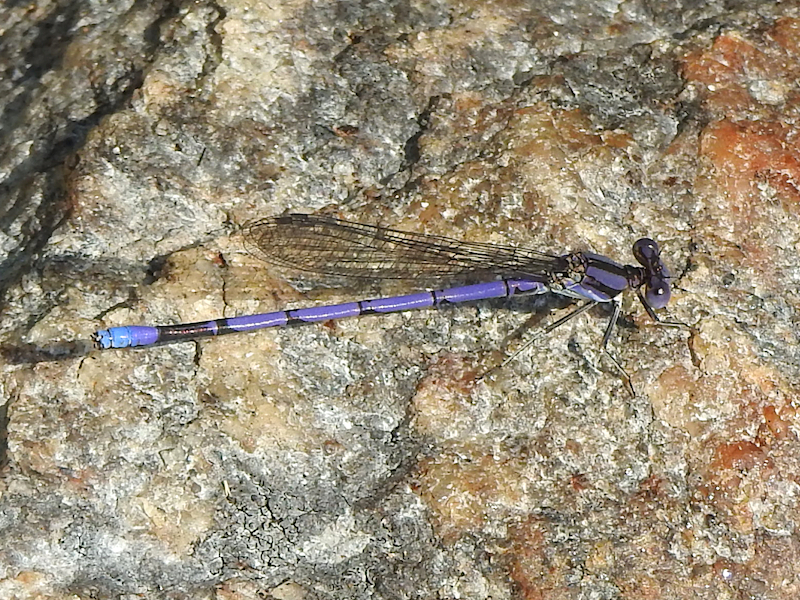
Violet Dancer (Argia fumipennis ssp. violacea)
This is the only purple odonate in our region, although females are brown. It is smaller than the more widespread Powdered Dancer, and has a distinctly forked shoulder stripe. It is found near flowing streams, rivers and lakes, and likes to perch directly on the ground or streamside rocks. It is more easily found in Quebec, though the Mississippi Snye and Jock River behind the former Richmond sewage lagoons are good places to see them in Ottawa.
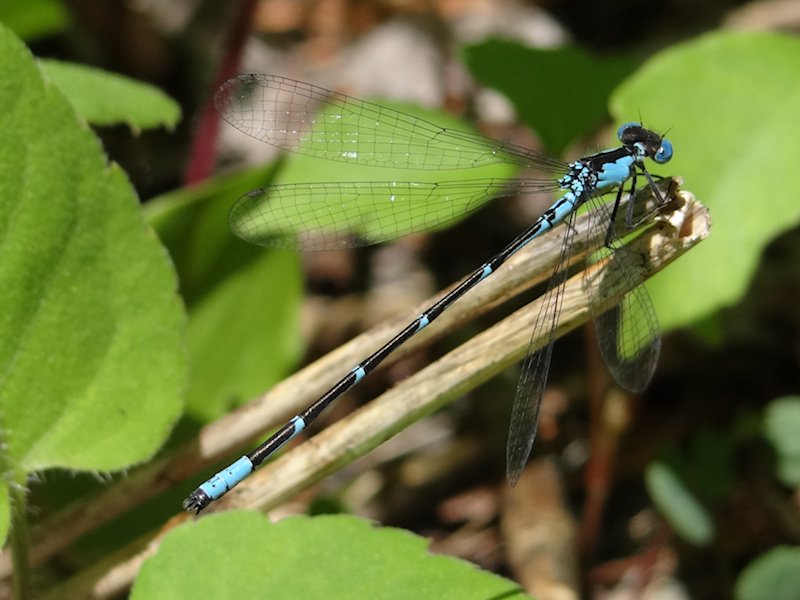
Aurora Damsel (Chromagrion conditum)
This distinctive damselfly is like no other in our region: although black and blue like a bluet (females are black and yellow), it perches with its wings partially open and has a single black patch on top of the thorax with wavy edges instead of shoulder stripes. In our area they tend to be found near small, clear flowing streams adjacent to wooded areas, though they also inhabit vegetated ponds and lakes.
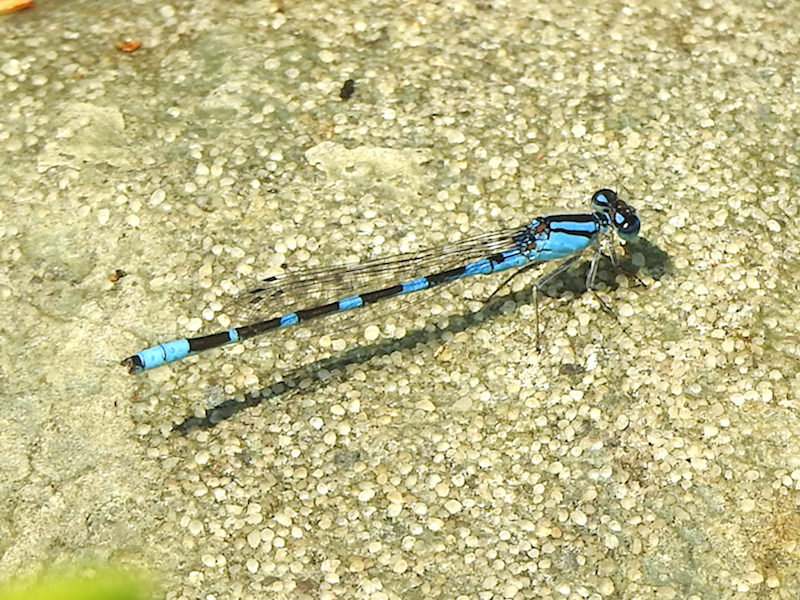
Tule Bluet (Enallagma carunculatum)
The bluets are the most difficult group of damselflies to identify. Those with more black than blue along the abdomen can be identified in the field; those with more blue than black need to be examined in the hand with a magnifying lens. The Tule Bluet is an intermediate bluet between the two extremes. It is unique in that the segments are slightly more black than blue.
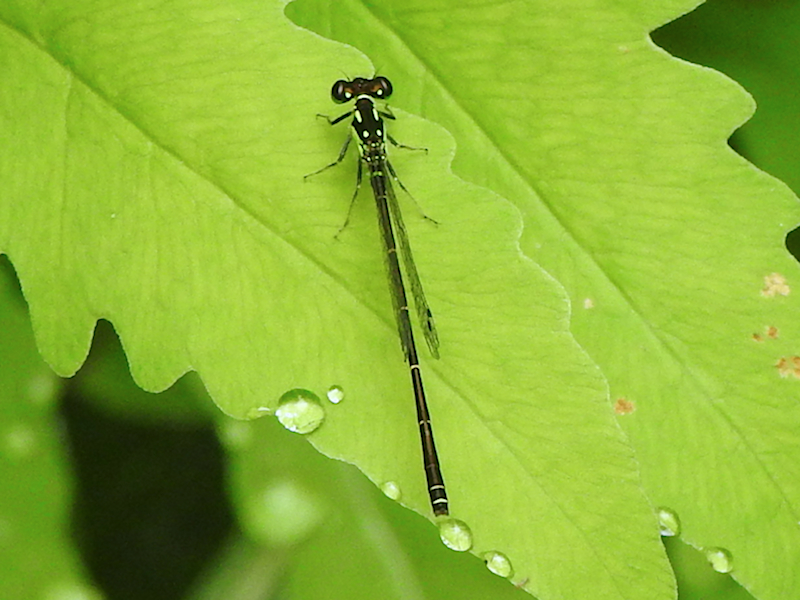
Fragile Forktail (Ischnura posita)
The less common of the two forktails, it is also harder to see as males are mainly black with a little bit of green on the head and thorax. Young forktails have the same pattern as mature males except with blue on the thorax, and mature females are dark grayish purple – just like Eastern Forktails, but with the characteristic exclamation points on the thorax. They are usually found in vegetated streams and wetlands with some shade.
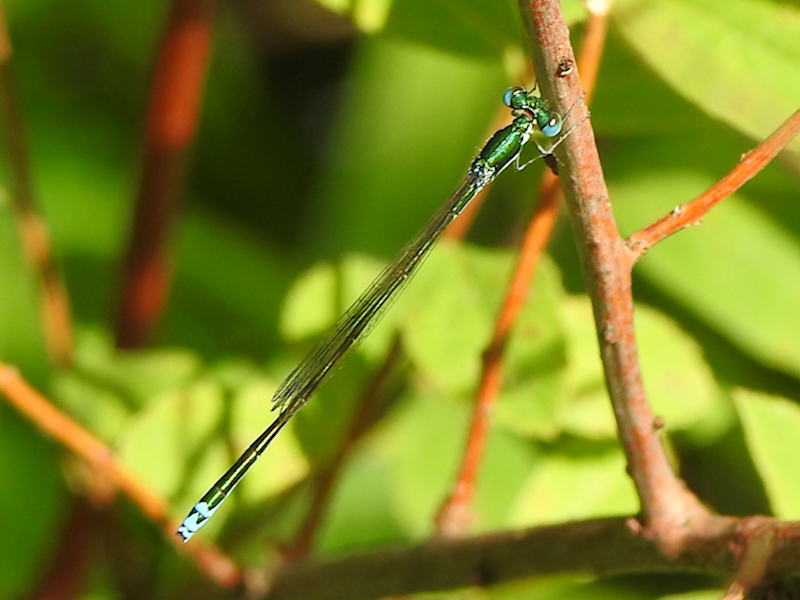
Sedge Sprite (Nehalennia irene)
These tiny damselflies are mostly metallic green with some blue at the tip of the abdomen and blue (males) or yellow (females) under the thorax. Widespread and common, look for them in the vegetation near slow-moving or still waters where they can be abundant once noticed. Their metallic colours and lack of both shoulder stripes and post-ocular spots are distinctive.
 OdoNotations