
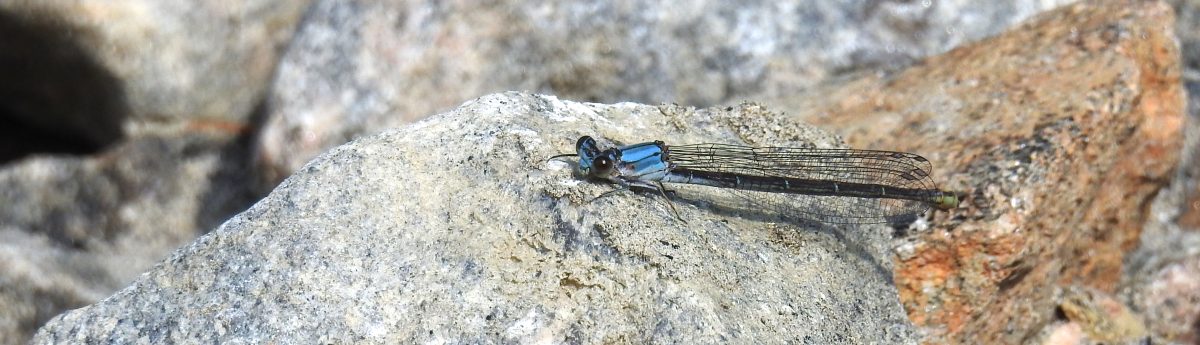
T0 date 27 skimmer species (Family Libellulidae) have been known to occur in the Ottawa-Gatineau region. The skimmers, in addition to being the largest family of dragonflies, are also the most familiar to people – not only do they inhabit urban and suburban rivers and wetlands, cottage lakes, and man-made ponds, they are colourful and spend much time perching or engaged in highly visible aerial battles as they defend their territories. While most skimmers hunt by perching on twigs or atop stalks of vegetation, then flying out to snatch up smaller insects flying by, the saddlebags and gliders behave more like darners, flying high above fields or meadows and catching insects on the wing.
The skimmers generally have thicker, stouter abdomens than dragonflies of other families. Many species have wings with coloured patterns, from the high-flying saddlebags to low-perching pennants and many of the king skimmers. The wings are often quite broad at the base compared to other dragonflies, with hindwings being larger than forewings – especially in the gliders and saddlebags which travel over long distances.
The skimmers are more easily identified than other families, partly because most are uniquely coloured and partly because most do not need to be caught….they can easily be photographed while perching on a branch, a rock or the ground. Only the meadowhawks and whitefaces require closer examination because they more closely resemble each other than other genera, particularly tenerals and newly emerged adults that have not attained their mature colours.
Status and Flight Season in Ottawa-Gatineau
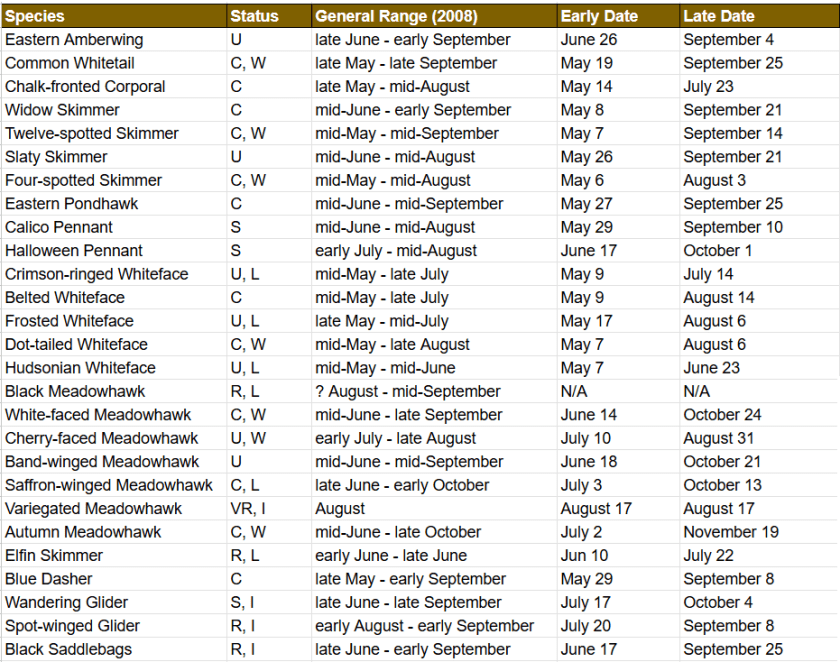
Examples of Species:
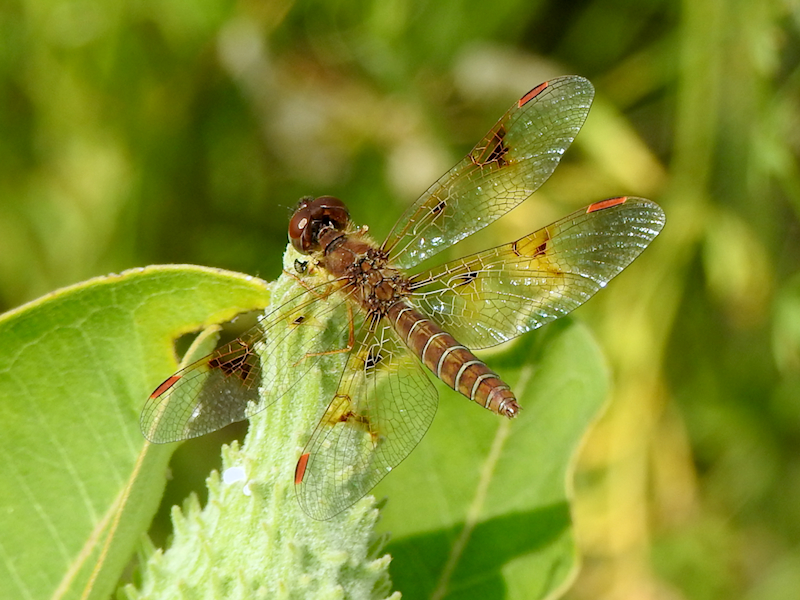
Eastern Amberwing (Perithemis tenera)
One of the newest species to arrive in Ottawa, it is the smallest dragonfly in the region. Even so, the almost fluorescent orange wings of the male are shockingly bright as it flies over the still ponds and slow-moving streams it favours. Females have clear wings with brown spots and are often found on wildflowers in meadows well away from the water. This species is a wasp mimic.
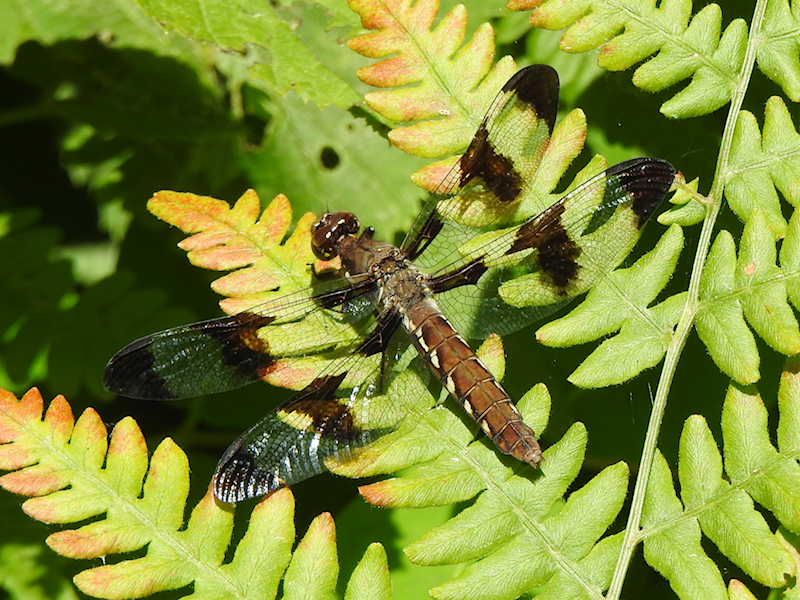
Common Whitetail (Plathemis lydia)
A common species of muddy-bottomed ponds, marshes and slow streams, adults are often found on sunny trails away from the water. Males and females are very different in appearance: only the male has the characteristic white abdomen while the female has a brown abdomen with a row of yellow triangles along the sides. The brown patches on the wings are also different shapes and sizes.
Calico Pennant (Celithemis elisa)
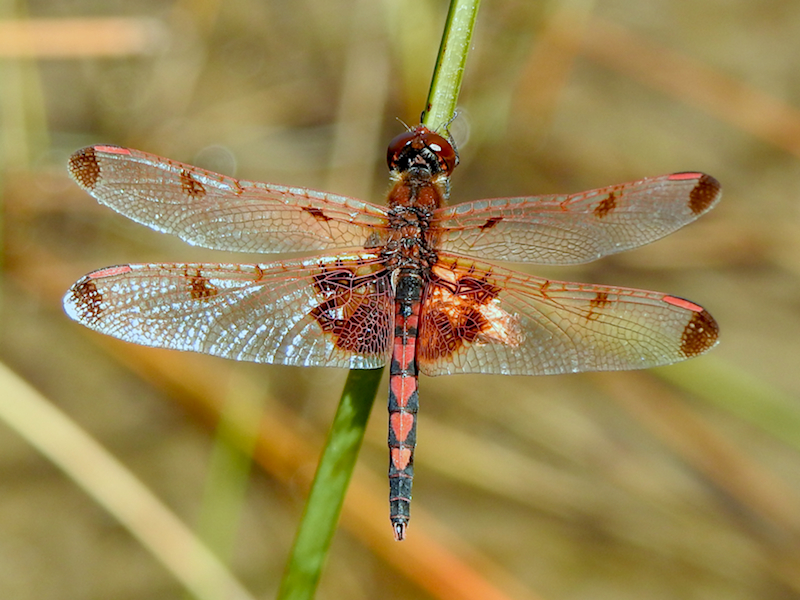
One of the most beautiful skimmers, it also one of the hardest to find. Mature males have red hearts down the top of the black abdomen and red wing patches; females and immature males have yellow markings instead of red. It tends to be locally common in ponds with abundant emergent vegetation and open meadows nearby for foraging. It is not widespread, possibly because it does not compete well with larger odes.
Belted Whiteface (Leucorrhinia proxima)
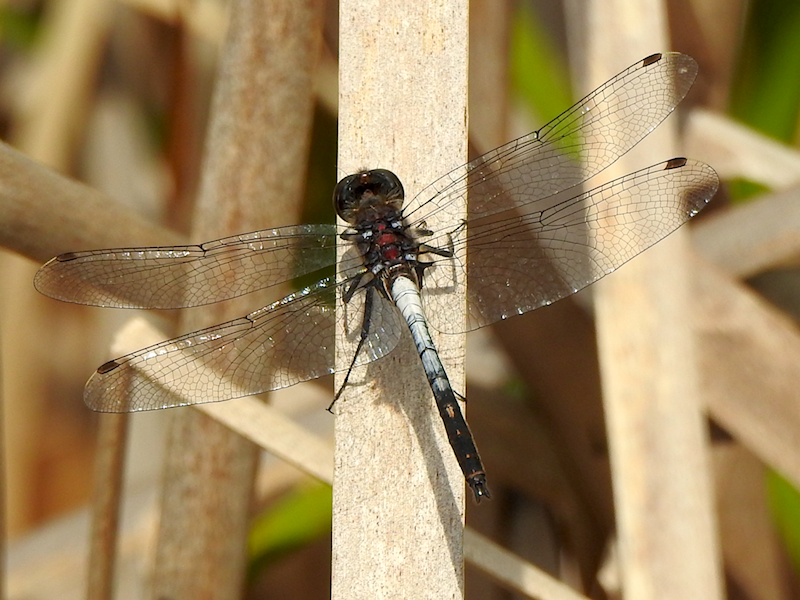
Whitefaces are small, thin skimmers that start out black with yellow markings and either turn pruinose (white) in the case of males or darken in colour in the case of females. Some males turn red instead, such as the Hudsonian Whiteface. All have brilliant white faces. The Belted Whiteface is a larger species which develops white pruinosity at the base of the base of the abdomen and retains the red colour between the wings. This early-season ode is usually found in marshy ponds and small lakes.
Wandering Glider (Pantala flavescens)
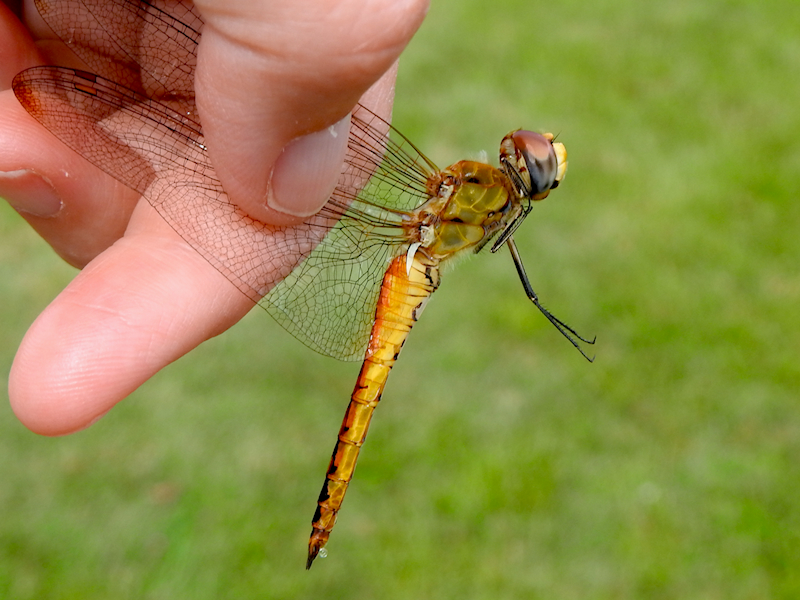
This is one of the few skimmers that is found flying more often than perching…it needs to be caught to appreciate is colours. Sometimes likened to a “flying carrot,” it is seen patrolling over meadows, parking lots, and shallow ponds in the latter half of summer. As it is a migrant, its numbers vary from year to year. It completes its breeding cycle in one season, migrating south before the cold weather arrives.
 OdoNotations