
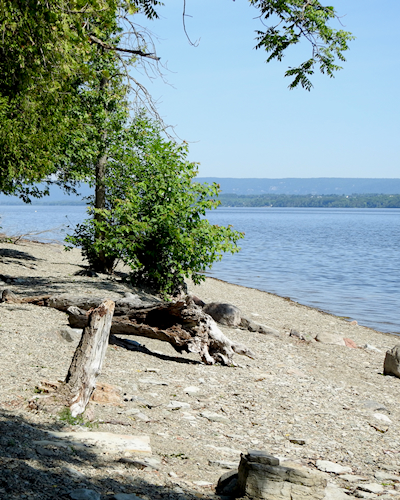
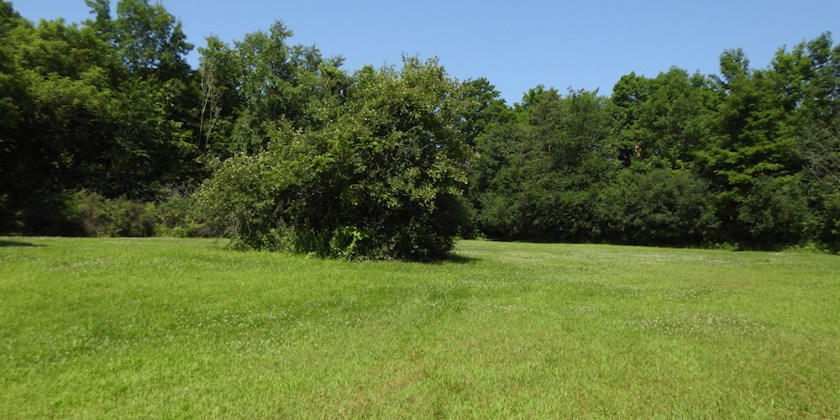
Sheila McKee Memorial Park is a relatively new addition to the list of top places to look for odonates in Ottawa. Formerly called Riverfront Park, in 2012 it was rechristened in honour of a community leader who served as a councillor in the former city of Kanata. It is located on the Ottawa River between Kanata and Dunrobin, just east of Pinhey’s Point at 1730 Sixth Line Road, next to the YMCA camp. Its 116 acres cover a large swath of forest, with a few grassy corridors open to the sunlight as well as a large open meadow at the north end. Extensive trails wind through the mixed coniferous-deciduous woods, leading to a sharp slope that takes you to a set of stairs built into the side of the small escarpment down to the Ottawa River. Here the stony shoreline follows the base of the small cliff, and the width of the beach depends on how high the Ottawa River is, though it is generally narrow…while you might encounter some sunbathers and small children playing along the water’s edge, you won’t find volleyball courts or picnic tables or even a solitary outhouse. The beach is gravel rather than sand, but the stones of varying sizes and broken boulders along the shore provide convenient perches for hungry or emerging dragonflies. Mosquitoes can be bad in the woods, but the shore is generally pest-free.
Sheila McKee Memorial Park landed on my radar in 2019 after my mentor told me a stroll along the shore in late July produced four species of Gomphids: Black-shouldered Spinyleg, Lancet Clubtail, several Midland Clubtails, and a Cobra Clubtail being eaten by a Midland Clubtail! That was enough for me to start visiting this small beach to look for clubtails, but other dragonfly species have made it worth visiting the open patches in the woods and sunny corridors on top of the escarpment.
I haven’t been visiting long enough to get a sense of the seasons here, but when I started surveying the park in late May 2024 I found quite a few immature whitefaces in the open corridors above the escarpment and no clubtails. By mid-June most of the immature whitefaces had disappeared, and emeralds and darners were on the wing. I didn’t see my first clubtails until the third week of June. Over the course of the summer it became a good place to see meadow-loving skimmers, followed by the meadowhawks at the end of the season. The following summer was different – instead of Halloween Pennants we found a good number of Calico Pennants in the meadow. There were fewer whitefaces, skimmers, and Blue Dashers, but the large number of emeralds and darners remained the same. I suspect the skimmer numbers are so variable because the marshes they breed in are a few kilometers away, and their presence here depends on the direction and distance they disperse from their breeding grounds. Still, with a total of 43 species recorded here as of summer 2025, it’s a terrific spot to spend a few hours during peak dragonfly season.
Sheila McKee Memorial Park Specialties
Clubtails
The four clubtail species found by Chris Lewis in 2019 have been found on repeat visits in subsequent years, making it the best place on the Ottawa side of the river to see the rare Cobra Clubtail and scarce Midland Clubtail. Two additional species were recorded on iNaturalist in 2021, each remarkable in its own right: a freshly emerged Mustached Clubtail on May 24, 2021 (the reason why I started checking the park in May in 2024), and a teneral Arrow Clubtail on June 24, 2021. I’ve only seen Mustached Clubtail in Gatineau Park, and hadn’t heard of anyone who had found Arrow Clubtail in the Ottawa-Gatineau region (though it does appear on the official checklist as “very rare” on both sides of the Ottawa River). I saw one Mustached Clubtail in 2024 and three individuals on a single visit in 2025 but have not yet found any Arrow Clubtails. On July 1 and 13, 2024 I added an seventh species to the list: Elusive Clubtail, when I encountered what looked like a mass emergence on both dates. For clubtails that prefer fast rivers with rocky substrates, Sheila McKee seems to be the best spot between Andrew Haydon Park and Morris Island Conservation Area to see them!
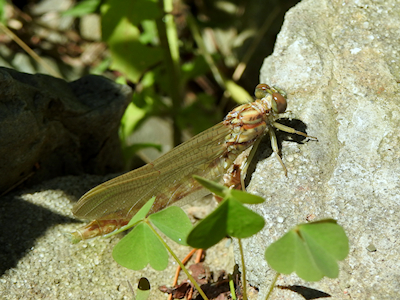
The shore is the best spot to see the most species. It is best to visit earlier in the day, before it is overtaken by afternoon shade: look for them resting on the broad sun-facing leaves of the vegetation growing close to the base of the cliff, or watch them flush from the ground as you walk along the shore (but please watch out for scuttling nymphs and pale, milky-coloured tenerals emerging on warm days as they can be easily damaged if stepped on while crawling to a safe place). Black-shouldered Spinylegs can be found in almost any sunny opening in the woods at the peak of their season, including the edges of the open corridors and meadows.
Other dragonflies
To my surprise the park has been good for emeralds and darners. Good numbers of Canada Darners can be found along the edges of the open corridors or patrolling the meadow in the early summer, and one day I found a Black-tipped Darner hanging in the same dead shrub. Lance-tipped Darners are sometimes found in these areas, so check every darner you see! I got my lifer Mottled Darner here on July 27, 2024 and have been looking for another one ever since. They are considered very rare in Ottawa
Most visits in June have had large numbers of emeralds feeding in swarms above the corridors, along the shore and out over the water. Three species of baskettail have been confirmed (all but Beaverpond), and to my surprise I found one Williamson’s Emerald and two Brush-tipped Emeralds on July 1, 2024, one of each species in the meadow at the north end of the park.
Stream Cruisers have turned up on many of my visits, and Swift River Cruisers have flown by (swiftly, of course) on a few occasions. Look for Stream Cruisers at the edge of the open areas, weaving in and out of the shady interior until they find a place to hang up. I also found one in a sunny spot along the staircase. The Swift River Cruisers may be patrolling the river or high up above the meadow.
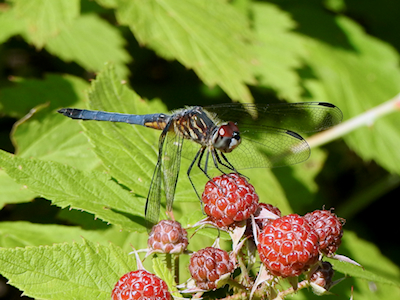
This park seems to be a good place to find Eastern Pondhawks and good numbers of Blue Dashers along the edges of the open areas at the top of the escarpment as well as Widow Skimmers and Halloween Pennants in the meadow. In May I’ve had several immature whitefaces, including Hudsonian and Frosted. In July I’ve had good numbers of Autumn Meadowhawks along with the occasional White-faced Meadowhawk.
Damselflies
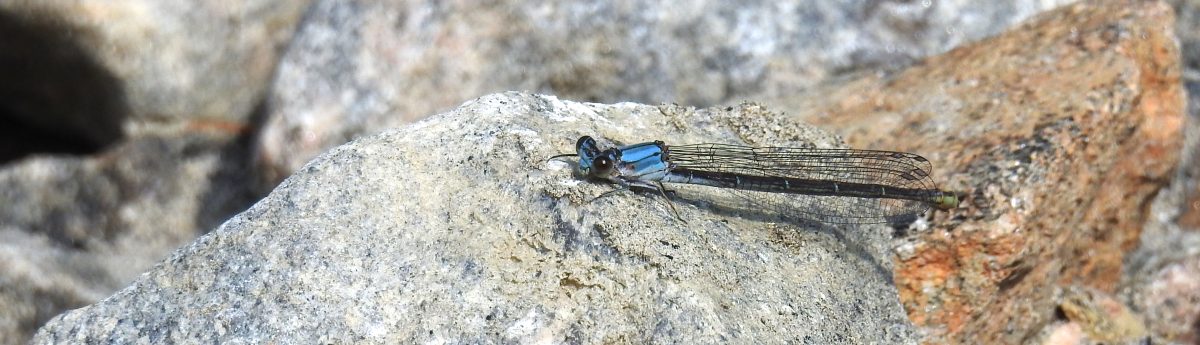
If you like Powdered Dancers, you won’t be disappointed! They are abundant and widespread throughout the park. Occasionally other pond damselflies turn up, such as Violet Dancer, Tule Bluet, Stream Bluet and Fragile Forktail, but they are few and far between.
Related Blog Posts:
To be added
 OdoNotations