
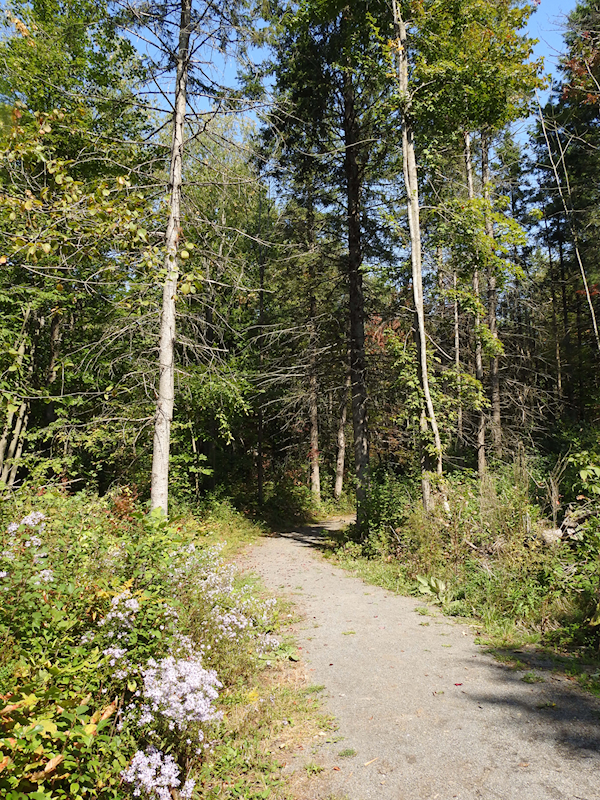
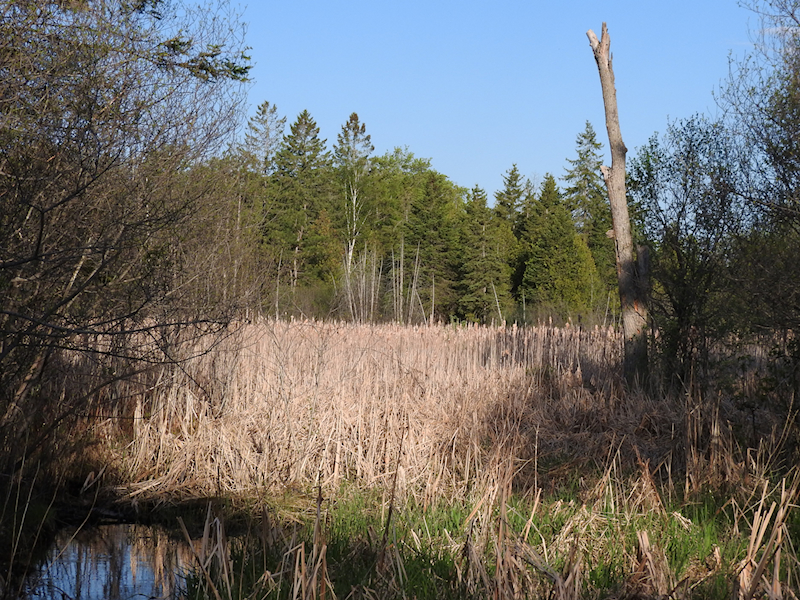
Stony Swamp is the largest wooded area in the National Capital Greenbelt and the conservation area closest to where I live in Kanata South. As such, I spend a lot of time there – it is where I started birdwatching way back in 2005. Much more than a swamp, it contains beaver ponds, wetlands, alvars, streams, the remnants of old settlements, meadows, an old quarry, and yes, swamps, within its mixed coniferous/deciduous forests. This makes it the most ecologically diverse protected area in the Ottawa Valley, and as such it has been classified as a provincially significant wetland and an Area of Natural and Scientific Interest (ANSI).
The billion-year-old Precambrian bedrock that lies beneath the Ottawa region can be seen in several places within Stony Swamp as the soil is very thin (or even non-existent) throughout much of it – you need only look at the bedrock exposed by uprooted trees to see it and wonder how such a diverse, magnificent forest managed to grow in these conditions. In the early spring, during the big snowmelt of late March and early April, Stony Swamp becomes “Swampy” Swamp as many parts of the trail become flooded and impassable without waterproof boots. While there are boardwalks passing over some of the vernal ponds, in many places they are not long enough or simply do not exist.
Of course, as a naturalist and dragon-hunter, my favourite time of the year to visit starts in late April when the spring ephemerals begin to bloom, the Northern Azures and Henry’s Elfins take wing, and the warblers return to fill the woods with their sweet songs. The first warm April days with southerly winds may bring the first dragonflies of the year to our region – Common Green Darners are migrants, and are the first ode on the wing here. My earliest date seeing one is April 15th when I found a pair in tandem in Stony Swamp, with the female ovipositing.
With more trails than any other area of the Greenbelt — over 40 kilometres — there are many places to look for odonates. My favourites are Sarsaparilla Trail with its boardwalk that looks onto a large pond, Jack Pine Trail with its accessible marshes and a forest stream at the back, and Lime Kiln Trail with its two ponds near the parking lot and large open areas at the back. Special mention goes to Old Quarry Trail and the Beaver/Chipmunk Trail as well with their marshes, beaver ponds and boardwalks.
Most trail parking lots are equipped with outhouses, which is another reason why Stony Swamp ranks highly on my list of favourite places. Drawbacks include the spread of Wild Parsnip on some of its trails, as well as ticks and mosquitoes. Although the mosquitoes here are not quite as bloodthirsty as the ones at Richmond Conservation Area, the small ones that emerge later in the summer seem to have a more painful sting.
Please note that leashed dogs are only allowed on some trails from April 15 to November 30. They are prohibited at Old Quarry Trail, Sarsaparilla Trail, Beaver Trail and Jack Pine Trail for conservation reasons – Stony Swamp is home to 63 species of regionally rare plants, a lichen population designated as a species at risk, and sensitive breeding species including American Goshawk, Red-shouldered Hawk, Wood Thrush, Least Bittern, and Blandings Turtles. Stony Swamp is also home to many mammals including deer, otters, fishers, beavers, coyotes, raccoons and porcupines; not only will you have a better chance of seeing some of these animals without a dog, you will also cause less disturbance to them as you walk through their home.
Trails and Specialties
- iNaturalist Project: Odonata of Stony Swamp
- List of odonata species found at Stony Swamp
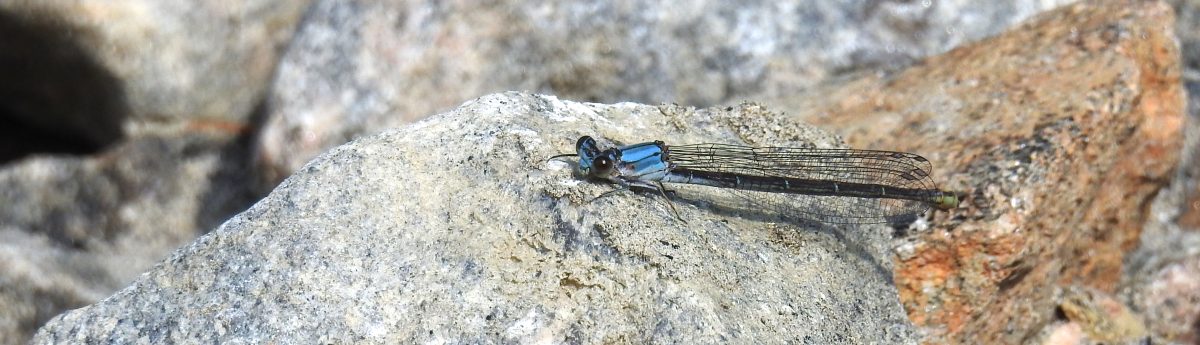
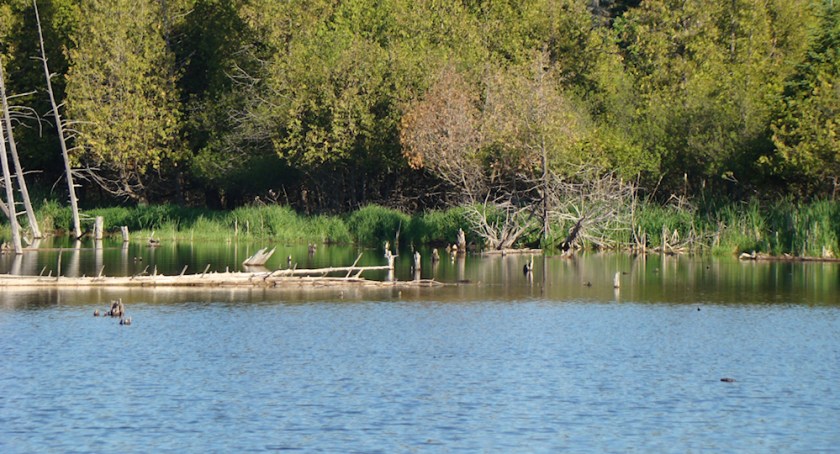
Sarsaparilla Trail, an 0.8 km wooded trail featuring a dock overlooking a large beaver pond, has the best variety of odes with at least 38 recorded species, accounting for a large proportion of the 58 species recorded in Stony Swamp. Blue Dashers, Belted Whitefaces, Spiny Baskettails, Racket-tailed Emeralds, Marsh Bluets and Northern Spreadwings are common here. The large, grassy clearing is a good place to find darners in the late summer, and I have caught both Canada and Green-striped Darner here; Stony Swamp is the only place I’ve seen the latter species in Ottawa, with additional observations at Bruce Pit and the Beaver Trail. Recent additions to the Sarsaparilla Trail list include Halloween Pennant, Harlequin Darner, Lake Darner, Horned Clubtail, Amber-winged Spreadwing and, surprisingly, Azure Bluet. As there is only one opening onto the water via a boardwalk that, as of 2025, is closed and in need of repair, it is possible that many of these “one-time” visitors are actually quite common all around the margins of the pond.
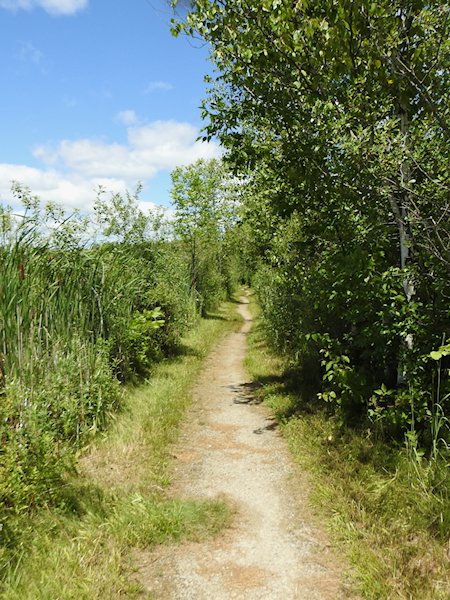
Jack Pine Trail, which consists of three concentric loops ranging from 0.7 km to 2.3 km, is the only place where I have reliably found Arrowhead Spiketail in mid-June, a spectacular black and yellow dragonfly that is usually seen flying up and down the stream at the back or perching in the nearby vegetation. It is also a great spot for emeralds, with Racket-tailed Emerald, Brush-tipped Emerald, Common Baskettail, and Prince Baskettail being the most common. In 2014 the largest loop was inundated with Williamson’s Emeralds, a species readily distinguished in flight from the Brush-tipped Emerald by its longer, slimmer build. This dragonfly species takes four years to complete its life cycle, so I was hoping for good numbers in 2018 but only found two individuals in Stony Swamp. Then, in 2025 after spotting a larger Somatochlora emerald flying with the Brush-tipped Emeralds at the back of the largest loop, I caught a male Kennedy’s Emerald on two separate dates and a Williamson’s Emerald once! I am not sure why this trail has so many different emerald species here, but I now refer to the trail through the marsh at the back of the trail system as the “Emerald Corridor” since these dragonflies readily fly up and down the trail and can be seen perching in the trees. Single sightings of Stream Cruiser, Slaty Skimmer, Black-tipped Darner, a Phanogomphus clubtail and a larger, unidentified clubtail may indicate strays.
Lime Kiln Trail, a 2.1 km trail that passes through wetlands, forest, a regenerating burn site, and a large, open alvar is a good spot to find Band-winged Meadowhawks in the late summer (usually near the ditch along Moodie Drive or around the parking lot), Wandering Gliders in the alvar, and darners near the two new ponds next to the parking lot.
Old Quarry Trail contains two loops — a medium loop (1.9 km) and a long loop (2.7 km) — as well as additional trails connecting to the Trans-Canada Trail and Trail 24 system. A large marsh is the centerpiece of this trail, attracting the usual pond species. Emerald Spreadwings have been found along the trail system, as has a Hudsonian Whiteface – the only place in Stony Swamp where this species has been seen. A Swamp Darner was found on Trail 24 near Lucie Park on June 15, 2024 – one of the few places this species has been recorded in Ottawa.
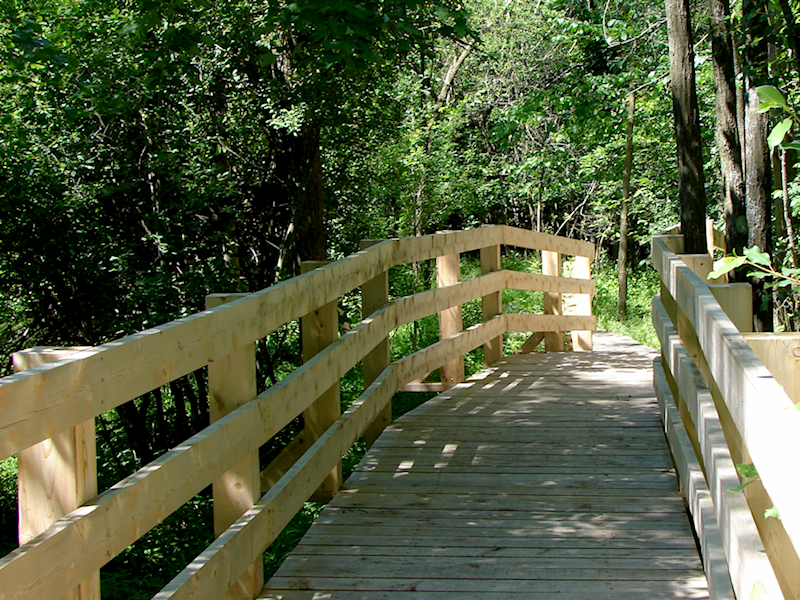
The Beaver/Chipmunk Trails consist of two concentric loops that are 1.2 and 0.7 km long respectively. It is a great place to see darners, particularly in the grassy area south of the parking lot and the meadow in the middle of the trail. Lance-tipped Darners, Canada Darners and Common Green Darners are the most common species, but Green-striped Darners have been found here in recent years just off the parking lot. Meadowhawks are abundant here in the early fall. One-time sightings include Williamson’s Emerald and Wandering Glider in the parking lot, and an Arrowhead Spiketail near the marsh at the back.
 OdoNotations