
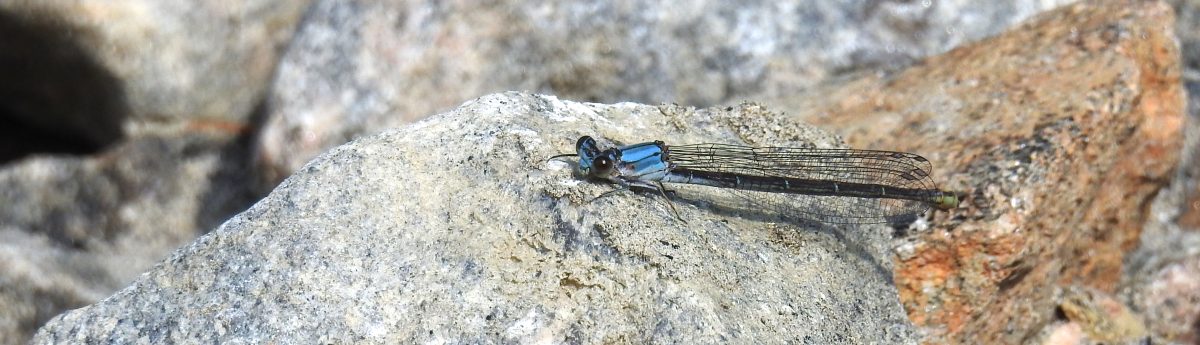
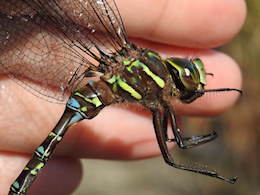
Last year I participated in my first Odolympics and had so much fun that I planned to do it again this year. The Odolympics is a special bioblitz hosted by the Dragonfly Society of the Americas, Odonata Central, and Sociedad de Odonatología Latinoamericana in order to record as many odonata species from as many places in the Western Hemisphere as possible. This specialized bioblitz is only three years old, and there are usually two Odolympics each year: one falling during the North American summer, and one falling during the South American summer in order generate a snapshot of odonate distribution throughout both hemispheres. The 2023 Summer Odolympics ran from August 19-27, giving observers two weekends to collect observations. Although late August is well past the peak of dragonfly diversity, I ended up counting 27 species, and photographed all but three. Even with the less-than perfect weather last year, I thought that 27 species for the end of August is pretty good, providing a much better snapshot of the odes on wing in Ottawa than I had anticipated.
I was hoping that the 2024 Odolympics would fall within the peak of dragonfly season here in Canada (namely June or July) and was disappointed when I learned that they would run from September 7-15, a date chosen by the organizers with the hopes of adding some new species to the Odolympics list (not likely this far north, however). Still, my experiment last year proved worthwhile enough to try it again this year; I was curious to see how many species I could find still flying as the season waned toward autumn.
Once the dates had been determined, I ran two searches through iNaturalist: first, all the species I found during the same time period last year. The second was all the species in Ottawa found during the month of September for all years. Because the weather was so warm last year, I’d found a good variety of odes and figured that would be a solid basis for the same period this year. According to iNaturalist, I’d seen 19 species during the same period last year:
- Slender Spreadwing
- Sweetflag Spreadwing
- Spotted Spreadwing
- Familiar Bluet
- Azure Bluet
- Orange Bluet
- Vesper Bluet
- Eastern Forktail
- Fragile Forktail
- Sedge Sprite
- Common Green Darner
- Canada Darner
- Lance-tipped Darner
- Shadow Darner
- Lake Darner
- Wandering Glider
- White-faced Meadowhawk
- Autumn Meadowhawk
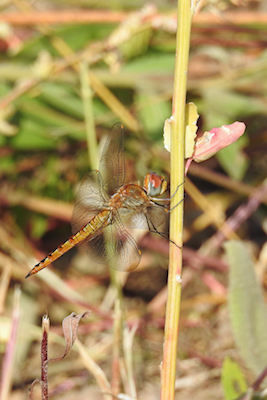
- Saffron-winged Meadowhawk
If I expand this to include all users in Ottawa during the same date range, a few other species are included: Blue Dasher, Spot-winged Glider, Elusive Clubtail and Tule Bluet.
Although iNaturalist can’t provide a list of all observations for that same period over all years, it can provide a list of all species observation during September for all years. That gives me a list of 48 species to aim for:
- Ebony Jewelwing
- Emerald Spreadwing
- Northern Spreadwing
- Sweetflag Spreadwing
- Slender Spreadwing
- Swamp Spreadwing
- Spotted Spreadwing
- Powdered Dancer
- Violet Dancer
- Familiar Bluet
- Azure Bluet
- Tule Bluet
- Skimming Bluet
- Orange Bluet
- Vesper Bluet
- Eastern Forktail
- Fragile Forktail
- Citrine Forktail1
- Sedge Sprite
- Common Green Darner
- Canada Darner
- Lance-tipped Darner
- Shadow Darner
- Green-striped Darner
25. Black-tipped Darner
26. Lake Darner
27. Mottled Darner
28. Cyrano Darner
29. Cobra Clubtail
30. Elusive Clubtail
31. Prince Baskettail
32. Swift River Cruiser
33. Eastern Pondhawk
34. Blue Dasher
35. Eastern Amberwing
36. Halloween Pennant
37. Calico Pennant
38. Black Saddlebags
39. Wandering Glider
40. Spot-winged Glider
41. White-faced Meadowhawk
42. Band-winged Meadowhawk
43. Saffron-winged Meadowhawk
44. Autumn Meadowhawk
45. Slaty Skimmer
46. Twelve-spotted Skimmer
47. Widow Skimmer
48. Common Whitetail
This was a fantastic list of species for Ottawa, though I had little hope of seeing many of these, such as Citrine Forktail (see footnote), Black Saddlebags, Mottled Darner (though I intended to make a visit to Sheila McKee Memorial Park again!), Cyrano Darner, Swift River Cruiser, Eastern Amberwing, and Prince Baskettail. The keys to finding many of these are simply good weather and good luck, especially during the first weekend, and it does not look as the weather will be on my side. It is supposed to rain all day Saturday and maybe Sunday (about a 40% chance) and the temperature will only be about 16°C. Thankfully the rest of the week looks better, though the cold nights are concerning….and of course I have to work:

Many of the places I visited last year are on my list for this year. They include Andrew Haydon Park (Orange and Vesper Bluets), Beaver Trail (darners), Bruce Pit (skimmers and darners; if the water still wasn’t so high I’d include damselflies), Eagleson Ponds (Saffron-winged Meadowhawk), Lime Kiln Trail (Band-winged Meadowhawk), Sarsaparilla Trail (skimmers and darners), the park behind Steeple Hill (Saffron-winged Meadowhawk and gliders), and Terry Carisse Park (bluets and skimmers). Additional places I’d like to visit this year include Sheila McKee Memorial Park (darners and perhaps Elusive Clubtails if I can catch them on a good day when they are emerging), the temporary pond at Kristina Kiss Park, (gliders) and Roger’s Pond in Marlborough Forest (a bit of a wildcard, though anything can turn up in Marlborough Forest in my experience!). If I have time I’m also considering Shirley’s Bay, Mud Lake, the Richmond Lagoons (though they were almost completely overgrown back at the end of June) and a couple of places in the town of Richmond (a park on the Jock River and a relatively new storm water pond). Unfortunately the first weekend looks to be a bit of a write-off, which means I will have to try and cram as many nearby places into my WFH days this week to make up for the time lost on the weekend.
I will be doing well if I can find the 19 or 20 species seen last year. If I can find 24 that would be even better – half of the total number of species on the Ottawa list. With more time and better weather I would try to find even more species, but there’s that thing called work that keeps getting in the way.
Good luck and good weather. Wish me both!
Footnote:
- The Citrine Forktail was a one-time wonder when a colony was discovered in Burnt Lands Provincial Park in 2008 ↩︎

 OdoNotations