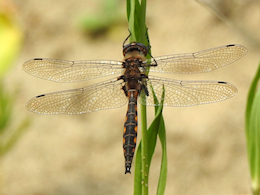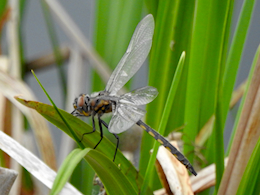
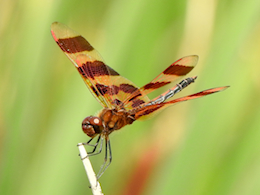
Revisiting Terry Carisse Park

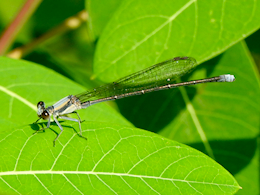
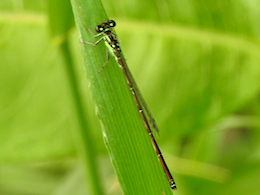
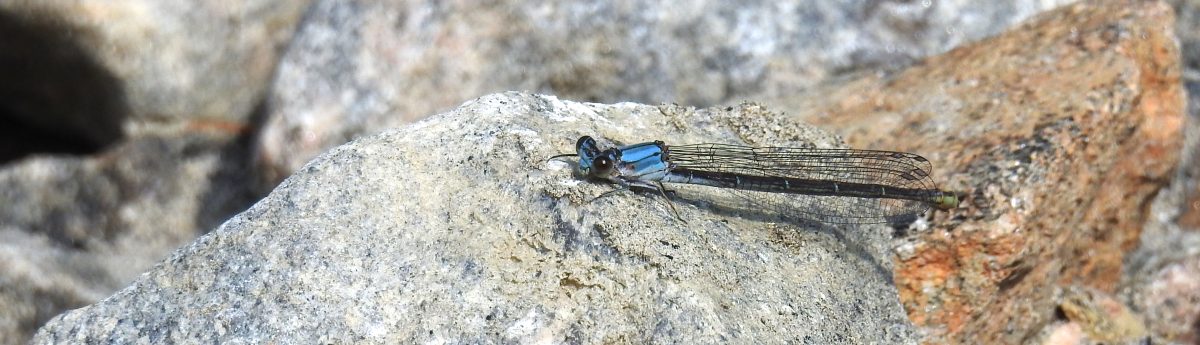
Fragile Forktail (Ischnura posita)

I haven’t spent much time at Terry Carisse Park this year, as I’ve had other projects and priorities demanding my attention and limited ode-hunting time. However, in May I received an email from a blog reader in Montreal named Pierre who was interested in trying to find a particular damselfly species – the Rainbow Bluet – which he and his wife had tried to find last year, without any luck, in known areas of Ottawa. He was interested in visiting Terry Carisse Park after reading my blog posts and messaged me in late May for the details, hoping these small, colourful damselflies would be easier to find this time around. I told him the best places to find them in the park (at the canoe/boat launch at the north end of the park and in the sunny vegetation at the top of the river bank along the south end) and told him to let me know how it went. I didn’t expect to hear from him until after his visit, but received another message on June 12th asking if I had been there recently. I hadn’t – I’d spent the previous two weekends in Nova Scotia, and the weather on my remote-work days has been too lousy to go look for odes. But when I saw the forecast for the following day – sunny and warm – I decided to head on over to see if I could do some pre-scouting for him ahead of his weekend trip.

Continue reading “Revisiting Terry Carisse Park”

Two provinces. Six families. One unbelievable day.

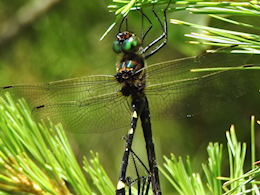
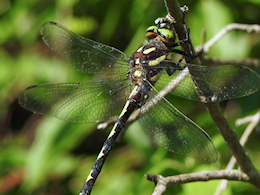
Swift River Cruiser (Macromia illinoiensis)

If you had told me it was possible to see more than a dozen Prince Baskettails hanging from the pine trees like early Christmas ornaments, three perching Swift River Cruisers (including two in a mating wheel), a perching Springtime Darner, an ovipositing Cyrano Darner, an emerging Dragonhunter, four additional clubtail species, a dozen Brush-tipped Emeralds, about 50 Widow Skimmers, and an Arrowhead Spiketail all in a single day here in the Ottawa region, I am not sure I would believe you. That kind of day is so rare in Ottawa that I would would assume that you were engaging in a particularly fanciful daydream. However, on the Quebec side of the river many things are possible. Part of it is due to the scenic geography – the deep, rocky lakes, rushing streams, and variety of marshes, swamps and bogs carved out of the Canadian Shield provide a fantastic variety of habitats. Part of it is due to the untouched wilderness outside of the Gatineau area – there are no cottages lining the shore, no subdivisions full of manicured lawns, no pesticides and insecticides to wreak havoc on insect populations. These two factors make it an excellent place to see a variety of odes – especially along the Ottawa River, a major dragonfly habitat of its own.

Continue reading “Two provinces. Six families. One unbelievable day.”

Richmond Lagoon Damselflies

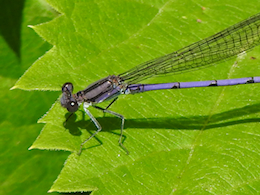
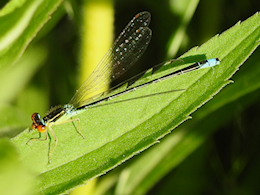
Rainbow Bluet

I often visit the former Richmond Lagoons (now called the Richmond Conservation Area) around late June or early July to look for spreadwings, as this is one of the best places to find five or six different species. It’s one of the few places I can find Lyre-tipped Spreadwings easily, and in 2023 I found another difficult-to-find species here, the Emerald Spreadwing. Both spreadwings are listed as “uncommon” in the Ottawa checklist, but the Lyre-tipped Spreadwing is also designated as “local,” having a special preference for shallow marshes and vegetated ponds completely in the open, particularly those that often dry up during prolonged droughts. While the Lyre-tipped Spreadwings typically disappear with the water, they are also quick to appear in temporary flooded areas such as farm ponds, gravel pits, and artificial ponds. While Emerald Spreadwings also inhabit densely vegetated, shallow wetlands, they can be common in shrubby or forested areas a distance away from their breeding ponds. Emerald Spreadwings are not usually successful in wetlands where predators such as fish or dragonflies are common, which may explain why they can be tough to find.

Continue reading “Richmond Lagoon Damselflies”

Exploring Kanata’s Creeks

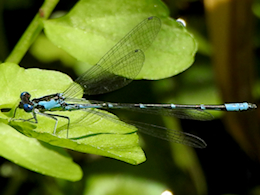
Aurora Damsel

Last November I spent some time on Google maps looking for accessible creeks around the fringes of Kanata north where I might find some creek-loving odonates. If a tiny fragment of a stream in Stony Swamp could hold Arrowhead Spiketails, who knows what other species might call these small streams home? I wasn’t expecting anything as magnificent or scarce as a Mustached or Eastern Least Clubtail, but I thought that Stream Cruisers, Fawn Darners, River Jewelwings, and maybe a spiketail might be possible.

A few areas looked particularly interesting, including a section of Shirley’s Brook between Station Road and Monk Environmental Park, the stream that drains the eastern end of the Beaver Pond near Lismer Pines Park, and Stillwater Creek where it runs between Corkstown Road and the Trans-Canada Trail, aka the Watts Creek Pathway. Although all of these streams run through green space, the surrounding areas had become built up with new homes and developments over the years. The Crystal Bay/Lakeview Park subdivision just south of Andrew Haydon Park is long-established, with a narrow band of trees running between the subdivision and Highway 417, but the area around the Beaver Pond off of Goulbourn Forced Road started being cleared for housing relatively recently (around 2010), starting with the controversial Terry Fox extension, and houses are still being built there to this day. The forest is thickest in Monk Environmental Park where there is little encroachment so far, and my hopes were highest for this little park as a result.

Continue reading “Exploring Kanata’s Creeks”

New Odes in Marlborough Forest

Arrowhead Spiketail (Zoraena obliqua)

Marlborough Forest is one of my favourite spots for ode-hunting. There are so many terrific species there, including some considered scarce, rare, or even very rare according to the official Ottawa checklist. So far I’ve found three lifers here – two of which I have not seen again in the forest or anywhere else: Ocellated Emerald on June 21, 2020, and Ashy Clubtail on June 19, 2022. The third species, Kennedy’s Emerald, was a lifer for me in Marlborough Forest on June 12, 2021 in Marlborough Forest and then, oddly enough, turned up on a house in Nepean on May 21, 2023. The sheer size of the forest – over 9,300 hectares of meadows, wetlands, old plantations and natural forests – tantalized me with the mysteries hidden within its depths, whether those be bog-loving Somatochlora emeralds, remnants of old farmsteads, or rumours of long-lost graveyards.

Continue reading “New Odes in Marlborough Forest”

Stony Swamp Dragons

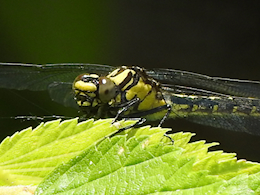
Horned Clubtail

It’s mid-June, which means the season is flying by and soon some of the early-season species will be gone. I’ve been trying to get out every chance I get, but uncooperative weather and a busy work week after my vacation meant that I wasn’t really able to get out until earlier this week for some intensive dragon-hunting. I worked from home Monday and Wednesday, and with the weather finally turning warm and sunny, a couple of lunchtime outings this week in Stony Swamp resulted in some surprisingly good dragonflies!

On Monday I visited Jack Pine Trail with one goal: to see if any Arrowhead Spiketails were flying. Some emeralds would be nice, too, as well as any spreadwings or cruisers, but the spiketail was my target species. Jack Pine Trail is the most reliable location for it in the west end, and when present I only seem to find it during the second or third week of June. The official checklist of Ottawa says it is present in the region between early June and early July, so I had high hopes of finding one.

Continue reading “Stony Swamp Dragons”

Rarities Along the River

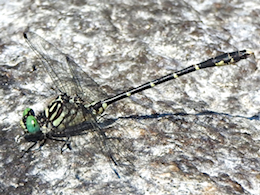
Mustached Clubtail

The Uhler’s Sundragon is an early-flying member of the emerald family that is apparently more easily found on the Quebec side of the OFNC study circle. However, iNaturalist shows a few records from the Quyon ferry dock along the Ottawa River, so one of my goals was to spend some time visiting places like the ferry dock, Sheila McKee Memorial Park, and Fitzroy Provincial Park to look for it and other river odes, including the uncommon Mustached Clubtail. I’ve only seen the Sundragon twice, both times in Nova Scotia, and in the same habitat – medium-sized- rocky forest streams flying over the gentle pools of water either at the top or bottom of a waterfall. Fortunately their patrols take them along the shoreline, and I was able to catch two in 2024 and one earlier this year. My goal was to see one in Ottawa, and I had high hopes for finding one at Fitzroy Provincial Park as there are two small rivers running through it that I wanted to check.

Continue reading “Rarities Along the River”

To See an Elfin Skimmer

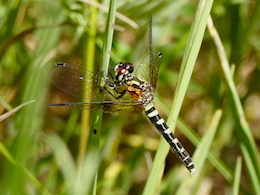
Elfin Skimmer

On Saturday, June 14, 2025 Derek Dunnett and I led a combined birding and dragonfly outing at Murphy’s Point Provincial Park for the Ottawa Field-Naturalists’ and McNamara Field Naturalists’ Clubs. It was restricted to 20 people for carpooling purposes (the park roads are quite narrow for parking) and 18 showed up altogether. Unlike our trip last year, the weather was perfect: cool and sunny in the morning, hot and sunny in the afternoon with a hint of a breeze. Our targets this year included Cerulean Warbler (which had been heard singing earlier in the week), Blue-winged Warbler, and Golden-winged Warbler, while our odonate targets included the diminutive Elfin Skimmer and various stream odonates. Last year the trip had been postponed several times due to rain, and we missed the Blue-winged Warbler, Golden-winged Warbler, and Elfin Skimmer as by the time we had visited (July 7) it was late in the breeding season and the weather for ode-hunting (thickly overcast in the morning) was less than ideal.

Continue reading “To See an Elfin Skimmer”

New Dragonflies at Bruce Pit

Beaverpond Baskettail

I’ve been spending time on iNaturalist again, updating my list of odonates found at various places around Ottawa and making a list of target species that others have seen that I have not. Bruce Pit was of particular interest to me, as Chris Lewis had sent me her personal list of species last summer; I was missing quite a few species she had seen (though I had found others she had not). Between her list and those listed in iNaturalist, I counted nine regular species that I was missing from my personal list: Black-tipped Darner, Harlequin Darner, Dusky Clubtail, Lilypad Clubtail, Common Baskettail, Prince Baskettail, Emerald Spreadwing, Orange Bluet, and Stream Bluet. One reason is that I usually don’t visit Bruce Pit early in the dragonfly season when some of these species are flying, while another is that sometimes when I visit I only check one or two areas. As a result, I planned to visit the conservation earlier in the season and see if I could find some new species for my personal list.

Continue reading “New Dragonflies at Bruce Pit”

The 2025 Ode Season Begins!

Spiny Baskettail

I usually see my first dragonfly of the year in April, which is not surprising given that the first dragonflies migrate here from further south during the first prolonged warm spell of the month. They are always Common Green Darners, heading north to find new ponds and lakes in which to breed. It isn’t until later in May, usually the second week when temperatures are consistently in the 15-20°C range, that the local species emerge, chiefly skimmers and emeralds and, of course, damselflies. However, this season it didn’t warm up to 20°C until the very end of the month of April. It was still warm by the time the first weekend of May arrived, and on May 4th I finally saw my first Common Green Darners at a small pond in Stony Swamp – three males, it appeared.

Continue reading “The 2025 Ode Season Begins!”

Last Odes on the Wing: October and November 2024

Spotted Spreadwing (Lestes congener)

Another ode season is over. Ottawa had some beautiful warm weather during the month of October – there were 26 consecutive days where the daytime high reached 9°C or above (between October 1st and 26th), tying for the 5th longest streak on record. As a result of the warm weather, I thought this would be the year I’d find more species flying later. Our first frost of the season occurred on October 16th with an overnight low of -1°C; this is a week later than the average first frost date. Then a warm spell hit late in the month – October 30th reached a ridiculous high of 22.2°C and October 31st hit 23.9°C, the warmest such days since records began in 1872. The month was mostly dry, with very little rain until the 29th.

November was cooler, though daytime temperatures remained above zero throughout the entire month. It’s not the day-time high that limits the dragonfly season in Ottawa, however; rather, it’s the nighttime lows falling below freezing. While the latest-flying dragonfly, the Autumn Meadowhawk, can withstand a few light frosts, a hard frost will kill both it and the flying insects it feeds on even if subsequent days reach double-digits. November 2nd and 3rd were both below -3°C, while November 9th and 10th were both below -2°C. A string of subzero nights after November 11th followed by warmer but cloudy, windy or wet days after November 20th ended the dragonfly season for good.

Continue reading “Last Odes on the Wing: October and November 2024”

The 2024 Summer Odolympics

Autumn Meadowhawk (Sympetrum vicinum)

The 2024 North American edition of the Summer Odolympics were held between September 7-15, giving ode enthusiasts two weekends and as much time as a regular working week would allow to collect observations. I had hoped to find 19 or 20 species based on the same period spent collecting observations last year, but as most species are on the decline by this time, I knew I needed both good weather and good luck to come up with a respectful number. Unfortunately, neither luck nor weather were in my favour that first crucial weekend when I hoped to find a few species whose season ended around the beginning of September; it rained most of Saturday, and the temperature never rose above 15°C. Although it didn’t rain nearly as much on Sunday, the weather was worse: it was cloudy, windy, and the temperature never rose above 14°C. In fact, it was the coldest September 8th in more than 70 years (since 1949) and the windiest since records began in 1953 with a mean wind of 21 km/h. With a 1:00am windchill of 1.6 it was almost (within 0.1) the lowest windchill ever recorded on September 7th. Cold, wet, windy nights are even more of an obstacle, as many late-lingering species may not survive the low temperatures. When the sun began peeking out from the thick, fast-moving clouds around 4:30 I headed out despite the wind as to have zero species recorded on the first weekend was unthinkable. I didn’t expect much, and found only two species at the Eagleson ponds: an Eastern Forktail and a Slender Spreadwing.

Continue reading “The 2024 Summer Odolympics”

Road Trip: Odes in P.E.I.

We only had one night on P.E.I. (which we spent at a hotel in Summerside across from the harbour) so we didn’t do a lot of hiking or exploring. We spent the day we arrived touring the western side of the island, where I thoroughly enjoyed the birds and views of North Cape, and the day of our departure exploring the eastern half. It wasn’t until the second day that I saw any odonates – we visited the Anne of Green Gables Museum and the birthplace of L.M. Montgomery, had lunch in Charlottetown, then drove across the island to East Point before catching the ferry at Wood Islands to Nova Scotia. When we reached the museum I immediately decided not to join my dad and step-mom on the tour: there was a pond on one side of the driveway, and a small marshy wet spot on the other. I could finally do some ode-hunting!

Marshy area at the Anne of Green Gables Museum
Continue reading “Road Trip: Odes in P.E.I.”

A Rare Mottled Darner

Mottled Darner

Sheila McKee Memorial Park has been such an amazing spot for odes this year that when the weekend called for not one, but TWO clear days, I decided it was worth going back for a few hours and looking for more clubtails. I arrived around 10:00, and as usual a dragonfly had claimed the first sunny opening in the woods as its territory – however, unlike the Common Whitetail, Racket-tailed Emerald, and Black-shouldered Spinyleg of my previous visits, this one was a brilliant green Eastern Pondhawk actively darting around and landing on different leaves. I took one terrible photo of it sitting on a leaf above head-height, facing me. This was the only pondhawk I saw, so I’m glad I got a photo for iNaturalist.

Continue reading “A Rare Mottled Darner”

Finding Amberwings

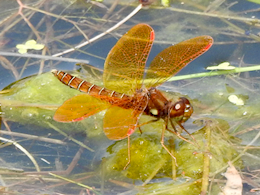
Eastern Amberwing

The Amber-winged Spreadwing at Bruce Pit wasn’t the only good find there on July 14th. Back on July 6th I’d found a different sort of amber-wing: an Eastern Amberwing, one of our smallest dragonflies. I’d also found and photographed a Halloween Pennant, a species I’d seen flying over the water last year but hadn’t managed to find perching. I observed both species on the slope between the fence and the edge of the pond, and both were new for my Bruce Pit list. I asked Chris Lewis if she had seen either species there before, and she told me she had seen Halloween Pennant there in the past, but not Eastern Amberwing – no surprise there, since this is a relatively new addition to the Ottawa area. When I headed over to Bruce Pit after finding the Amber-winged Spreadwing at Bill Teron Park on July 14th, it was to see if I could find any more Eastern Amberwings or Halloween Pennants and get some better photos.

Continue reading “Finding Amberwings”