Revisiting Terry Carisse Park

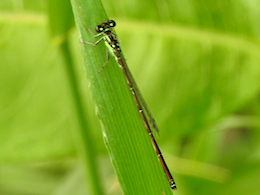
Fragile Forktail (Ischnura posita)

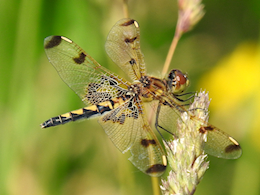
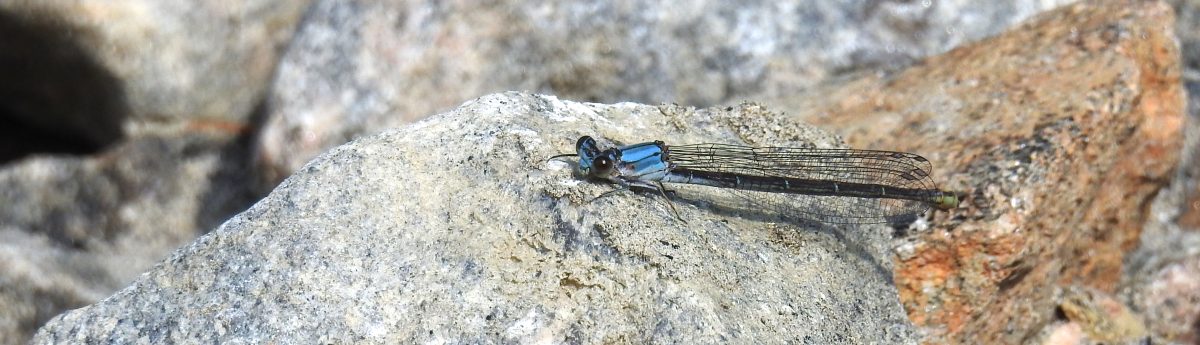
I haven’t spent much time at Terry Carisse Park this year, as I’ve had other projects and priorities demanding my attention and limited ode-hunting time. However, in May I received an email from a blog reader in Montreal named Pierre who was interested in trying to find a particular damselfly species – the Rainbow Bluet – which he and his wife had tried to find last year, without any luck, in known areas of Ottawa. He was interested in visiting Terry Carisse Park after reading my blog posts and messaged me in late May for the details, hoping these small, colourful damselflies would be easier to find this time around. I told him the best places to find them in the park (at the canoe/boat launch at the north end of the park and in the sunny vegetation at the top of the river bank along the south end) and told him to let me know how it went. I didn’t expect to hear from him until after his visit, but received another message on June 12th asking if I had been there recently. I hadn’t – I’d spent the previous two weekends in Nova Scotia, and the weather on my remote-work days has been too lousy to go look for odes. But when I saw the forecast for the following day – sunny and warm – I decided to head on over to see if I could do some pre-scouting for him ahead of his weekend trip.

Continue reading “Revisiting Terry Carisse Park”
New Dragonflies at Bruce Pit

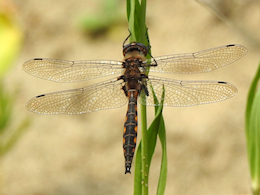
Beaverpond Baskettail

I’ve been spending time on iNaturalist again, updating my list of odonates found at various places around Ottawa and making a list of target species that others have seen that I have not. Bruce Pit was of particular interest to me, as Chris Lewis had sent me her personal list of species last summer; I was missing quite a few species she had seen (though I had found others she had not). Between her list and those listed in iNaturalist, I counted nine regular species that I was missing from my personal list: Black-tipped Darner, Harlequin Darner, Dusky Clubtail, Lilypad Clubtail, Common Baskettail, Prince Baskettail, Emerald Spreadwing, Orange Bluet, and Stream Bluet. One reason is that I usually don’t visit Bruce Pit early in the dragonfly season when some of these species are flying, while another is that sometimes when I visit I only check one or two areas. As a result, I planned to visit the conservation earlier in the season and see if I could find some new species for my personal list.

Continue reading “New Dragonflies at Bruce Pit”

Marlborough Forest: Heaphy Road

Frosted Whiteface

Last year I spent a cloudy Sunday morning in the south end of Marlborough Forest, looking for for new parts of Marlborough Forest to explore as there were very few odonate records on iNaturalist from that area. I visited four places that looked intriguing on Google Map: an unmaintained trail extending beyond Mulholland Road at Harnett Road; a large wetland further south on Harnett Road directly accessible by car; another unmaintained trail beyond Weedmark Road off of Paden Road; and the Paden Road trail itself. I had hoped to have time to explore Heaphy Road on the western boundary, as Google Maps shows it running through another big wetland and crossing over a large creek before encountering more wetlands. I wasn’t sure what the creek looked like in this area, whether it was a slow, deep, muddy, meandering waterway like the Jock River or if it was a narrow, rocky, fast-flowing stream like those I had seen recently in Nova Scotia. Fast-flowing waters provide habitat to a different variety of odonate species than the slow-moving streams and marshy ponds that make up much of Ottawa county, and I was hoping that there was a fast enough flow to attract jewelwings, clubtails, and perhaps even a spiketail. So far all that had been recorded in that area was Sedge Sprite, Common Whitetail, Dot-tailed Whiteface, and Common Green Darner, all very abundant and widespread species in Ottawa.

Continue reading “Marlborough Forest: Heaphy Road”

Next Gen Dragon-hunters

Canada Darner
Canada Darner

After I returned from my visit to southern Ontario I still had bugs on the brain, specifically odonates. Now that September has arrived the days will be getting shorter and the nights cooler, which spells the end of the season for a number of different species. It is, however, prime time for darners, and I still had yet to find a Lake Darner or Green-striped Darner this year. I also haven’t seen any Saffron-winged Meadowhawks either, another species that peaks in August and early September, despite searching known locations at the Eagleson storm water ponds. While I knew that bird migration was heating up, my brain hasn’t yet made the switch from odes to birds. I am having trouble getting up early enough to get out for my regular birding walks before work, and I won’t even consider putting my net away while the weather is still nice – I want to wring every last sunny moment looking for dragonflies and damselflies before taking the mandatory six-month winter hiatus. This has never happened to me before, and while I still am using eBird to keep track of what I see, most of my checklists are incidental ones noting only a few species that caught my attention while out later in the day dragonfly-hunting.

Continue reading “Next Gen Dragon-hunters”

‘Tis the Season for Spreadwings

Emerald Spreadwing

If the first half of June is great for seeing all kinds of pond damsels (Family Coenagrionidae), the latter half is great for seeing all sorts of spreadwings (Family Lestidae). They may not have the bright colours or the variety of hues of the pond damsels, but what the spreadwings lack in colour they make up for with their larger size and the beautiful metallic green colouration of some of the species. Adult male spreadwings are generally one of three colours: metallic green, black, or brown, each developing various amounts of bluish-gray pruinosity on the thorax and tip of the abdomen. They can be easily identified in the hand or in a photograph that clearly shows the tip of the abdomen viewed from above, as each species has paraprocts that are distinctly different in size and/or shape. On the other hand, females and tenerals are generally duller, browner, or sometimes even bronze or orange in colour. Much like female bluets, these spreadwings are difficult to identify in the field; though some can be examined and identified in the hand, others require a microscope. As such, I have never really delved into the difficulties of identifying female spreadwings.

Continue reading “‘Tis the Season for Spreadwings”

Damselflies in New Places

Violet Dancer
Violet Dancer

Damselflies are small odonates related to dragonflies, but belong to Order Zygoptera instead of Order Anisoptera. Unlike dragonflies, damselflies have very slender abdomens, and the forewing and hindwing are similar size and shape. Two of the three families found in eastern North America – the broad-winged damsels and pond damsels – hold their wings above the body, parallel to the abdomen, while perching. The third family – the spreadwings – do not perch horizontally with their wings parallel to the body, but typically “hang” from a perch, with the wings slightly spread at an angle. Adult damselflies are not strong fliers, and generally do not travel far from water. They are most often found in vegetation or on the ground near ponds, streams, and other bodies of water. Because of their small size they can be difficult to see, but the dark wings of the jewelwings and brightly coloured abdomens of some of the pond damsels help aid in observation.

Continue reading “Damselflies in New Places”

Ode-Hunting in Early July

Taiga Bluet
Taiga Bluet

By early July a variety of dragonflies and damselflies are on the wing, although some of the early species – such as the Beaverpond and Spiny Baskettails – have already finished flying for the year. This is usually the time of year when I start focusing on odes on afternoon outings in addition to enjoying them as distractions on morning birding outings. While some of the best ode-hunting can be found along the Ottawa River (including Mud Lake, Andrew Haydon Park, Petrie Island, and Morris Island) there are some great spots in my own backyard, including Bruce Pit, Stony Swamp, and the Eagleson storm water ponds (which will be the focus of a separate post of its own). Bruce Pit is a particularly great spot for odes, and some unusual ones have turned up there including Swift River Cruiser, Black Meadowhawk and Black Saddlebags. Eastern Red Damsels used to breed there prior to 2010, and I decided to spend the afternoon of July 4th wading around the edges of Bruce Pit to see if I could find any. Unfortunately, the area where we used to see them (and odes such as Amber-winged Spreadwing and Saffron-winged Meadowhawk) has become overgrown with cattails and phragmites over the year, so I wasn’t sure it was possible to walk along the shore where we used to go a decade ago (I can’t believe it has been so long …. apologies to those who have never visited my old LiveJournal site, back in the days when I used to host my images on Photobucket which no longer allows free hosting and has hidden many of my images).

Continue reading “Ode-Hunting in Early July”

Ode-hunting in Prince Edward County

Calico Pennant

During the first week of July my fiancé and I spent some time in Prince Edward County with my dad’s family. We rented a cottage on Loves Lane on Prince Edward Bay, a nice three-bedroom place with 8 acres of land only 20 minutes away from both Sandbanks and Picton. The weather was beautiful, and I spent most of my time getting to know the local residents. On our first full day at the cottage (Monday, July 1st), I went for an afternoon walk on the property to see what I could find. It seemed to be a good spot for odonates; every now and then a couple of Prince and Common Baskettails flew in and started swooping above the deck. There were some other dragonflies present too, so I brought my net out in the hopes of catching one.

Continue reading “Ode-hunting in Prince Edward County”

The odes of Sugarbush Trail (Gatineau)

River Jewelwing
River Jewelwing

On the first Saturday in June I made plans to meet Chris Traynor at the parking lot of the Sugarbush Trail in Gatineau Park to look for dragonflies. He has re-named this trail the “Clubtail Trail” due to the large number of clubtails that breed there, and I was eager to find some new species for my life list. Unfortunately our last visit there wasn’t terribly productive due to the overcast skies; the weather on Saturday was much nicer, sunny and warm even in the morning.

As we weren’t planning to meet until 9:00 am, I stopped by Sarsaparilla Trail first to check out the birds there. This turned out to be a fantastic idea as I heard a Least Bittern calling somewhere in the reeds to the north of the boardwalk and a Virginia Rail grunting somewhere on the south side. Other species included Brown Creeper, Eastern Wood-Pewee, Great Crested Flycatcher, Eastern Kingbird, a couple of Tree Swallows, a Marsh Wren singing in the reeds at the end of the boardwalk (the same one from last year?), a couple of Yellow Warblers, a White-throated Sparrow, and two Purple Finches.

Continue reading “The odes of Sugarbush Trail (Gatineau)”

Familiar Odes in Nova Scotia

In early July my fiancé and I spent some time in Nova Scotia, spending a night in Cape Breton before heading to the Annapolis Valley where he grew up. We decided to drive down to save on costs, spending the first night in Woodstock, NB as we did in 2008 and our second night in Baddeck on Cape Breton Island. There we stayed at the Silver Dart Lodge right above Bras d’Or Lake near the start of the Cabot Trail. The property was lovely, with single rooms in the main lodge and small chalets available for rent (we stayed in the main lodge). Situated on 90 acres, the property boasts a pool, a playground, a gazebo overlooking the small, rocky beach, and best of all, hiking trails in the woods.

We arrived in the early afternoon. Doran wanted to rest after the long drive from Woodstock, but I felt compelled to explore the property. I could hear the lovely song of a Northern Parula coming from the trees behind the lodge so I decided to start my exploration with a walk along the hiking trails. There was a charming wooden frame at the entrance of the trail; I spotted movement just above it and was surprised to see a very young robin perching on top of the frame.

Walking Trail at Silver Dart Lodge
Walking Trail at Silver Dart Lodge (click to enlarge)
Continue reading “Familiar Odes in Nova Scotia”