Richmond Lagoon Damselflies

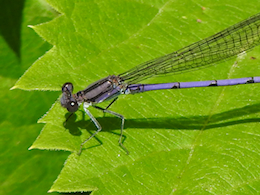
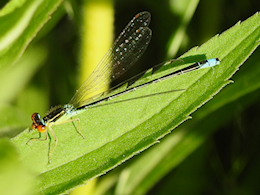
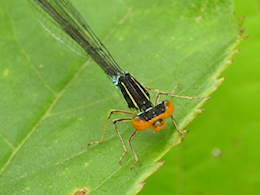
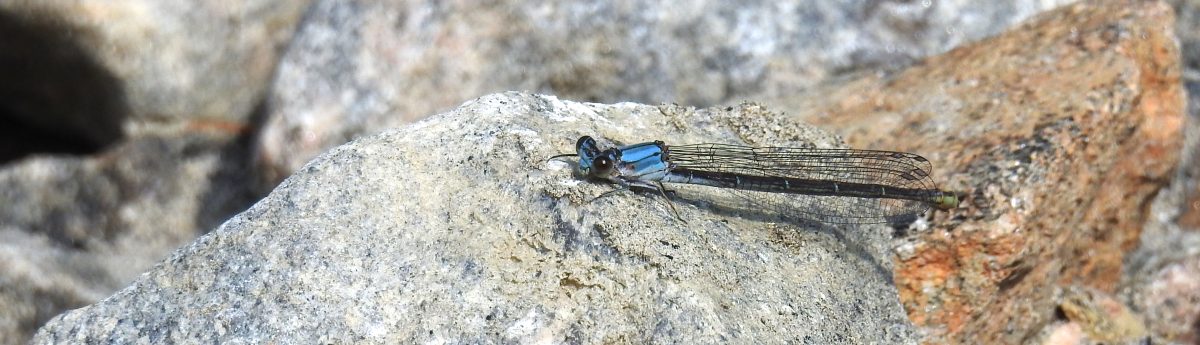
Rainbow Bluet

I often visit the former Richmond Lagoons (now called the Richmond Conservation Area) around late June or early July to look for spreadwings, as this is one of the best places to find five or six different species. It’s one of the few places I can find Lyre-tipped Spreadwings easily, and in 2023 I found another difficult-to-find species here, the Emerald Spreadwing. Both spreadwings are listed as “uncommon” in the Ottawa checklist, but the Lyre-tipped Spreadwing is also designated as “local,” having a special preference for shallow marshes and vegetated ponds completely in the open, particularly those that often dry up during prolonged droughts. While the Lyre-tipped Spreadwings typically disappear with the water, they are also quick to appear in temporary flooded areas such as farm ponds, gravel pits, and artificial ponds. While Emerald Spreadwings also inhabit densely vegetated, shallow wetlands, they can be common in shrubby or forested areas a distance away from their breeding ponds. Emerald Spreadwings are not usually successful in wetlands where predators such as fish or dragonflies are common, which may explain why they can be tough to find.

Continue reading “Richmond Lagoon Damselflies”

Rarities Along the River

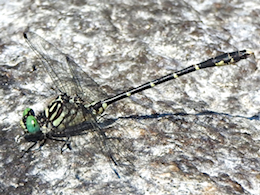
Mustached Clubtail

The Uhler’s Sundragon is an early-flying member of the emerald family that is apparently more easily found on the Quebec side of the OFNC study circle. However, iNaturalist shows a few records from the Quyon ferry dock along the Ottawa River, so one of my goals was to spend some time visiting places like the ferry dock, Sheila McKee Memorial Park, and Fitzroy Provincial Park to look for it and other river odes, including the uncommon Mustached Clubtail. I’ve only seen the Sundragon twice, both times in Nova Scotia, and in the same habitat – medium-sized- rocky forest streams flying over the gentle pools of water either at the top or bottom of a waterfall. Fortunately their patrols take them along the shoreline, and I was able to catch two in 2024 and one earlier this year. My goal was to see one in Ottawa, and I had high hopes for finding one at Fitzroy Provincial Park as there are two small rivers running through it that I wanted to check.

Continue reading “Rarities Along the River”

The 2023 Summer Odolympics

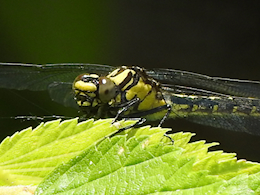
Dragonhunter
Dragonhunter

When I first heard about the Odolympics – a special bioblitz hosted by the Dragonfly Society of the Americas, Sociedad de Odonatología Latinoamericana, and Odonata Central in order to record as many odonata species from as many places in the Western Hemisphere as possible – I knew I had to participate. This specialized bioblitz is only two years old, and there are usually two Odolympics each year: one falling during the North American summer, and one falling during the South American summer in order generate a snapshot of odonate distribution throughout both hemispheres.

Dragonflies and damselflies, collectively known as odonates, are valuable indicators of a wetland’s environmental health and biodiversity. Simply put, the more odonates that use a wetland for breeding and feeding purposes, the healthier the ecosystem. Naturalists were encouraged to submit their observations during the bioblitz via one of two platforms: iNaturalist, or Odonata Central. While I love iNaturalist and have been using it for a few years now to record my non-avian observations, I began submitting my observations to Odonata Central last year when it developed a checklist-based phone app similar to eBird. iNaturalist also has a phone-based app for submitting observations, but it is intended to be used in conjunction with the phone’s camera which I only use as a backup camera when my Nikon Coolpix’s battery decides to take a nap. Although I love the ease of searching for data in iNaturalist’s projects, I chose to record my Odolympic observations in Odonata Central as it allowed me to include observations of species for which I am usually unable to get a photo (yes, I’m looking at you, Prince Baskettail and Wandering Glider!)

Continue reading “The 2023 Summer Odolympics”

Nova Scotia 2023: Odes of Marsh and Pond

River Jewelwing

The weather played a big part in our trip this year. Rainclouds blew in and blew out all week long, bringing rain on most of the days we were there.  Fortunately the sun came out long enough to get in a few hikes at the various waterfalls and for me to take some long walks while Doran was out with the car. I spent quite a few hours looking for odonates and other critters around the ponds and the Annapolis Rail Trail, mostly in the afternoons when the sky cleared up. Although they are maybe half as long as the Eagleson storm water ponds by my house and much less diverse in terms of wildlife species, I still managed to find an interesting variety of creatures.

The afternoon after our waterfall search was particularly productive. I found my first Band-winged Meadowhawk and Familiar Bluet of the trip, which are also my first observations in iNaturalist for Nova Scotia for these species.

Continue reading “Nova Scotia 2023: Odes of Marsh and Pond”

Elegance and Rainbows at Terry Carisse Park

Rainbow Bluet

Last year I embarked on a new odonate project: to study the species found at one tiny park along the Jock River. This park, originally named Bow of the Jock Park before it was changed to Terry Carisse Park in 2006, consists of a narrow strip of green space that runs perhaps 500 or 700 meters along the shore of the Jock River on an elevated bank about two meters above the water. The park itself consists mostly of manicured lawn with a wooded swamp at the north end where Mahoney Creek empties into the Jock River, two launching areas for canoes and kayaks, a playground, and a thick band of riparian vegetation that almost completely blocks all views of the river from one end of the park to the other. The Jock River itself is smaller than the Rideau River, much more sluggish, without a lot of rocks or rapids that would attract the clubtails and spiketails found in Gatineau Park. It hasn’t been surveyed for odonates as well as the Ottawa River has, mainly because much of it runs through private agricultural or residential land, with only a few small parks with even smaller access points in Richmond and Ottawa.

Continue reading “Elegance and Rainbows at Terry Carisse Park”

Damselflies in New Places

Violet Dancer
Violet Dancer

Damselflies are small odonates related to dragonflies, but belong to Order Zygoptera instead of Order Anisoptera. Unlike dragonflies, damselflies have very slender abdomens, and the forewing and hindwing are similar size and shape. Two of the three families found in eastern North America – the broad-winged damsels and pond damsels – hold their wings above the body, parallel to the abdomen, while perching. The third family – the spreadwings – do not perch horizontally with their wings parallel to the body, but typically “hang” from a perch, with the wings slightly spread at an angle. Adult damselflies are not strong fliers, and generally do not travel far from water. They are most often found in vegetation or on the ground near ponds, streams, and other bodies of water. Because of their small size they can be difficult to see, but the dark wings of the jewelwings and brightly coloured abdomens of some of the pond damsels help aid in observation.

Continue reading “Damselflies in New Places”

Terry Carisse Park in the Summer

Rainbow Bluet

Most naturalists who have heard of Terry Carisse Park along the Jock River associate it with birds – particularly the Hooded Warbler that spent a few days there in May 2014. As a rare bird for Ottawa, this discovery put this small riparian park on the map for many Ottawa birders. Other people may associate it with the Osprey nest there, although the Osprey haven’t nested there for a few years now. I myself have returned regularly to this park in the spring and fall to look for the Rusty Blackbirds that often stop over here during migration – in May 2021 I found at least 50 of these declining birds feeding on the lawn and perched in the trees that line the river bank. Because of the thick shoreline vegetation, the wooded swamp to the north, and the open grassy areas dotted with conifers it is a good place to look for birds during migration. I had never been here during the summer breeding season, and it occurred to me this summer that it might be a good spot to look for odonates. I started my summer ode survey on July 2, 2022, continuing through early August, and found more species than I expected – including some species I’ve only seen at Petrie Island or Morris Island Conservation Area!

Continue reading “Terry Carisse Park in the Summer”

Ode-hunting along the River

Shadow Darner
Shadow Darner

Mud Lake and Andrew Haydon Park are usually excellent places to find different species of dragons and damsels throughout the summer months. In both 2015 and 2019 I had a good number of species at Andrew Haydon Park in late July, and an OFNC dragonfly outing at Mud Lake on July 21, 2013 also netted some fantastic species. I was hoping for some similar luck on an ode-hunting trip on July 24th, but this time I found fewer species and fewer individuals overall. I am not sure why there seem to be so few dragonflies around good pond habitat these past two years (such as the Eagleson ponds), but the trend is concerning.

My first stop was the shoreline at Mud Lake where I hoped to find some large river clubtails perching on the rocks in the channel behind the filtration plant. When I arrived I was happy to find two dragonflies perching on the rocks right away, and managed only to photograph one before a couple of people came along and scared them both – while I’m certain one of them was a clubtail, the one I photographed turned out o be an Eastern Pondhawk. The clubtail did not return, although I saw a couple flying out over the water several times on my visit.

Continue reading “Ode-hunting along the River”

Clubtails at Sheila McKee Park

Cobra Clubtail

On July 22nd I received an email from Chris Lewis about a new dragonfly spot along the Ottawa River. I’d been to Shelia McKee Park out near Dunrobin just once, on an OFNC trip in 2015 to look for herps; it has a network of woodland trails and a steep staircase that leads down from the top of the cliff to the rocky beach at the bottom. Chris said she found evidence of a very recent dragonfly emergence of in the form of both exuviae and teneral dragonflies; she recognized exuviae of both clubtails and emeralds, though she was not able to identify them to species. She saw an unidentified darner and several teneral meadowhawks in the woods, and several Powdered Dancers and a pair of Stream Bluets in tandem near the water. However, it was her clubtail report that intrigued me: she mentioned one Lancet Clubtail, both mature and teneral Black-shouldered Spinylegs, several Midland Clubtails, and one Cobra Clubtail which had become the unfortunate meal of a Midland Clubtail. It is amazing that I’ve never considered going back to this park for odes before – the shoreline here is quite rocky, with little or no emergent vegetation, reminiscent of Britannia Point at Mud Lake or the causeway at Morris Island, both of which are great spots for clubtails. Curious to see these clubtails for myself, I headed out the following Sunday (July 28th) and brought my net in case there was anything worth catching.

Continue reading “Clubtails at Sheila McKee Park”

Ode-hunting in Prince Edward County

Calico Pennant

During the first week of July my fiancé and I spent some time in Prince Edward County with my dad’s family. We rented a cottage on Loves Lane on Prince Edward Bay, a nice three-bedroom place with 8 acres of land only 20 minutes away from both Sandbanks and Picton. The weather was beautiful, and I spent most of my time getting to know the local residents. On our first full day at the cottage (Monday, July 1st), I went for an afternoon walk on the property to see what I could find. It seemed to be a good spot for odonates; every now and then a couple of Prince and Common Baskettails flew in and started swooping above the deck. There were some other dragonflies present too, so I brought my net out in the hopes of catching one.

Continue reading “Ode-hunting in Prince Edward County”

Searching for Damselflies at Hurdman

Eastern Forktail (male)

On the first day of June I brought my camera to work with me and headed over to Hurdman at lunch, hoping to find some interesting butterflies and odes to photograph. Hurdman can be a very “buggy” place, so I was sure to find something interesting; at that time I still hadn’t seen my first damselflies of the year, and Hurdman is a great spot to find Eastern Forktails, Elegant Spreadwings, Powdered Dancers, Stream Bluets and Rainbow Bluets during the month of June. However, with the closure of the transitway between Hurdman and Laurier stations, as well as the detours and increased traffic on Nicholas Street resulting from the sinkhole on Rideau Street, it now takes much longer to get there so I am no longer able to spend as much time there on my lunch hour as I would like. Getting around downtown has become and adventure, and timely bus schedules have become the first casualty of all the construction.

Continue reading “Searching for Damselflies at Hurdman”