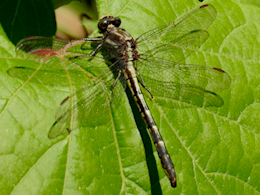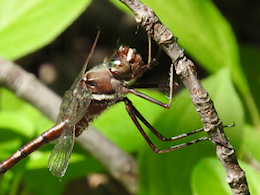
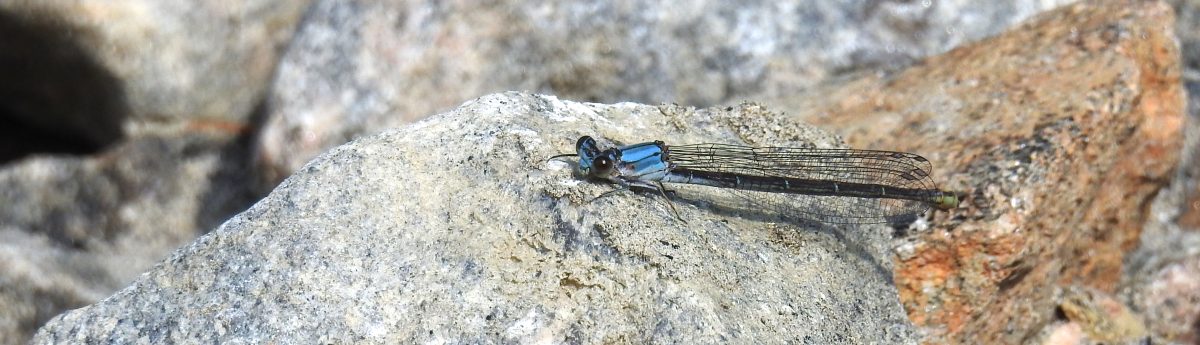
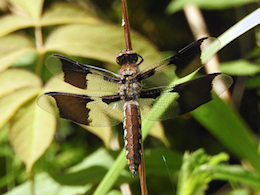
Yarmouth, Nova Scotia: Hebron Recreational Complex

Common Whitetail (Plathemis lydia)

My fiancé Doran and I spent two weeks in the Maritimes in late May/early June: first we spent some time in Yarmouth, Nova Scotia, where Doran (a comic book creator) had a booth for all three days of the Y-Con Gaming & Comics Convention, followed by three days in the Annapolis Valley to visit family, and finishing with a few days in Moncton, New Brunswick where Doran had a booth at East Coast Comic Expo for a day and a half. These are places I never would have planned to visit for birds and dragonflies on my own, so it was a great opportunity to explore some places completely off my radar! I prepared for the trip the same way any contemporary naturalist would prepare: I investigated iNaturalist, explored eBird, and goggled over Google maps looking for places that had an intriguing variety of birds, odonates, and habitats in order to come up with a short list of places to visit around each of our AirBnBs. I wanted to see (or hear) and document as many species as possible with three main goals in mind: (1) to find some East Coast lifers whose range is limited to the Maritimes (White Corporal and Mantled Baskettail being at the top of my list); (2) to find some species that live in the Ottawa-Gatineau region but are difficult to find, mainly due to the inaccessibility of habitat (such as emeralds in bogs or clubtails and snaketails in rushing creeks); and (3) add as many ode records as possible to Nova Scotia and Moncton in order to increase the general knowledge of the species that live there.

Continue reading “Yarmouth, Nova Scotia: Hebron Recreational Complex”
Hudsonian Whitefaces of the Bog

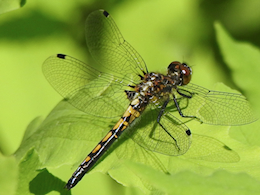
Hudsonian Whiteface

Although it’s been warming up nicely, I haven’t seen many dragonflies since witnessing the wonderful mass emergence of Spiny Baskettails at Mud Lake on May 12th. So when Chris T. told me he was thinking about going to Mer Bleue on the weekend, I decided to join him. Mer Bleue is ecologically significant as one of the few accessible bogs in eastern Ontario, hosting many different species not found in typical forests or wetlands. There were a couple of butterflies in particular I was hoping to see, the Brown Elfin and Jutta Arctic which I last saw in 2012, as well as the aptly-named day-flying Black-banded Orange Moth (Epelis truncataria). Several bog-loving odes were high on my list, chiefly Sphagnum Sprite, Ebony Boghaunter, Harlequin Darner, and Hudsonian Whiteface, all of which I’d seen here in my early ode-hunting days with Bob Bracken and Chris Lewis. I was also secretly hoping to stumble upon a Somatochlora emerald or two, as they are more likely to be found in the Mer Bleue bog than on the side of a random house in Nepean….or so I hoped!

Continue reading “Hudsonian Whitefaces of the Bog”

The 2023 Summer Odolympics

Dragonhunter
Dragonhunter

When I first heard about the Odolympics – a special bioblitz hosted by the Dragonfly Society of the Americas, Sociedad de Odonatología Latinoamericana, and Odonata Central in order to record as many odonata species from as many places in the Western Hemisphere as possible – I knew I had to participate. This specialized bioblitz is only two years old, and there are usually two Odolympics each year: one falling during the North American summer, and one falling during the South American summer in order generate a snapshot of odonate distribution throughout both hemispheres.

Dragonflies and damselflies, collectively known as odonates, are valuable indicators of a wetland’s environmental health and biodiversity. Simply put, the more odonates that use a wetland for breeding and feeding purposes, the healthier the ecosystem. Naturalists were encouraged to submit their observations during the bioblitz via one of two platforms: iNaturalist, or Odonata Central. While I love iNaturalist and have been using it for a few years now to record my non-avian observations, I began submitting my observations to Odonata Central last year when it developed a checklist-based phone app similar to eBird. iNaturalist also has a phone-based app for submitting observations, but it is intended to be used in conjunction with the phone’s camera which I only use as a backup camera when my Nikon Coolpix’s battery decides to take a nap. Although I love the ease of searching for data in iNaturalist’s projects, I chose to record my Odolympic observations in Odonata Central as it allowed me to include observations of species for which I am usually unable to get a photo (yes, I’m looking at you, Prince Baskettail and Wandering Glider!)

Continue reading “The 2023 Summer Odolympics”

Quebec: Kazabazua and Beyond

Black-tipped Darner

The Common Sanddragon is one of the dragonfly species in the Algonquin Park field that is not found in the Ottawa-Gatineau region. A member of the clubtail family, it is well-marked with a mottled green and brown thorax reminiscent of a Harlequin Darner and uniquely-shaped markings down the length of the abdomen to segment 7: they look like goblets in the male, and start out as goblet-shaped in the female but gradually lose the stem. Their legs are very short for a dragonfly, and mature males have green eyes while females have gray or brown eyes. The appendages in both sexes are pale, and they are the only dragonfly in our region which has pale appendages, a mottled thorax, and brown spots at the base of each wing. Its larvae live in rivers, lakes, and streams with sandy bottoms, and due to its short legs, the adults perch horizontally on the sandy beaches and banks of its rivers rather than hanging from trees or in the vegetation. At the time of the printing of the first edition of the Algonquin field guide, it had not been recorded within the park and was only known from a few sites in Peterborough County and a single record from Windsor in Ontario’s deep south.

Continue reading “Quebec: Kazabazua and Beyond”

Nova Scotia 2023: Odes of Marsh and Pond

River Jewelwing

The weather played a big part in our trip this year. Rainclouds blew in and blew out all week long, bringing rain on most of the days we were there.  Fortunately the sun came out long enough to get in a few hikes at the various waterfalls and for me to take some long walks while Doran was out with the car. I spent quite a few hours looking for odonates and other critters around the ponds and the Annapolis Rail Trail, mostly in the afternoons when the sky cleared up. Although they are maybe half as long as the Eagleson storm water ponds by my house and much less diverse in terms of wildlife species, I still managed to find an interesting variety of creatures.

The afternoon after our waterfall search was particularly productive. I found my first Band-winged Meadowhawk and Familiar Bluet of the trip, which are also my first observations in iNaturalist for Nova Scotia for these species.

Continue reading “Nova Scotia 2023: Odes of Marsh and Pond”

Nova Scotia 2023: Rural Roads and Waterfalls

Petite Emerald

The morning of July 18th was warm and cloudless, so we resumed our search for rushing creeks, waterfalls, and odes. I had noticed one spot on Google maps that wasn’t too far from us – Slokum Brook Falls, just north of the Trans-Canada Highway. Photos showed a nice little brook with a steep waterfall in the middle of the woods, and reviews on Alltrails.com indicated that it was a bit difficult to find, as it is very overgrown at the beginning. It is said to be the highest falls on the North Mountain that drains into the valley, though there is really only water here during the spring runoff. We drove down Lily Lake Road, slowing down once we got past the lake itself. I peered into the dense foliage along the road, and found only two spots that looked like trails entering the woods, though both had “private property” signs at the entrance. Once the forest opened up we realized we must have gone past it, and decided to turn around at the end of the road, which elbowed north onto Douglas Road as the woods gave way to farm fields.

Continue reading “Nova Scotia 2023: Rural Roads and Waterfalls”

Gatineau Park: In Search of Emeralds and Clubtails

Violet Dancer
Violet Dancer

Chris Traynor and I chat about dragonflies and damselflies a lot. We both also like to pour over old dragonfly reports, iNaturalist records, and Google maps looking for suitable habitat for this species or that, as well as interesting places to go dragon-hunting in general. It was Chris who, when searching for places to see Clamp-tipped Emerald, thought that Taylor Lake in the northwestern part of Gatineau Park might be worth a visit. There are two iNat records from the area from 2015, as well as one Brush-tipped Emerald record from a few kilometers away. The map shows a variety of ode-worthy wetlands including streams, ponds, seeps and marshes, and an exploratory hike of about 5 kilometers in the fall cemented his impressions and desire to return there during prime dragonfly season. It was also almost completely unexplored for odonates, which made it quite enticing in my eyes, and close to a spot where Chris Lewis and Bob Bracken had discovered a stream with mature Eastern Least Clubtails and other clubtails several years ago. Good Somatochlora spots in the Ottawa-Gatineau region are uncommon, and we both thought would be fantastic to discover one up in Gatineau Park. I emailed Chris Lewis about Chris’s idea to check on the trails around Taylor Lake and revisit some of her and Bob’s footsteps in Gatineau Park, and the three of us made plans to visit its northern reaches on July 8th.

Continue reading “Gatineau Park: In Search of Emeralds and Clubtails”

The Morris Island Spring Bioblitz

Springtime Darner

Last year a particular OFNC outing caught my eye: a bioblitz to be held at the Morris Island Conservation Area on September 10th. Morris Island is a fantastic place for a bioblitz; the woodlands and wetlands of this 47-hectare site are home to a number of fascinating wildlife species, including several ode species not regularly found in my area of the city. I had never gone ode-hunting in September there before, as September is past the peak of ode season, with fewer species flying than in June or July. Still, it was a good chance to observe what was still flying there, and maybe find an unusual darner species or two. I attended with Chris T. and Chris L. and we photographed seven species for inclusion on the Morris Island Bioinventory Project on iNaturalist: Skimming Bluet, Eastern Forktail, Fragile Forktail, Powdered Dancer, Halloween Pennant, Autumn Meadowhawk, and White-faced Meadowhawk. So much for finding any cool darners!

Continue reading “The Morris Island Spring Bioblitz”

Marlborough Forest: Summer 2022

Ashy Clubtail

I did not get out to Marlborough Forest as often as I would have liked this past summer; ongoing medical issues early in the season left me feeling too tired and too sore for the long five-hour outings I enjoyed so much last year. On June 2nd I visited the E6 trail with Rick Collins to look for the Sedge Wrens breeding there. We heard one without too much difficulty, though we weren’t able to spot it. Our other highlight was a female Ruffed Grouse on the trail trying to lure us away from its chicks (none seen) by giving distress calls. It was a gray, drizzly day so I didn’t see any insects worth photographing. Indeed, I didn’t take my camera out of my bag at all.

The weather was much better on June 19th, so Chris Traynor and I went to trail E4 to look for Twin-spotted Spiketails and some different emerald species for his life list. I was also eager to show him the pool below the culvert as this was where I’d seen my one and only Ocellated Emerald hanging out in 2020. It was a bit windy, but the sun was shining and the weather was warm, and the breeze made the usual biting insects less of a distraction.

Continue reading “Marlborough Forest: Summer 2022”

A trip to Morris Island with the McNamara Field Naturalists

Slaty Skimmer
Slaty Skimmer

On Saturday, July 3rd I accompanied the McNamara Field Naturalists on their first in-person outing since the latest Stay-at-Home Order ended on June 2nd. Ontario entered Stage 2 of its reopening plan on July 2nd, which raised the number of people who could attend outdoor social gatherings and organized public events to 25 people (as well as allowing haircuts and personal care services again). Although I am not a member of the McNamara Field Naturalists Club, which calls Arnprior home but whose explorations include a large swath of the Ottawa Valley, one of my friends happens to be in charge of putting field trips together, and asked if I wanted to help lead a dragonfly walk. I said yes, and suggested Morris Island as it’s a great place to find all sorts of odes, including several flashy skimmers and clubtails that can be found perching in the vegetation and along the trails. I was thrilled when my mentor Chris Lewis joined us, as it would be easier to find some more of the unique species with a couple of knowledgeable people looking.

Continue reading “A trip to Morris Island with the McNamara Field Naturalists”

New Dragonflies at Marlborough Forest

Kennedy's Emerald
Kennedy’s Emerald

The beginning of June arrived with plenty of warmth and sunshine, and I couldn’t wait to go back to Marlborough Forest at the peak of butterfly and dragonfly season to look for new species living there. Last year when I started going to Marlborough Forest in mid-June, I kept seeing large, dark dragonflies – almost certainly emeralds of some sort – zipping down the shadowy trail before the sun had fully risen above the trees. I never had my net on me when I saw them on my early-morning birding walks, so I was unable to catch one to verify their identity. This time I was prepared for these dawn-flying dragons, and brought my net with me. I had already added one dragonfly to my life list, the Ocellated Emerald at Trail E4 last year; was it possible that there were other species of interest here?

My first summer visit to Trail E4 occurred on June 6th. Although the morning started out cool, it quickly warmed up. The usual birds were singing along the trail, including all the Red-eyed Vireos, Eastern Wood-pewees, Eastern Kingbirds, Veeries, and the Tree Swallows that were missing from my mid-May visit. I heard seven warblers (Ovenbirds, Northern Waterthrushes, Black-and-whites, Nashvilles, Common Yellowthroats, Black-throated Greens, and a single Magnolia Warbler), two Chipping Sparrows, a Field Sparrow, and a Blue-headed Vireo singing in its usual spot in the large open area devastated by motor bikes and ATVs.

Continue reading “New Dragonflies at Marlborough Forest”

Dragonfly Emergence

Freshly emerged dragonfly

My first real dragonfly outing of the year occurred on May 24, 2021, and as usual, took place at Roger’s Pond in Marlborough Forest. I invited a few friends to join me now that outdoor gatherings can include up to 5 people, and fellow OFNC members Derek and Gerald decided to join me. It was a warm, sunny day, and I hoped to find the usual common skimmers and clubtails, as well as a few uncommon species that I’d seen previously at Marlborough Forest such as the elusive Ebony Boghaunter and Harlequin Darner. I’ve already seen one boghaunter this season, but it’s been a few years since I’ve seen a Harlequin Darner, and the Cedar Grove Nature Trail has been a repeat site for this ode.

We met at 9:30 am, just early enough to get some birding in while waiting for the sun to rise higher in the sky. We had the usual Nashville Warblers, Black-throated Green Warblers, Great Crested Flycatchers, White-throated Sparrows, Veeries, and Yellow-bellied Sapsuckers on the walk in. At the pond itself we had Eastern Kingbirds, a Pied-billed Grebe, Common Yellowthroats and four Ring-necked Ducks. Many dragonflies were already flying along the open trail through the cedar forest, including a few teneral whitefaces and emeralds.

Continue reading “Dragonfly Emergence”

Gatineau Park: Specialty Dragon-hunting

Zebra Clubtail

Gatineau Park is a special place for dragonflies – many species of the National Capital Region can be found there that aren’t found on the Ontario side of the Ottawa River, while others seem to be much more common there than in Ottawa. Chris Traynor has been exploring the park quite a bit these past couple of years, searching for dragonflies that breed in the quiet lakes, sluggish streams, and fast-flowing creeks of the Gatineau Hills. Not surprisingly, he has found a good number of species that have not been reported in Ottawa, such as Eastern Least Clubtail, Mustached Clubtail, Beaverpond and Harpoon Clubtails, and even a couple of snaketails. Many of these species prefer clear, swift-moving streams with rocky bottoms, which might be the reason for their absence in Ottawa; the Ontario side of the National Capital Region is relatively flat, with more marshes and slow-moving, mucky streams winding through suburbs and forest rather than down the foothills and escarpments which form the Canadian Shield. One of Chris’s best finds was a portion of Meech Creek where Zebra Clubtails and Fawn Darners are quite common, with the occasional Dragonhunter and Violet Dancer. I accompanied him twice to this magical spot, once during the August long weekend last year, and once again this year. As I never did get around to posting those photos last year (remember I mentioned I’d fallen behind?), I will incorporate both sets of photos in this post.

Continue reading “Gatineau Park: Specialty Dragon-hunting”

The Dragonflies of Mud Lake

Stream Cruiser

Once migration winds down, many birders stop visiting Mud Lake while they look for breeding birds elsewhere. Although birds such as Wood Duck, American Redstart, Yellow Warbler and Common Ravens are abundant and easy to find at the city’s premier migration hotspot during the breeding season, many of Ottawa’s summer specialties – such as Grasshopper Sparrow, Lincoln’s Sparrow, Golden-winged Warbler, Mourning Warbler, and Sedge Wren – are found elsewhere, and so most birders switch their focus from looking for migrating transients to chasing these summer residents down just as soon as the last Blackpoll Warblers and Arctic Terns disappear in early June. This is about the same time my attention to dragonflies and butterflies intensifies – and Mud Lake is a great place to find a good variety of both these insects.

Continue reading “The Dragonflies of Mud Lake”

Adventure in Dunrobin

Snowshoe Hare

On June 5th I headed out to Dunrobin to spend some time looking for odes and birds. My first stop was the Crazy Horse Trail on March Road at the end of Huntmar Road. This is a relatively new pedestrian-only trail for hikers, skiers, and snowshoers that was developed by the Friends of the Carp Hills under an agreement with the City of Ottawa. It is named for an old tavern that used to stand adjacent to the trailhead but has long since been demolished. The goal of the trail is to provide recreational access to the the Carp Hills on City-owned property while keeping impact on the environment to a minimum. The trail is narrow, and as there is no intention to groom or widen the trail, people are asked to respect the natural areas by staying on the trail, keeping dogs under control at all times (which means using a leash if necessary), leaving no waste, and respecting property boundaries. There are some rough, volunteer-built boardwalks in places too wet to cross which adds to its charm. In fact, all trail maintenance and improvement depends on volunteers, rather than the City, which makes it doubly important to respect the work they have done in creating this trail.

Continue reading “Adventure in Dunrobin”