The 2024 Summer Odolympics

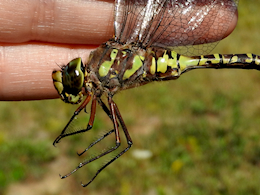
Autumn Meadowhawk (Sympetrum vicinum)

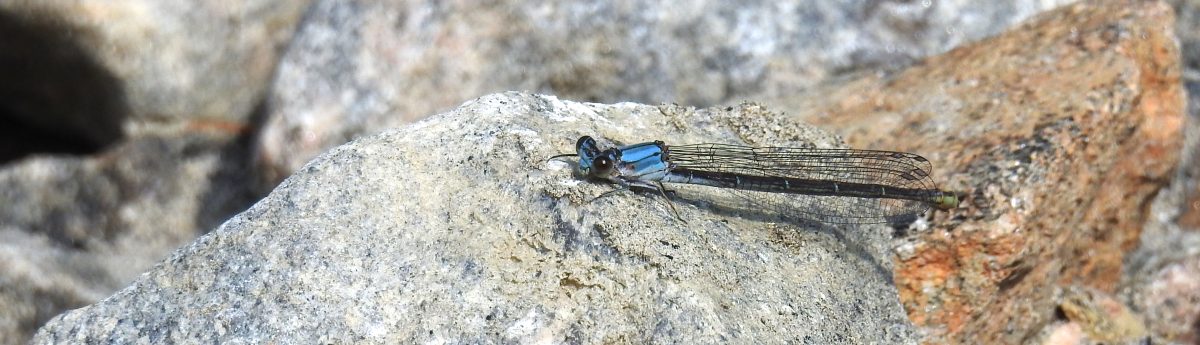
The 2024 North American edition of the Summer Odolympics were held between September 7-15, giving ode enthusiasts two weekends and as much time as a regular working week would allow to collect observations. I had hoped to find 19 or 20 species based on the same period spent collecting observations last year, but as most species are on the decline by this time, I knew I needed both good weather and good luck to come up with a respectful number. Unfortunately, neither luck nor weather were in my favour that first crucial weekend when I hoped to find a few species whose season ended around the beginning of September; it rained most of Saturday, and the temperature never rose above 15°C. Although it didn’t rain nearly as much on Sunday, the weather was worse: it was cloudy, windy, and the temperature never rose above 14°C. In fact, it was the coldest September 8th in more than 70 years (since 1949) and the windiest since records began in 1953 with a mean wind of 21 km/h. With a 1:00am windchill of 1.6 it was almost (within 0.1) the lowest windchill ever recorded on September 7th. Cold, wet, windy nights are even more of an obstacle, as many late-lingering species may not survive the low temperatures. When the sun began peeking out from the thick, fast-moving clouds around 4:30 I headed out despite the wind as to have zero species recorded on the first weekend was unthinkable. I didn’t expect much, and found only two species at the Eagleson ponds: an Eastern Forktail and a Slender Spreadwing.

Continue reading “The 2024 Summer Odolympics”
Next Gen Dragon-hunters

Canada Darner
Canada Darner

After I returned from my visit to southern Ontario I still had bugs on the brain, specifically odonates. Now that September has arrived the days will be getting shorter and the nights cooler, which spells the end of the season for a number of different species. It is, however, prime time for darners, and I still had yet to find a Lake Darner or Green-striped Darner this year. I also haven’t seen any Saffron-winged Meadowhawks either, another species that peaks in August and early September, despite searching known locations at the Eagleson storm water ponds. While I knew that bird migration was heating up, my brain hasn’t yet made the switch from odes to birds. I am having trouble getting up early enough to get out for my regular birding walks before work, and I won’t even consider putting my net away while the weather is still nice – I want to wring every last sunny moment looking for dragonflies and damselflies before taking the mandatory six-month winter hiatus. This has never happened to me before, and while I still am using eBird to keep track of what I see, most of my checklists are incidental ones noting only a few species that caught my attention while out later in the day dragonfly-hunting.

Continue reading “Next Gen Dragon-hunters”

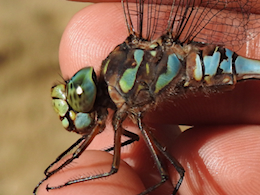
Identifying Green-striped and Lake Darners

Lake Darner
Lake Darner

Darner (genus Aeshna) season typically begins in July in the Ottawa-Gatineau region. The two most common mosaic darners, Lance-tipped and Canada, emerge early in the month, along with the slightly less common Shadow Darner. These three species are the most widespread members of this group, and if you see a mosaic darner flying along a forest trail or in an open clearing in the greenbelt it is most likely to be one of these. Lake Darner, Variable Darner, and Black-tipped Darner are considered “uncommon” in the Ottawa-Gatineau region, with the first being a localized species and the latter two species considered to be widespread. I suspect they may be easier to find on the Quebec side of the region, as there are more lakes and suitable bodies of water in Gatineau Park, and Black-tipped Darner has been relatively easy to find there. Finally, the Mottled Darner and Green-striped Darner are both considered “very rare”, with only a handful of records of each. I’ve been lucky to see a few Green-striped Darners in Stony Swamp in recent years, with one individual at Bruce Pit in September 2019 and two individuals at the Beaver Trail in September 2021. I’ve never seen a Mottled Darner, and hope to catch up with this species one day.

Continue reading “Identifying Green-striped and Lake Darners”

September Odes – A Summary

Shadow Darner

By the time September rolls around, most odonate species are done for the year in the Ottawa region – gone are the Aurora Damsels and Elegant Spreawings, the Spiny Baskettails and Ebony Boghaunters, the Arrowhead Spiketails and Horned Clubtails, the Chalk-fronted Corporals and Four-spotted Skimmers. This is the time of year when the number of meadowhawks and darners begin to peak, and southern species such as Spot-winged and Wandering Gliders may blow into our region with the warm south winds. A few bluet and spreadwing species may persist, as well as the common and widespread Eastern Forktail, though each day sees fewer and fewer individuals. This is a summary of species I saw and photographed around Ottawa during September 2019 – due to my trip to Edmonton and some cool, cloudy weekends, I didn’t visit as many places as I had hoped and missed a few common species.

Continue reading “September Odes – A Summary”

A Lake Darner in Ottawa

Lake Darner

On August 27th, the last Saturday of the month, I headed out to a spot I normally don’t visit so late in the summer – Roger’s Pond along the Cedar Grove Nature Trail. I usually go in May and June when early-season dragonflies are flying, such as the locally rare Ebony Boghaunter, the uncommon Harlequin Darner and Brush-tipped Emerald, as well as the usual whitefaces, Racket-tailed Emeralds, Spiny and Beaverpond Baskettails, and Aurora Damsels. I had two reasons for wanting to go: the first was the Band-winged Meadowhawk, a species I had seen in good numbers here on one late-summer visit several years ago but have had trouble finding recently, and the second was a yearning to find some Aeshna darners. After seeing such a good variety at my Dad’s trailer and failing to find the Variable Darner at Bruce Pit, I thought that Roger’s Pond might be a good spot to look for Ottawa’s common and uncommon species.

Continue reading “A Lake Darner in Ottawa”