
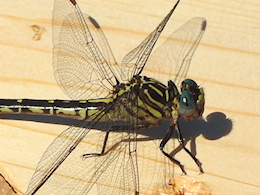
Mature Elusive Clubtails are difficult to find. The best way to find one is by simply being in the right place at the right time – a strategy that requires a little knowledge of its preferred habitats and an enormous amount of luck. My first two encounters with a mature adult were entirely unexpected. I was in the right habitat, but as I was fall-birding at the time I wasn’t expecting to see any particularly exciting dragonflies…and unfortunately, the luck that led to my discoveries was of the bad variety – bad for the dragonfly.
My first encounter with this species occurred on October 10, 2011 at Constance Bay – it was Thanksgiving weekend, and I was looking for the Nelson’s Sparrows that had been reported in the sedgy area east of the beach. After getting the bird (it was a lifer for me!) I headed west along the beach to check out the shorebirds in the water. That’s when I noticed a large bug buzzing about in the sand. When I stopped to have a look, I realized it was a dragonfly….and a clubtail! It wasn’t able to fly, and when I got a good look at it, I understood why: parts of both wings on its left side were missing.
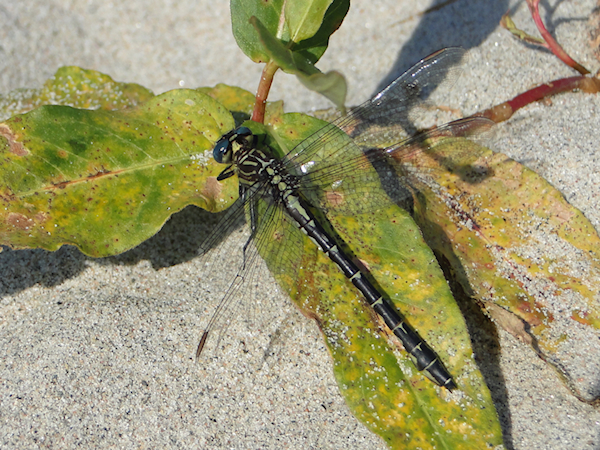
I was able to pick it up, photograph it, and place it on the leaf of a low-growing plant where I hoped it wouldn’t get stepped on. The blue eyes, black and yellow striped thorax, and pattern of spots along the abdomen are all characteristic of the Elusive Clubtail. I had seen the exuvia of one back in July 2011, but never an adult of this species. While the Elusive Clubtail prefers lakes or large rivers with a sandy bottom, its name comes from its habit of perching inaccessibly in the treetops, where it hangs vertically from leaves much like a darner. It also patrols open waters of large rivers away from the shore, where it is difficult to see – or catch.
This was also a lifer for me, so I took several photos from different angles to make sure I could identify it correctly once I got home. According to Christina Lewis at the time, this was an extraordinarily late date for this species, which made her wonder if climate change may be involved, or if there are simply more people out looking for, learning & communicating about Odonata. As of today’s date, there are several other October dates for Elusive Clubtail along the Ottawa and St. Lawrence Rivers in iNaturalist, and the latest date is October 14 from two different years – 2011 and 2013.
My next encounter took place on September 16, 2019. I was walking along the sandy shore next to the marina at Dick Bell Park, then heard a familiar sound – the furious fluttering of something on the ground. I scanned the area and saw a fresh looking Elusive Clubtail on the ground. I wasn’t sure what was wrong until I crouched down and saw a wasp hanging onto its neck. I assume that the wasp was trying to parasitize the clubtail, but as the dragonfly was still alive and fighting I used a stick to disengage the wasp and shoo it away. The clubtail sat still after that, so I picked it up and put it on a leaf in the sun. Fortunately, that intervention ended well for the dragonfly.
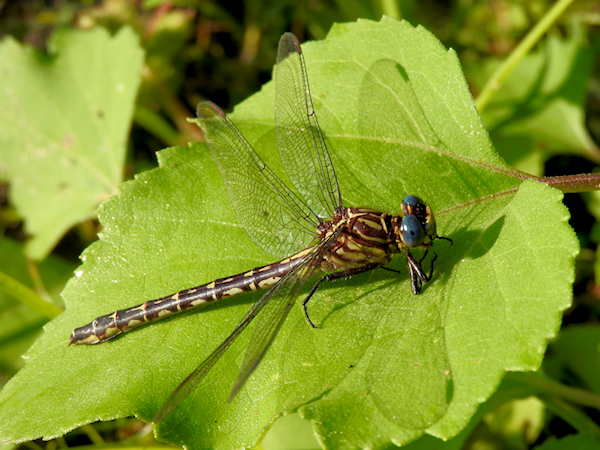
It seems that the best way to find a mature Elusive Clubtail – for me, at least – is to stumble upon one. However, one stumbled upon me today, and took me quite by surprise!
I was checking out the new boardwalk at Sarsaparilla Trail and enjoying the warmth of the day. The usual Autumn Meadowhawks and Fragile Forktails were present, and I was just happy to be away from my desk for a while.
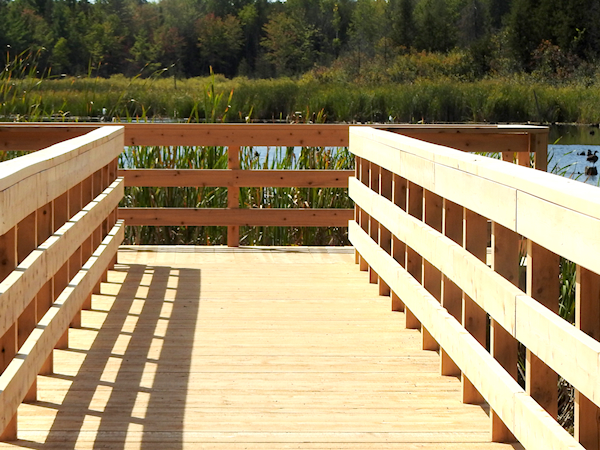
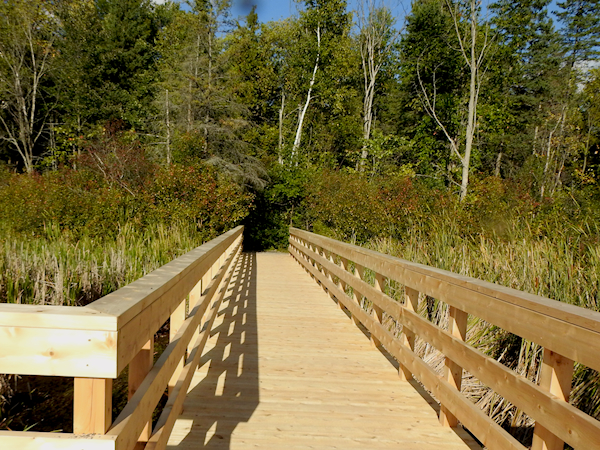
Then I looked down at the boardwalk railing to my left and was startled to realize a large dragonfly was sitting right next to me. I hadn’t seen it fly in, when I realized what it was – a female Elusive Clubtail – I was baffled.
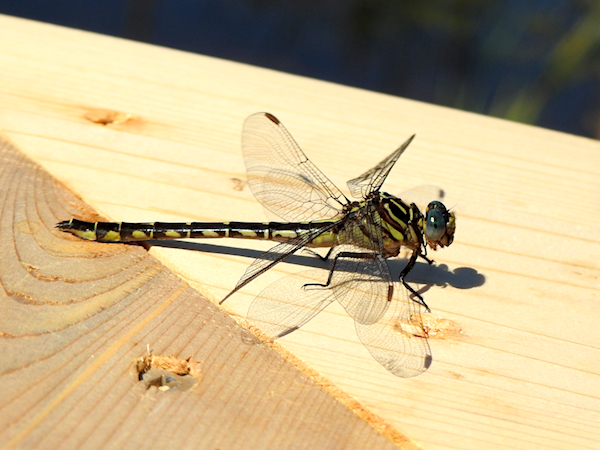
Elusive Clubtails breed in large rivers with a moderate current, as well as large, clear lakes with bottoms of sand or occasionally silt or gravel. Because they are difficult to find as mature adults, most evidence of this species comes from surveying their larvae in these water bodies and collecting the exuviae left behind on shore after emergence. Seasoned dragon-hunters find it so difficult to collect evidence of this species that they have jokingly re-named it “Stylurus no-datus” – credit to Brian Pfeiffer for that gem! It’s placement in genus Stylurus makes it one of the hanging clubtails, a group of dragonflies that tend to hang up vertically in trees when perching, rather than perching horizontally on the ground like most clubtails (though many young ones do rest on the ground after emergence).
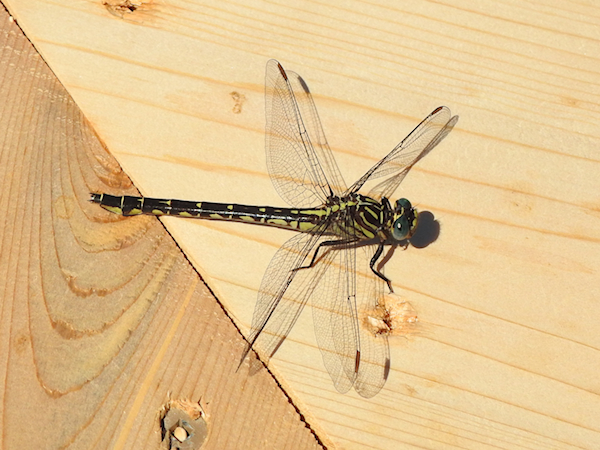
Which brings me to the most important question of the day – what was it doing resting horizontally on the boardwalk rail at the edge of a marsh? While most Ottawa-Gatineau sightings occur along the Ottawa River or a relatively short distance nearby, there are a couple of other sightings from much further away, including two in the Mer Bleue area, and now this one in Stony Swamp. It seems more likely that a wind picked these individuals up and assisted them to these places than that they breed in Mer Bleue Bog or the pond at Stony Swamp – just dropping in to check out the habitat, perhaps one might say.
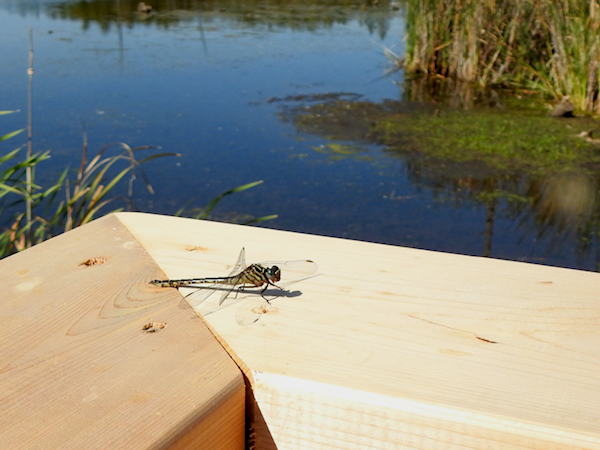
However, the fact that it landed right beside a dragon-hunter who not only knew what it was but also that it was decidedly in the wrong habitat made me wonder if it was more than just a mere coincidence of nature. I couldn’t help but wonder if it was a message – perhaps the spirit of my mentor Christina Lewis dropping in to say “hi” in a form that would get my attention. It would be just like her to pick this species and these circumstances to send a playful message from the other side.
Okay, so I don’t truly believe that animals embody the spirits of our departed loved ones. Instead, I view all animals as unique and independent individuals with their own quirks and their own agency rather than Disney characters here solely to entertain and fulfill the fancies of human beings.
But still…I wondered.


