
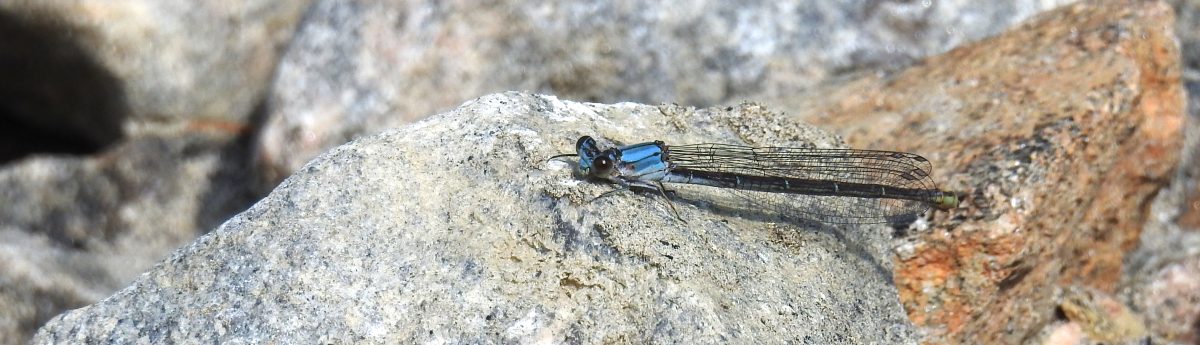
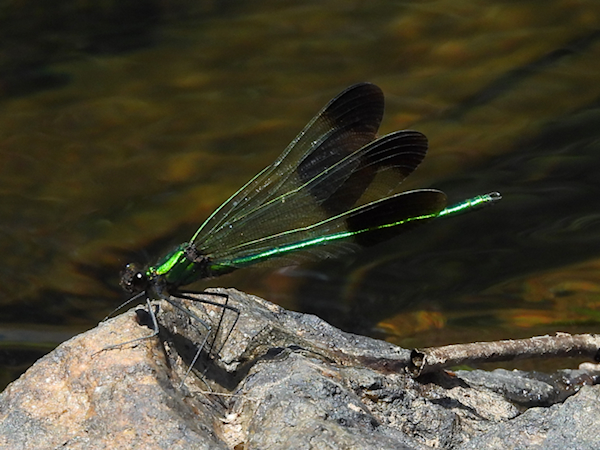
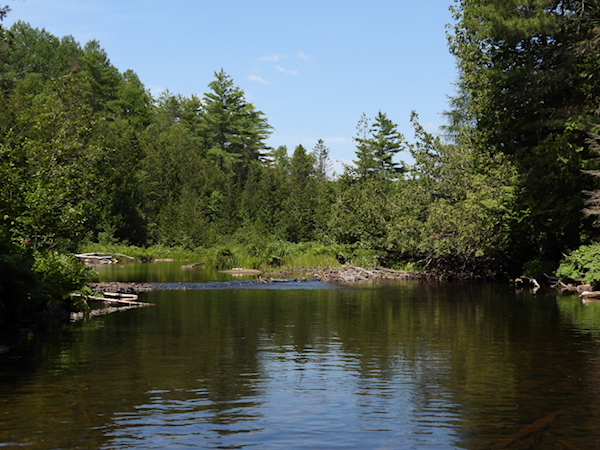
On July 12th I accompanied Chris Traynor to a new stream in Gatineau Park, the Ruisseau du Lac à la Loutre that follows Chemin du Lac-la-Pêche north of the well-known lake of the same name. Chris had found a couple of accessible spots last year and believed it had great potential for stream-loving odes including cruisers, clubtails and snaketails. We headed north late on a sunny Sunday morning; the traffic wasn’t too bad. Our first stop wasn’t too productive as most of the stream was in shade and there wasn’t much of a bank to walk on. We tried accessing the stream from two different spots, but found nothing other than a few Ebony Jewelwings.
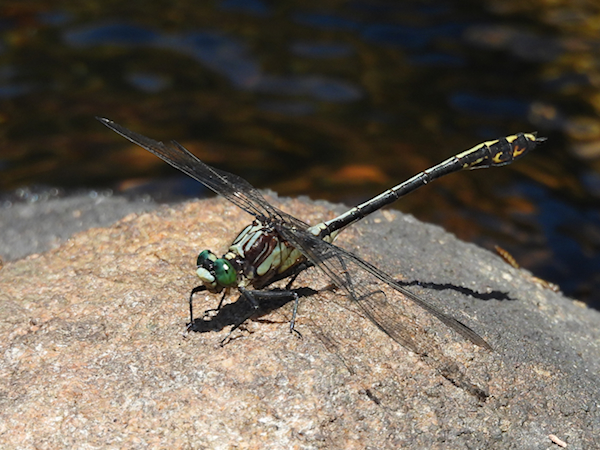
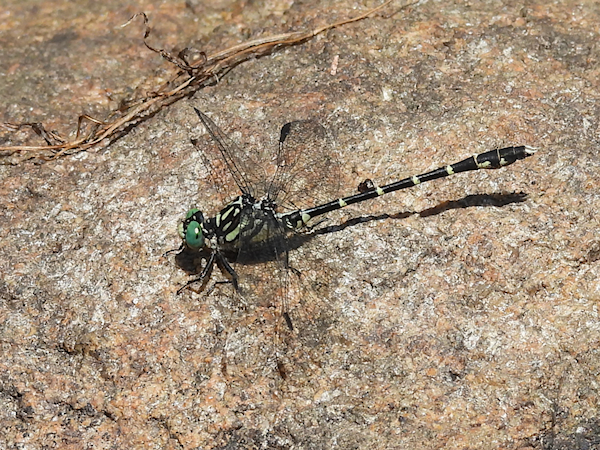
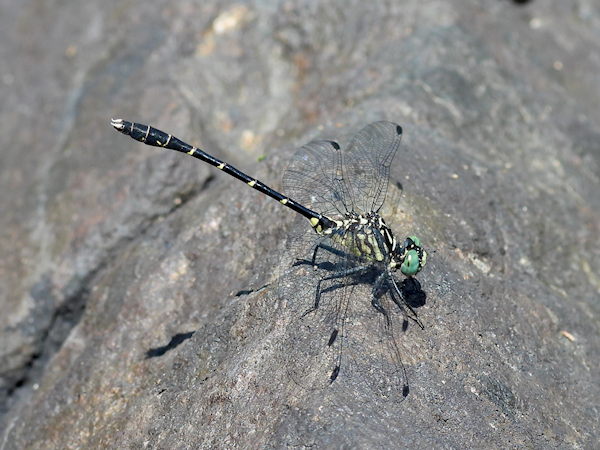
Our second stop was significantly better. The stream was a bit wider, a bit deeper, and a lot sunnier so there was lots of activity to enjoy. There were plenty of rocks in the middle of the stream for perching dragonflies to land on, and the first one I noticed was a Black-shouldered Spinyleg. This was not the only one – in fact they were so common here that Chris renamed the stream Spinylegs Creek!
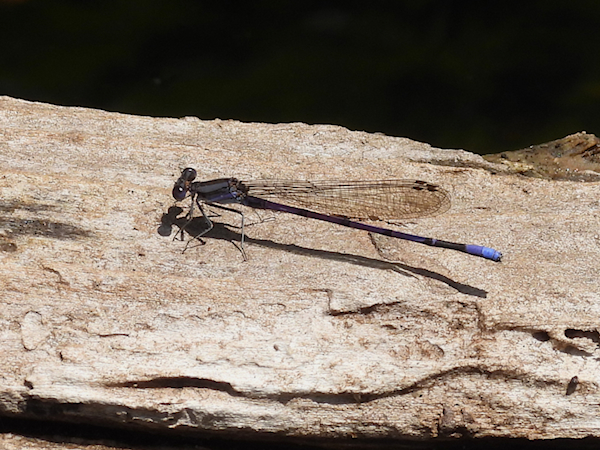
The usual dancers and jewelwings were present; there were more Ebony than River Jewelwings, and more Powdered than Violet Dancers.
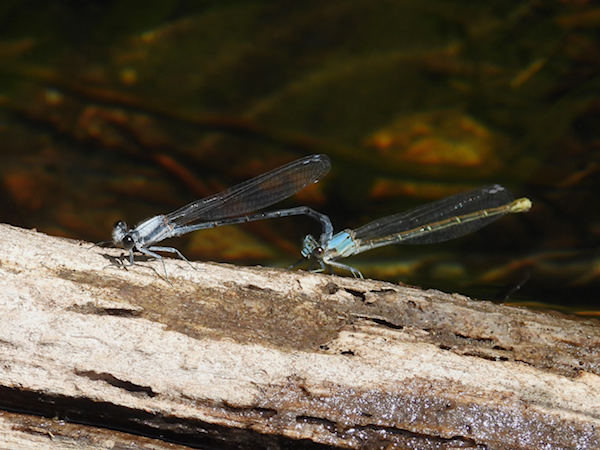
I noticed a small dragonfly resting on a rock and was delighted to see an Eastern Least Clubtail. There was a Powdered Dancer resting directly behind it, which gives an indication of its size. Although the Eastern Least Clubtail is not the smallest dragonfly in our region (that honour belongs to the Elfin Skimmer), it is the smallest clubtail, and the Powdered Dancer is the largest pond damselfly in our area; it is only a bit smaller than the clubtail!
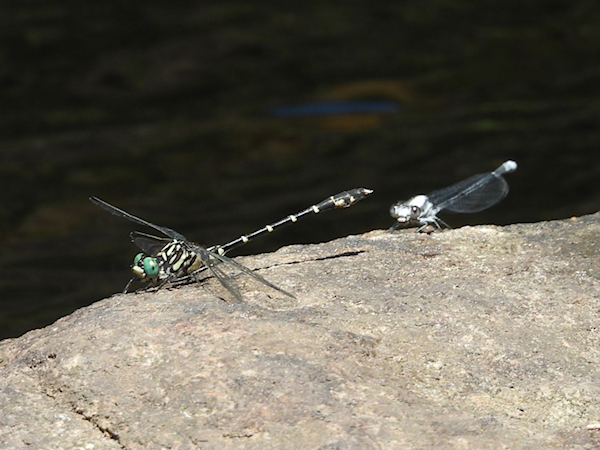
The easiest way to find these tiny dragonflies is to look for perched individuals on sunny rocks in the middle of shallow, rocky creeks and streams with plenty of riffles and a decent flow. Although the official checklist of dragonflies of Ottawa-Gatineau lists the Eastern Least Clubtail as being found on both sides of the Ottawa River, I have not heard of any locations on the Ontario side of the river where they might be found. They are present at Blakeney Rapids near Mississippi Mills, but that location is outside both Ottawa county and the OFNC 50-km circle on which the checklist is based.
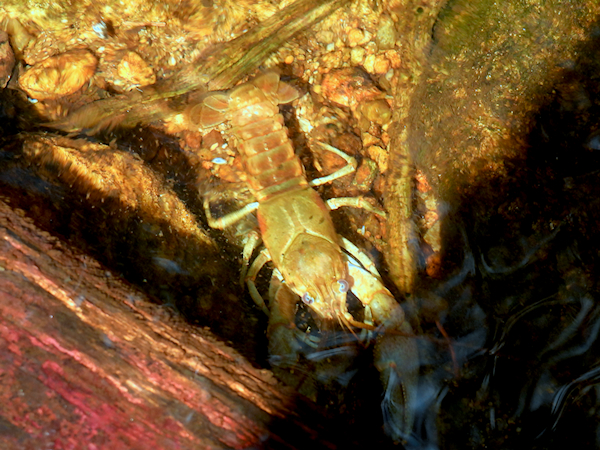
I left the middle of the river to check out the vegetation along the banks. The creek bottom was full of rocks, and at one point I lost my balance and sat down hard in the water. Fortunately neither my camera nor my phone were affected; the water was barely a foot deep. However, almost every step I took sent some underwater creature scrambling for cover beneath the shadows of a rock. I photographed a couple of crayfish; I am still hoping they will be identified on iNaturalist.
There was a log at the edge of the creek on which a clubtail was perching; closer inspection revealed it to be a Lancet Clubtail. I did not see the fishing spider on the log until after examining my photos at home; they have a way of hiding in plain sight until I can take a closer look at my photos!
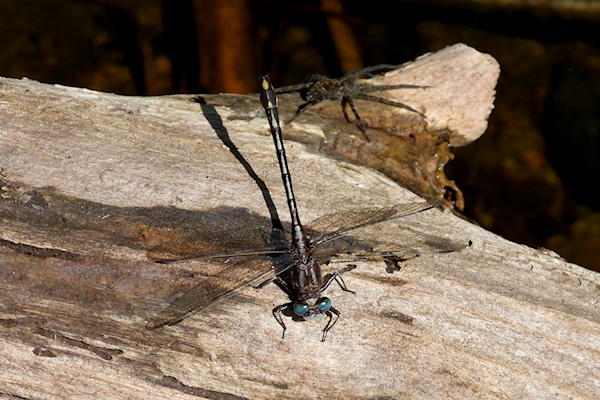
A Violet Dancer was also perching on the log, but at a distance from the clubtail.
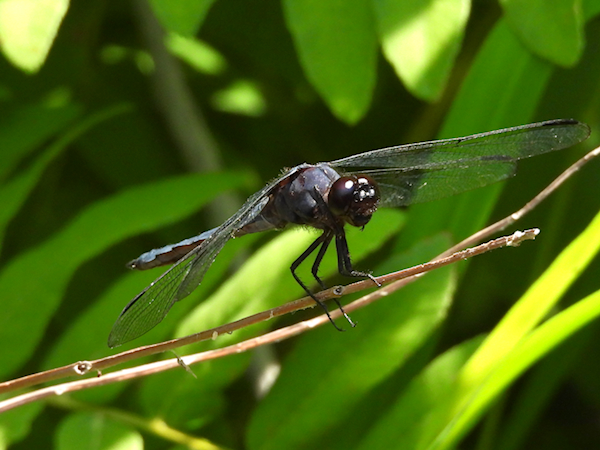
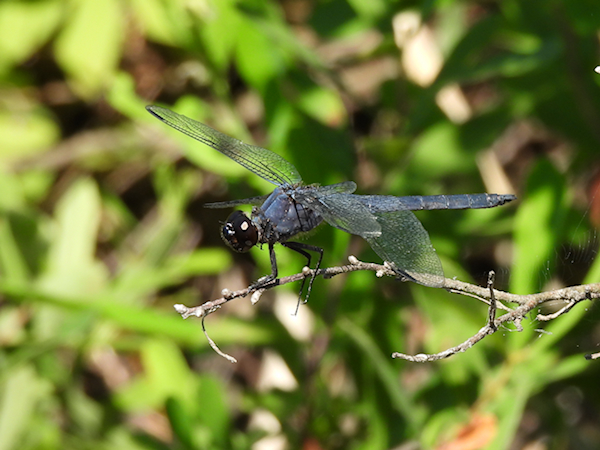
I was also delighted to see a couple of Slaty Skimmers in the vegetation overlooking the water; the males would occasionally dart out after one another. The handsome dark blue colours of the males make them one of my favourite skimmers.
I returned to the rocks to photograph the Eastern Least Clubtail, as it was the most interesting dragonfly in the area and one that I need to make a special trip to see. A Dragonhunter did zoom by, and a Swift River Cruiser made a couple of passes but there were no snaketails, and no Stylurus clubtails that we could see. Eventually Chris decided to move on to a different spot along the same river, which was much more open and featured a small tumble of falls. Here we found another Eastern Least Clubtail, more Black-shouldered Spinylegs, and more Powdered Dancers.
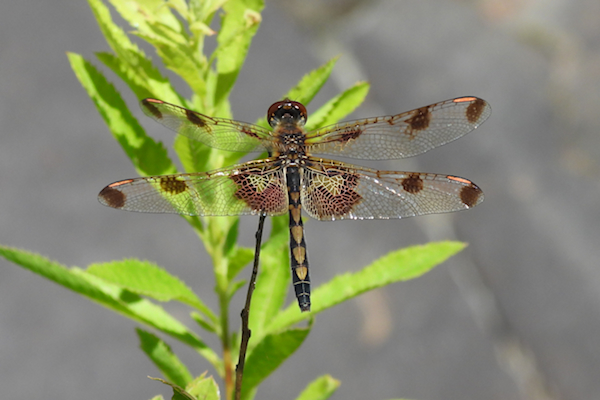
Another spot close by was reached by crossing the rocky surface of the ground through some knee-high vegetation to an open pool of water well above the first small waterfall. Chris found a Calico Pennant perching in the vegetation, and it stayed long enough for some photos. Although I thought it was a male in the field based on the in-between colour of the heart-shaped markings on its abdomen, it is in fact a female based on the appendages at the tip of its abdomen. While male and female Calico Pennants both start off bright yellow, males turn red, while females darken – and in some cases, become quite reddish such as this one.
There was a small island within the large pool of water, and while Chris crossed over to it easily I remained behind on the rocks as the water was too deep on one side and the bottom too slippery on the other side. Instead I contented myself with watching the Black-shouldered Spinylegs and a Slaty Skimmer from my rock.
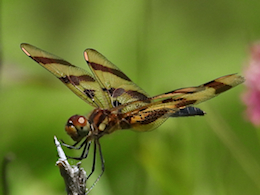
Then I noticed a Halloween Pennant perching on a reed in front of some Swamp Milkweed growing quite close to the water. Dragonflies on flowers always make for a beautiful photograph, and I was hoping to get a shot of the pennant in front of the pretty pink blossoms. To our delight, something even more incredible happened: the Slaty Skimmer landed on the same stem as the pennant! It’s not very often I see two colourful dragonflies on the same stem
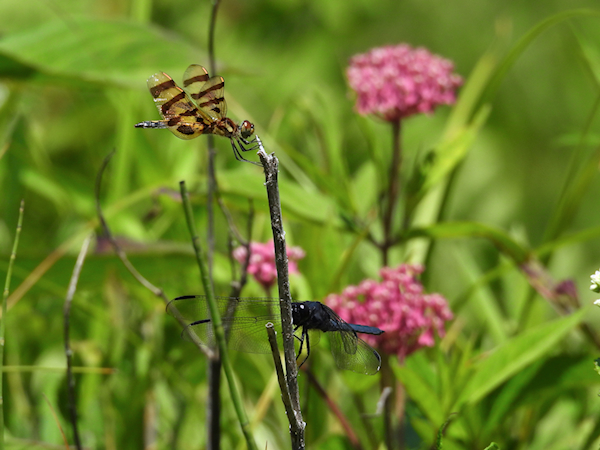
Both Chris and I got some decent photos of the two dragonflies, and with that iconic opportunity, we set off to our next stop.
There wasn’t much to see at the large culvert where the stream passes beneath the road, and even less at Chris’s usual spot for Zebra Clubtails – we saw not a single odonate there. Still, we had had such fantastic luck at the two locations along Spinylegs Creek that we couldn’t be too disappointed – altogether it was a fantastic outing!


